Wood Deck Restoration: Steps, Costs and When to Hire Out
A wood deck can be restored when the framing is sound and the surface can be taken back to clean, bare wood. The inspection decides that. The strip is the hardest step, and it is the one where homeowners, property managers and contractors most often lose a weekend and damage the boards. We handle that step in San Francisco and the Bay Area with mobile dustless (wet abrasive) blasting, and the rest of the job is a routine you can follow in order.
This guide covers the full sequence: how to judge the deck, what to repair, how to remove old paint or stain, how to clean, sand and refinish, and what the work costs.
TL;DR
- Probe the posts, joists and ledger board first. If a screwdriver sinks in, you have rot to fix before any finish goes on.
- Old film-forming finish (paint, solid stain) has to come off completely, or the new coat peels again. Removal is the step that goes wrong most often.
- Decks built before 1978 may carry lead paint. Test before anything is sanded, scraped or pressure washed.
- Wood must dry fully before staining: three to four rain-free days, or a moisture meter reading of 15% or less.
- Our paint removal starts from $3 per square foot, with free estimates and no need for on-site power or water hookups.
Table of Contents
- Can your deck be restored, or does it need replacing?
- Check for lead before you scrape or sand
- The restoration sequence, step by step
- What does restoration cost?
- Pool decks and other painted surfaces
- How long does a restored deck last?
- Perspective
- Get the removal step quoted
- FAQ
- Sources
Can your deck be restored, or does it need replacing?
Start under the deck, not on top. Bob Vila’s repair-or-replace guide says to begin at the ledger board, the board that attaches the deck to the house, because significant rot there can lead to collapse. Then check the beams, joists, posts, fascia, flashing and railings. If more than one area is damaged, price a rebuild alongside the restoration.

The quick field test comes from This Old House: push a screwdriver tip into posts and joists. If it sinks in, that wood is rotten. Rotted boards can be cut back to the centerline of the nearest joist, and the good end reattached with deck screws and filled with matching decking.
Decks.com adds that rot is usually worst near the ground and where the deck meets the house. It also suggests photographing the decking so the supplier can match the species, and considering composite if most boards are bad.
A practical rule: gray, splintery or peeling surface boards on a solid frame are a restoration job. Soft framing, a damaged ledger or rot in several places is a structural question, and that calls for a licensed contractor before anyone touches the finish.
Check for lead before you scrape or sand
If the house or deck was built before 1978, assume old coatings could contain lead until a test says otherwise. The EPA’s Renovation, Repair and Painting rule has been in effect since April 22, 2010. It requires firms working for pay in pre-1978 homes to be EPA-certified and to employ a certified renovator.
Sanding or pressure washing lead paint turns it into hazardous dust and runoff. For a homeowner this means: test first, and if lead is present, hire a certified firm for the removal. We offer lead paint removal and containment for exactly this situation.
The restoration sequence, step by step
Every reputable guide follows the same order. Here it is, with the point where each step usually fails.
1. Clear, inspect and repair
Remove furniture and planters. Break off large splinters, reset raised nail heads or replace them with deck screws, and replace bad boards. Family Handyman recommends this before any cleaning. Rusted fasteners should be recessed or replaced, because they stain the wood and snag sanders.
Where it goes wrong: replacing boards with a different species. New boards take stain differently, so photograph the deck and match the wood.
2. Remove the old finish
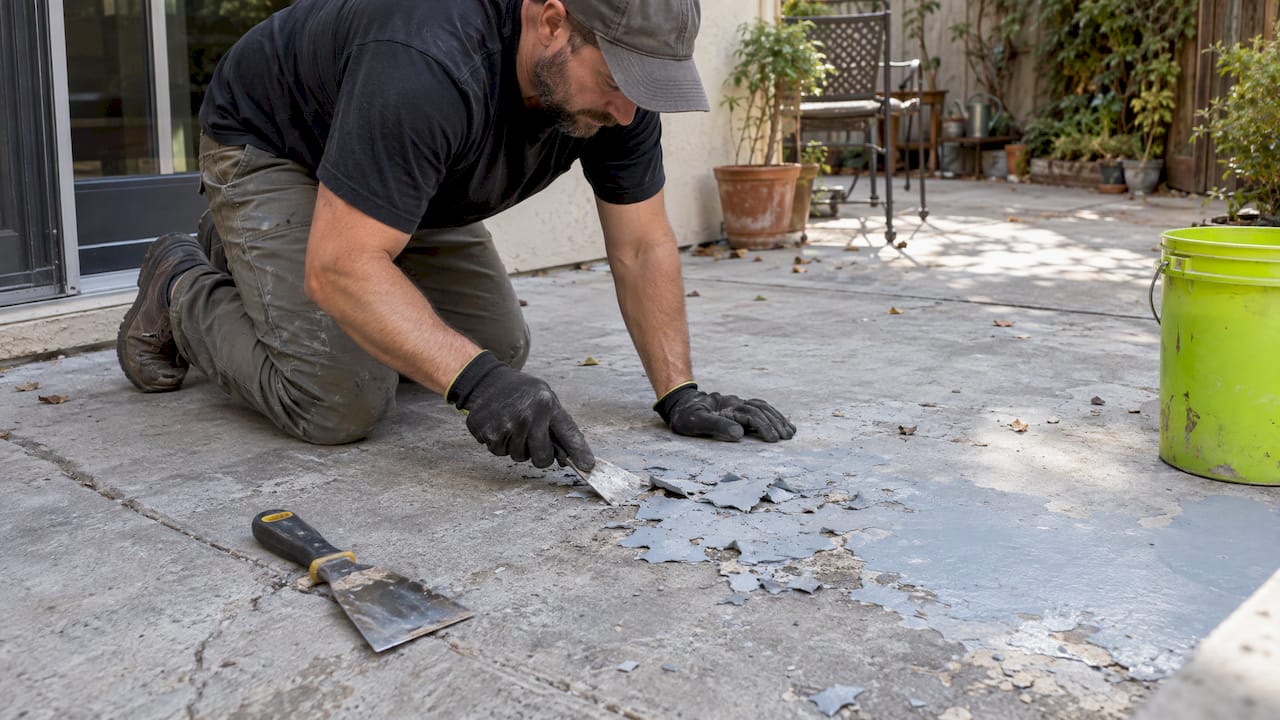
This is the make-or-break step. Penetrating stain on a lightly weathered deck may only need a cleaner. Paint, solid stain and failed sealers have to come off entirely, because new finish does not bond to a peeling film.
The common ways to do it:
- Chemical stripper. Rust-Oleum’s technical data sheet for an acrylic stain remover gives about 15 minutes of dwell time and a rinse at 1,500 to 2,500 psi for pressure-treated wood, but only 500 to 1,000 psi for cedar and redwood. Cabot’s wood stripper label calls for acid-resistant gloves, goggles, boots and a dust mask, a rinse no stronger than 1,000 psi, and neutralizing afterward. It must never be mixed with ammonia or acids.
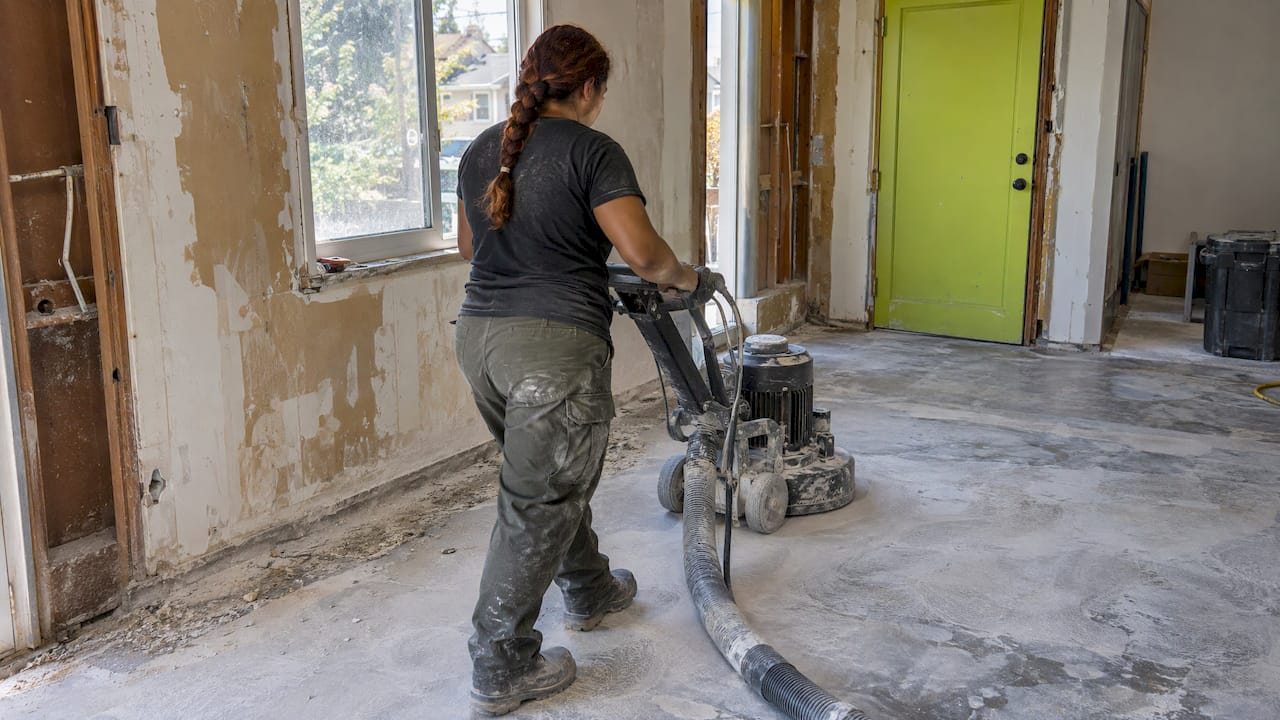
- Scraping and sanding. Slow, and Decks.com warns that coarse paper and high-speed tools leave scratches that are hard to hide. On older pressure-treated lumber it also creates a dust problem: Consumer Reports notes that pressure-treated wood made before 2004 may contain chromated copper arsenate, which releases toxic arsenic dust when sanded, and suggests hiring a professional for that sanding.
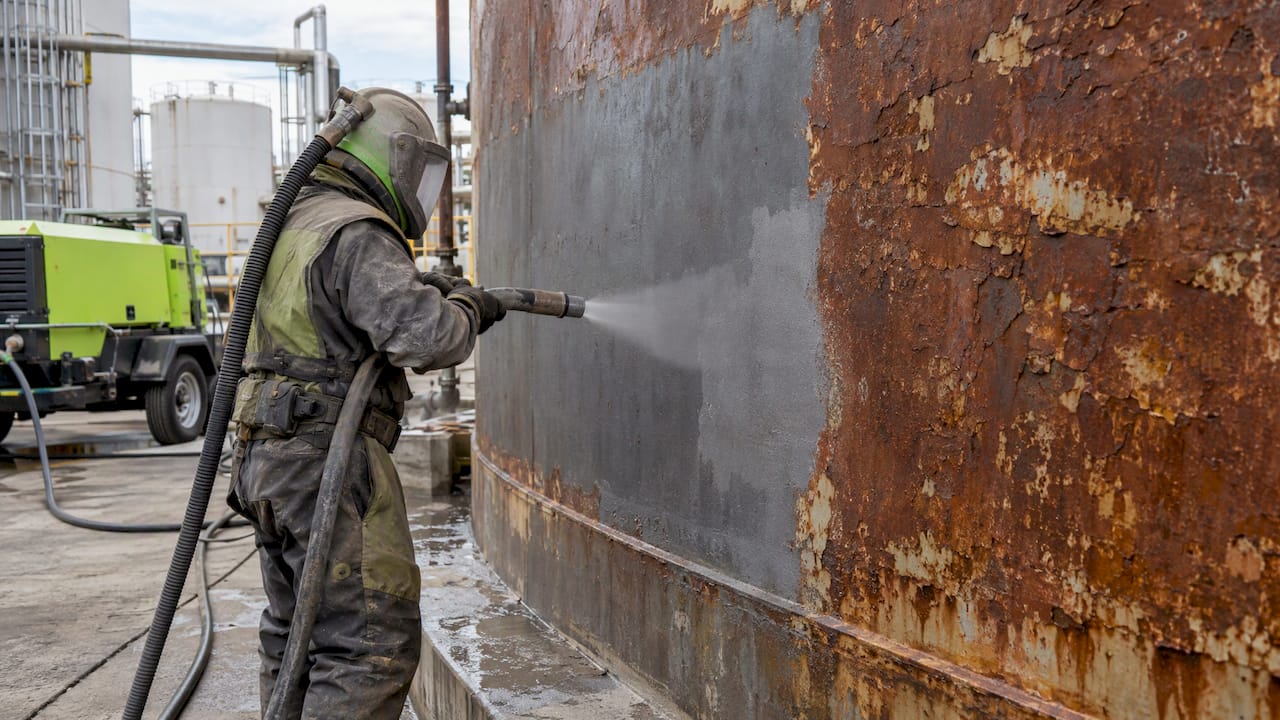
- Dustless blasting. Wet abrasive blasting removes coatings without chemicals to neutralize or rinse into the soil, and our method produces up to 92% less dust than traditional dry sandblasting. Our rigs carry their own air and power, so all we need is parking and access to the deck. See our wood stripping and restoration page for the surfaces we handle.
Where it goes wrong: pressure that is too high. Etched, fuzzy grain stains unevenly and splinters. The fix is a lower setting or a different method, not more passes.
For a deck with several layers of paint, a lead-era coating or a big surface, we recommend handing this one step to us. You then get bare, clean wood without the chemical handling, the sanding dust or the runoff. Our deck paint removal guide walks through methods, risks and costs in more detail.

3. Clean and brighten
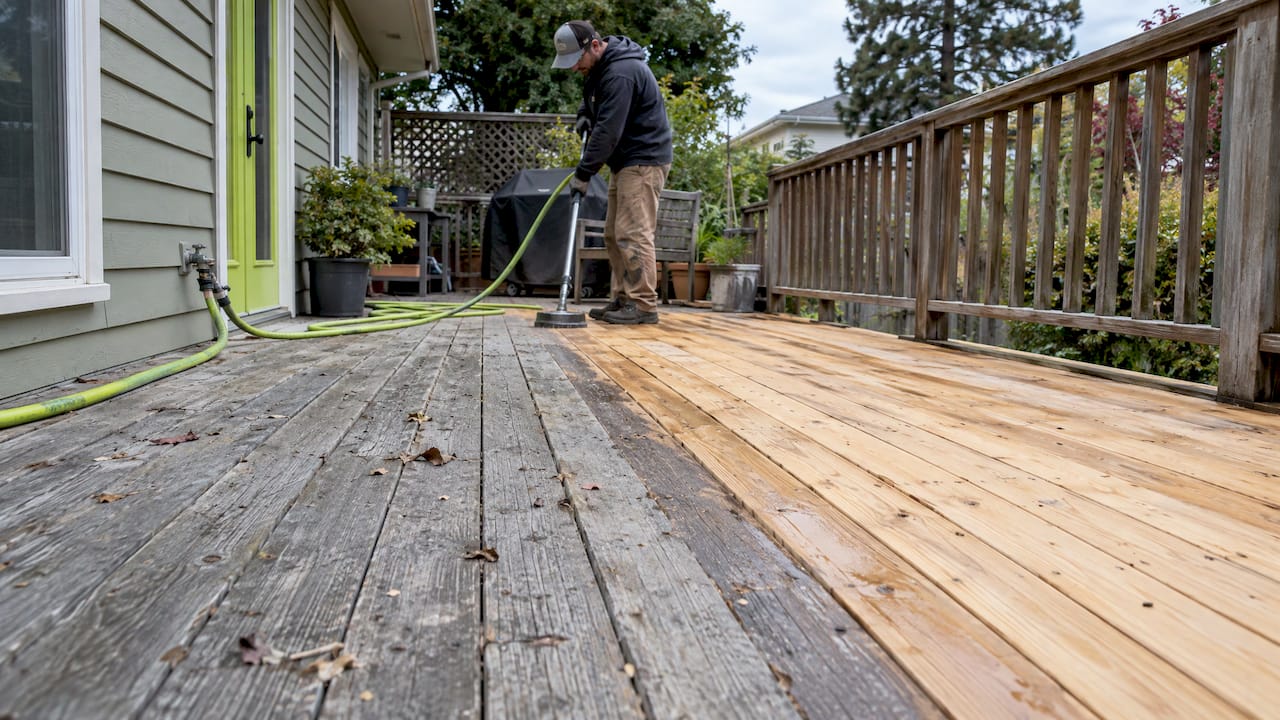
Cleaning lifts dirt, mildew and gray surface fibers; a brightener restores the wood’s color and balances the pH after stripping. Sherwin-Williams’ sequence is to neutralize with a brightener for 10 to 15 minutes, scrub lightly and rinse fully.
For an unfinished pine or tropical hardwood deck, This Old House passes along a USDA Forest Products Laboratory cleaner: 1 quart household bleach, 1/3 cup powdered laundry detergent and 3 quarts warm water. It is not for cedar or redwood, which need an oxygen-bleach (sodium percarbonate) cleaner. Never mix bleach with an ammonia-based detergent, because it forms a poisonous gas. Wear safety glasses, a mask, gloves and rubber boots, as Bob Vila advises.
Cedar needs a gentler approach to cleaning and brightening. This guide to cedar cleaning, sealing and repair explains how to match the cleaner to the wood species.
Where it goes wrong: letting cleaner dry on the boards, and skipping the rinse. Residue blocks stain from soaking in.
4. Let it dry
This is where most weekend projects fail. This Old House gives three to four consecutive rain-free days in most climates, or a moisture meter reading of 15% or less. A simple check is a water drop: if it soaks in, the wood is dry enough to take finish. In the Bay Area, that means watching the forecast in the wet season and planning the work for the dry months.
5. Sand
Sanding smooths splinters and opens the grain so stain can penetrate. Sand with the grain only. This Old House uses 50-grit paper on a pole; the Home Depot guide starts at 60 to 80 grit on rough areas and moves up to 120 to 150 if you want a smoother result. Use a sanding sponge on railings, then sweep or vacuum thoroughly.
Where it goes wrong: skipping the spots that were shaded by planters or furniture. They stay slick and take stain differently, so they need roughing up too.
6. Stain or seal
For older decks, a semi-transparent stain is the common choice. This Old House notes that its pigment gives even color and sun protection, and that it absorbs into the wood rather than peeling like paint. Work in sections of about 50 square feet, as Decks.com suggests, so you can brush out drips before they set. Use natural-bristle brushes for oil-based products and synthetic brushes for water-based ones. Stay off the deck for a full day afterward.
Where it goes wrong: a second coat on a first coat that has not been absorbed, which leaves a sticky film. Follow the product data sheet.
What does restoration cost?
The finish materials are the smaller cost. The labor sits in removal and prep. Our published starting rates for the work that applies to decks:
| Service | Published rate |
|---|---|
| Paint Removal | from $3 per sq ft |
| Dustless Blasting | from $3 per sq ft |
| Surface Preparation | $2 to $3 per sq ft |
| Wood Restoration | quoted after a site visit |
As a worked example, a 400 sq ft deck at the lowest listed paint removal rate of $3 per square foot starts at $1,200 for the removal step. Your actual quote depends on how many coating layers there are, the condition of the wood and access, which is why we give free estimates. Our Bay Area cost guide explains what moves the price.
Pool decks and other painted surfaces
Most pool decks are concrete rather than wood, and paint on them needs a method that does not push residue into the pool. If you are a property manager with a painted pool surround or a wood boardwalk, our paint removal service covers concrete, wood, brick and metal, and the free estimate is the place to describe the surface and the pool setup.
How long does a restored deck last?
Wood decks last roughly 10 to 30 years with regular upkeep, depending on species and exposure. How well the finish is maintained matters as much as the restoration itself. Plan to wash the deck once a year and recoat semi-transparent stain when water stops beading on the boards, typically every two to three years. Restoring early, while the framing is sound, keeps the deck out of the rebuild category.
Perspective
Most deck restorations we see in the Bay Area fail at the same point: the old finish was not fully removed, so the new stain sits on top of it and peels again within a season or two.
That is why we focus on the strip. Our dustless blasting rigs are self-contained, with their own air and power, so the work does not depend on your hookups, and our method produces up to 92% less dust than traditional dry blasting. For contractors, it means a prepped surface and a schedule that holds. For homeowners and property managers, it means one quote for the hardest part of the job.
Staining and sealing are straightforward once the wood is bare and dry. Getting to that point is the work we do every day.
USA
Get the removal step quoted
If your deck has peeling paint, solid stain or several layers of old coating, we can strip it with mobile dustless blasting and leave you bare wood ready for cleaning and finish. Paint removal starts from $3 per square foot, estimates are free and scheduling is quick. See all our surface preparation and restoration services or request an estimate for your deck.

FAQ
Can I restore a deck that is peeling?
Yes, if the framing is sound. Peeling means the finish is a film that has lost its bond, so all of it has to come off before the new coat goes on. Sanding over loose paint only hides the problem for a season.
Is a pressure washer enough to restore a wood deck?
A pressure washer cleans and rinses, but it does not remove a well-bonded coating on its own. Too much pressure also etches the grain: Rust-Oleum’s data sheet limits cedar and redwood to 500 to 1,000 psi. Our comparison of dustless blasting, sandblasting and pressure washing shows what each removes.
How long should a deck dry before staining?
Three to four consecutive rain-free days in most climates, or a moisture meter reading of 15% or less. The Home Depot guide says to wait at least two days after cleaning. A drop of water that soaks in is a good sign.
Does an old deck need testing for lead?
If it was built before 1978, yes, before any sanding, scraping or pressure washing. Lead removal work in older homes falls under the EPA’s certified-renovator rule, and we offer lead paint removal with containment.
How much does professional deck restoration cost?
Our paint removal starts from $3 per square foot, so a 400 sq ft deck starts at $1,200 for removal. Final pricing depends on coating layers and wood condition, and the estimate is free.
Sources
- How to Restore a Weathered Deck, This Old House
- Should I Repair or Replace My Deck?, Bob Vila
- How To Restore a Weathered Deck, Bob Vila
- How to Restore and Refinish a Deck, Decks.com
- How to Paint and Restore a Deck, Family Handyman
- How to Stain a Deck, Consumer Reports
- How to Refinish a Deck, The Home Depot
- How to Prep and Stain an Old Deck, Sherwin-Williams
- DeckStrip ASR technical data sheet, Rust-Oleum
- Problem Solver Wood Stripper, Cabot
- Questions and Answers about the Lead Paint Rule, NAHB
- Cedar cleaning, sealing and repair guide