How to Remove Paint From a Patio Without Damaging It
The right method depends on two things: how old the paint is and what the patio is made of. Fresh spills lift with scraping, blotting and a wash. Cured or multi-layer paint on concrete or pavers usually needs a stripper or abrasive work, and that is where most patios get damaged. For a whole patio, we use mobile dustless (wet abrasive) blasting, which strips coatings in one pass with up to 92% less dust than traditional dry sandblasting. Our dustless blasting service starts from $3 per sq ft.
TL;DR
- Fresh paint: scrape or blot (never wipe), then wash with a washing soda or TSP solution and rinse.
- Dried or layered paint: a stripper sized to the paint type, or blasting for large areas, beats scrubbing.
- Test a small patch first. Steel brushes, aggressive grinding and a too-close pressure washer tip can scar concrete and loosen pavers.
- Homes built before 1978 may have lead paint. Do not dry sand, grind or blast without lead-safe containment.
- Never let wash water or stripper residue reach a storm drain.
Table of Contents
- Start by Identifying the Paint and the Surface
- Fresh Paint on a Concrete Patio or Pavers
- Dried Paint: Stripper, Pressure Washing or Grinding
- Lead Paint: Know Before You Scrape
- Paint Residue and Wash Water
- When Blasting Is the Better Route
- What We Say From Experience
- Get a Quote for Your Patio
- FAQ
- Sources
Start by Identifying the Paint and the Surface
Three questions decide everything:
- Is the paint fresh or cured? Fresh paint is a cleanup job. Cured paint has bonded to the surface pores.
- What type is it? Latex and acrylic soften with different products than oil-based paint, and spray paint behaves differently again.
- What is the surface? Smooth poured concrete tolerates more than exposed aggregate, brick pavers or stamped concrete, where scrubbing can dislodge stones or wear off the pattern.
If the house was built before 1978, treat any old paint layers as possibly lead-based until tested. See the lead section below before you scrape anything.
Fresh Paint on a Concrete Patio or Pavers
Speed matters. The longer paint sits, the deeper it goes.
- Scoop or blot up the excess. Blotting rather than wiping keeps the paint from spreading into the pores.
- Wet the surface with clear water.
- Scrub with a hot solution. The University of Georgia extension suggests 5 tablespoons of washing soda or 1 tablespoon of TSP per gallon of water. TSP (trisodium phosphate) is a heavy-duty cleaner, so wear gloves and eye protection.
- Rinse with clear water and let it dry. Judge the result only once the concrete is dry, because wet concrete looks darker and hides leftover pigment.
Use a nylon brush, not steel. Steel bristles can cut the surface, and the scratches show more than the paint did. On pavers, stop when another round brings no improvement. Past that point you are only wearing the stone.
For concrete stains that are not paint, our guide to concrete stain removal by stain type covers what works for each.
Dried Paint: Stripper, Pressure Washing or Grinding
Once paint has cured, you have three manual options, and each has a failure mode.
Chemical stripper
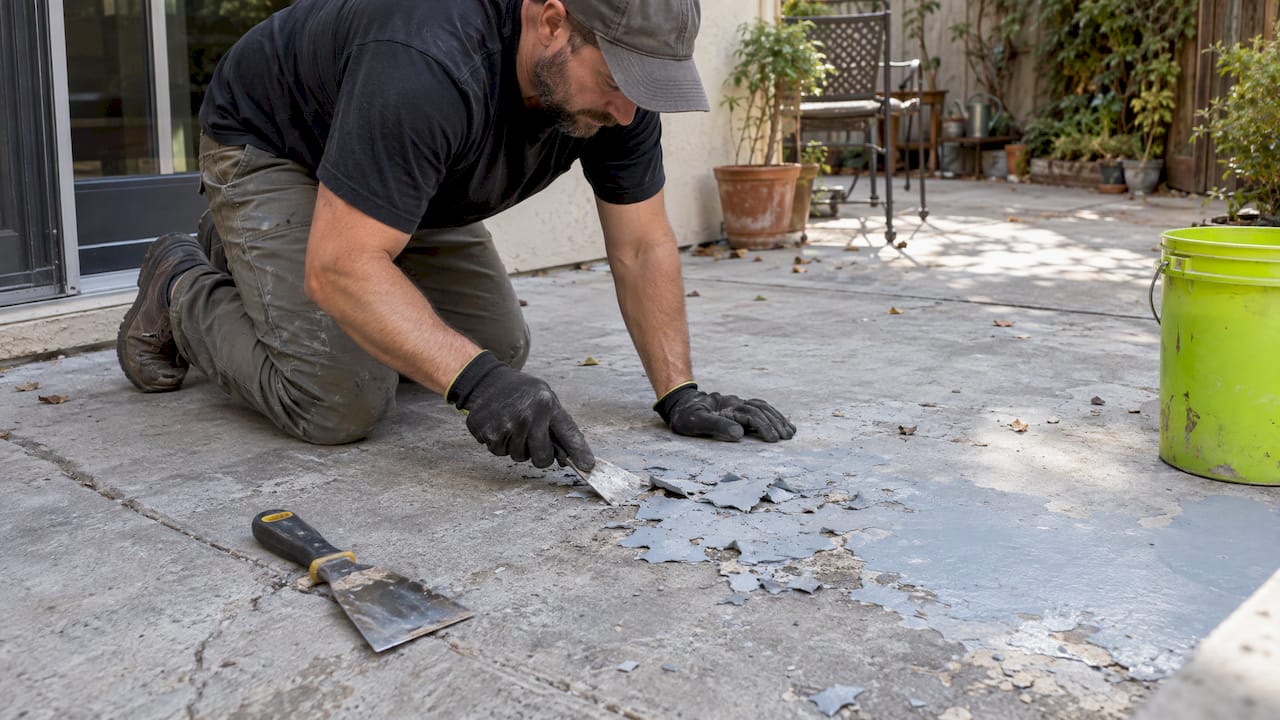
A stripper softens paint at the surface and in the near-surface pores. Even coverage and enough dwell time matter, then you lift and collect the softened coating. On pavers, one guide suggests scraping off excess, applying remover and waiting about 20 to 30 minutes, then scrubbing gently and blotting, not rubbing.
Choose a product labeled for concrete and your paint type, test a hidden patch, wear the PPE on the label and work in small sections. Klean Strip’s concrete stripper instructions call for chemical-resistant gloves, scraping up residue, then degreasing and rinsing well. Expect to repeat on thick or layered paint. Stripper residue is household hazardous waste, so see the disposal section.

Pressure washing
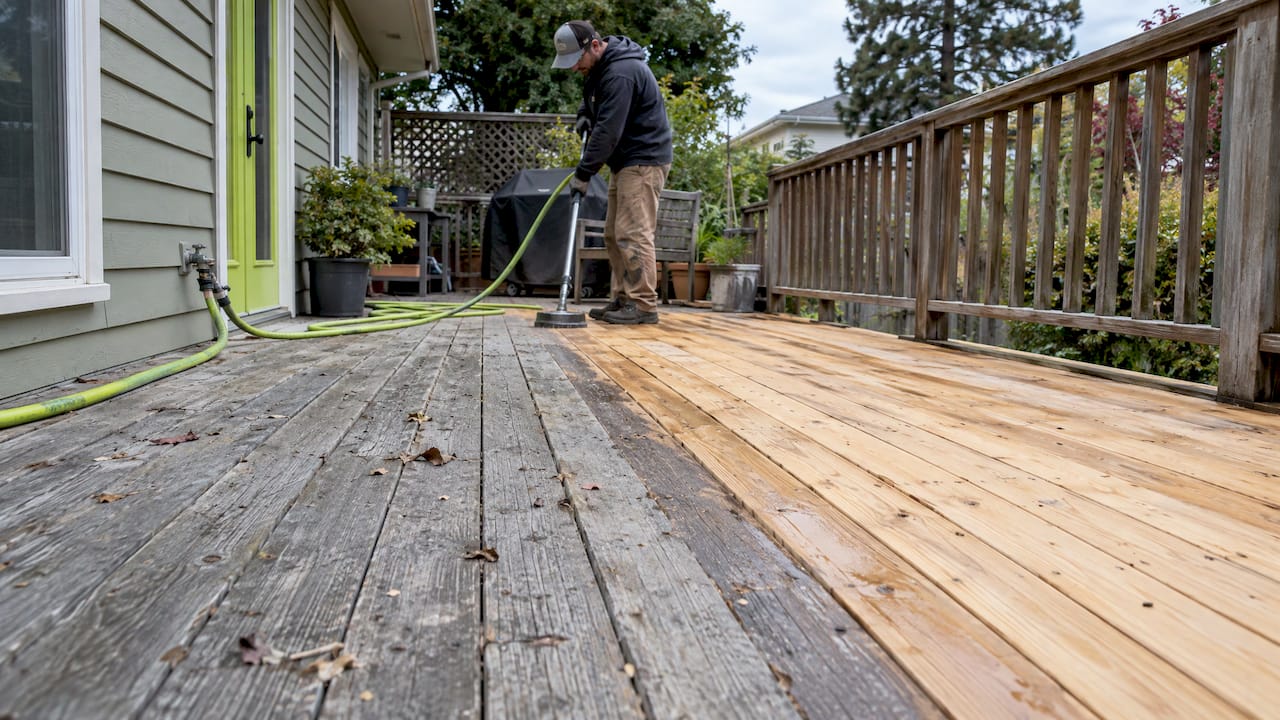
Pressure washing suits bubbling, cracking, flaking or thin paint. Test first, start with a 25-degree tip, hold it 12 to 18 inches away at roughly 45 degrees, and work up only if needed. Too much pressure etches concrete and blows sand out of paver joints. For joint-safe technique, see this guide on pressure washing pavers without losing joint sand. Pressure alone rarely clears paint that is well bonded.
Grinding and sanding
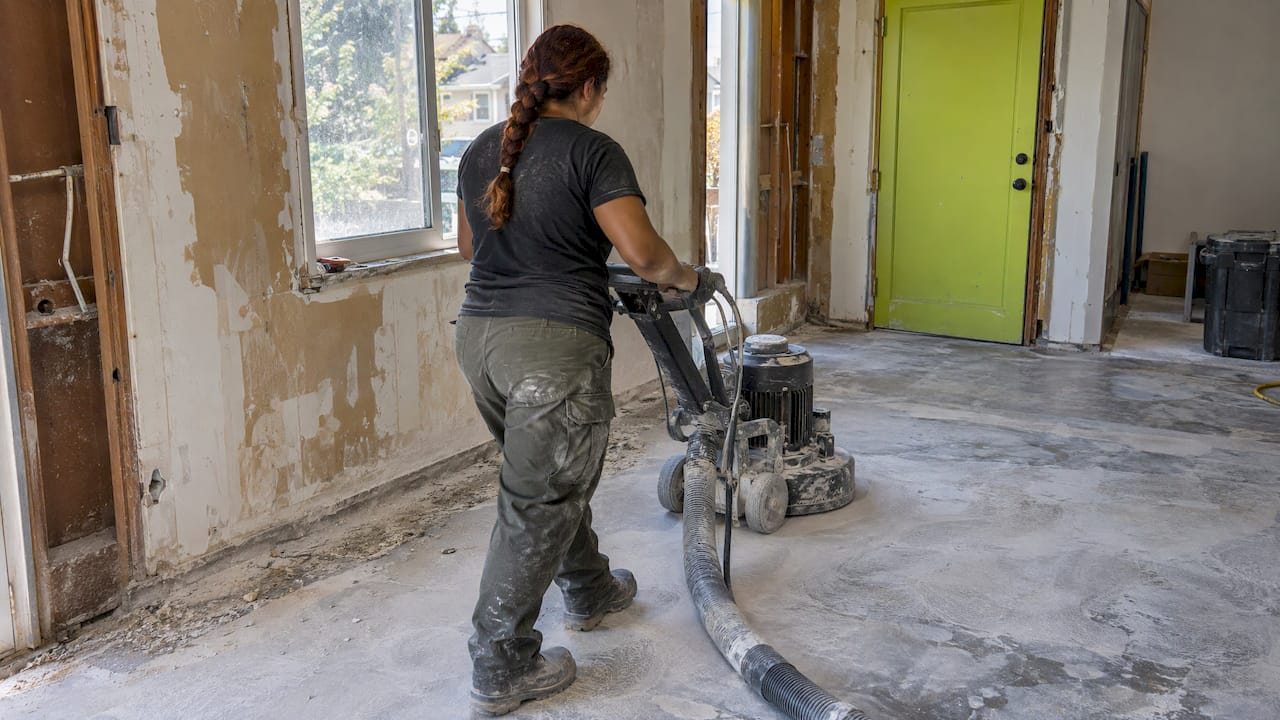
Grinding is an option for stubborn spots, but it calls for eye protection, a respirator and constant dust vacuuming. It also changes the surface profile, so a patio that looked uniform can end up patchy and visibly lower in the ground-down areas.
Rubbing alcohol and WD-40
People search for these because they are in the garage. A rag soaked in 70% or stronger rubbing alcohol may soften cured latex paint on a small spot. They are spot treatments, not a method for a patio.
Lead Paint: Know Before You Scrape
Paint on pre-1978 homes can contain lead, and the dust is the hazard. HUD’s guidelines warn against machine sanding or grinding without HEPA exhaust and a shroud, and abrasive blasting without HEPA containment. Its abatement chapter also rules out open-flame burning and heat guns above 1,100°F.
EPA’s lead-safe practices include frequent HEPA vacuuming, tool cleaning, keeping people out of the work area and washing up before leaving. If your patio or adjoining walls may contain lead, have the paint tested and bring in a certified lead professional rather than dry scraping. We handle this work under containment: see lead paint removal in California or our lead paint removal and containment service.

Paint Residue and Wash Water
Paint removal leaves chips, sludge and dirty water, and none of it belongs on the ground.
- Collect chips and debris in heavy-duty bags. Mist protective sheeting before folding it dirty side in.
- Capture wash water. Do not pour it onto soil or into a storm drain. Local agencies say to control, contain, capture and dispose of process water, and wash water with paint in it goes to a household hazardous waste facility.
- Paint remover, thinner and oil-based paint are take-to-collection items, never to be poured into storm drains or septic systems.
In the Bay Area, check your county’s hazardous waste program for drop-off rules and appointments.
When Blasting Is the Better Route
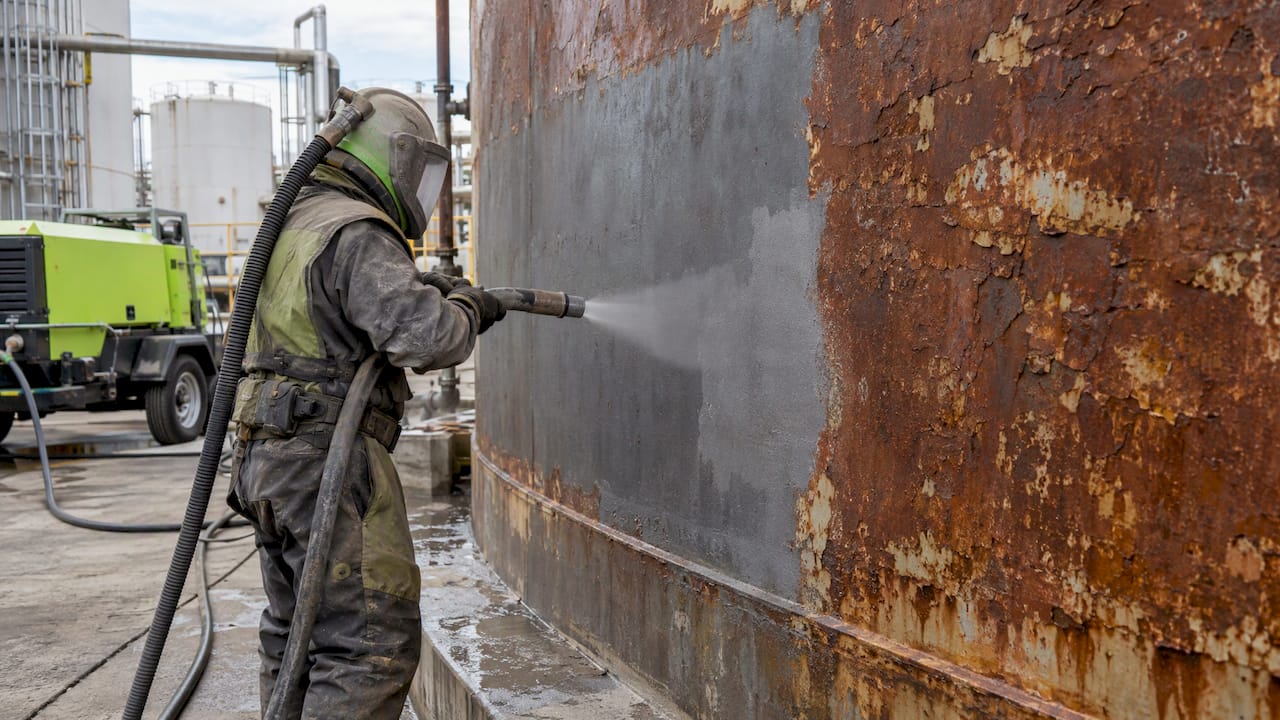
Stripper, scrubbing and grinding all get slow and uneven when the patio is large, the paint is layered or the surface is textured. That is the case for dustless blasting. Water carries the abrasive, so the dust stays low, and one pass strips paint from concrete, brick, wood and metal. Our self-contained rigs bring their own air and power, so we only need parking and access to the surface. You do not need to run a hose or outlet to the job.
Here is how the main approaches compare on a patio:
| Method | Best for | Risk |
|---|---|---|
| Scrub with washing soda or TSP | Fresh spills | Little effect on cured paint |
| Chemical stripper | Small areas, one or two layers | Repeat coats, hazardous residue |
| Pressure washing | Flaking or thin paint | Etching, lost paver joint sand |
| Grinding | Spots, floors being resurfaced | Dust, uneven surface |
| Dustless blasting | Whole patios, layered paint, textured surfaces | Needs a contractor and rig |
For the full comparison, see dustless blasting vs. sandblasting vs. pressure washing. If the patio is being redone afterward, our guide to restoring a concrete patio covers the steps and options.
What We Say From Experience
Most patio paint jobs go wrong the same way: someone escalates. Scrubbing fails, so they reach for a stronger stripper, then a grinder, then a pressure washer set too high. Each step removes some paint and some concrete.
Our approach is to match the method to the coating before touching the surface. Wet abrasive blasting removes paint, rust and coatings from concrete, wood, brick and metal while producing up to 92% less dust than traditional methods, and it lets us prepare a surface to a coating spec when something new is going on top.
We also keep the job simple for you. Our rigs are self-contained, so the site only needs parking and access. Estimates are free, and we schedule quickly.
USA
Get a Quote for Your Patio
Our paint removal service covers concrete, brick, wood, metal and asphalt across San Francisco and the Bay Area. Published pricing starts from $3 per sq ft for paint removal and dustless blasting. Surface preparation is $2 to $3 per sq ft. Free estimates and quick site visits are available. See all of our services.

Contractors, property managers and homeowners can send us the patio size, the paint type and photos for a straightforward quote.
FAQ
Is it better to sand or use paint remover on a concrete patio?
For small areas, a stripper is gentler because it releases paint without cutting the concrete. Sanding or grinding changes the surface and creates dust, so it needs a respirator and a vacuum. For a full patio, blasting is faster and more even.
Can I remove paint from pavers with a pressure washer?
Only flaking or thin paint, and only with test passes at a safe distance. A strong jet can strip the sand from joints and etch the stone. Bonded paint usually needs a stripper or blasting.
Does 70% isopropyl alcohol remove dried paint?
It can soften cured latex paint on a small spot if left for a few minutes before scraping. It is not practical for a whole patio.
What should I do with the wash water?
Capture it and keep it out of storm drains. Water containing paint or stripper goes to a household hazardous waste facility under your local rules.
Sources
- Remove Stains From Paint, UGA Extension
- Clean Paint From Concrete, Lowe’s
- How To Remove Stains From Paving Stones
- How to Remove Spray Paint From Concrete, The HouseMag
- How to Remove Paint from Concrete, Prosoco
- How To Remove Paint from Concrete, This Old House
- How to Remove Paint From Concrete, Build-Construct
- Klean Strip Concrete Stripper instructions
- HUD Lead Safe Housing Guidelines, Chapter 11
- HUD Lead Safe Housing Guidelines, Chapter 12
- EPA Steps to Lead Safe Renovation, Repair and Painting
- Process & Wash Water fact sheet, Think Blue
- Household Hazardous Waste Management Guide, Wisconsin DNR
- Pressure Wash Pavers Without Losing Joint Sand