Concrete Grinding in California: Costs, Rules and Prep
Concrete grinding uses diamond abrasives to strip coatings, knock down high spots and leave a slab clean and ready for a sealer, coating or polish. In California it also comes with dust-control rules, so the right contractor controls silica dust, matches the tooling to your slab and gets the profile your coating needs. Our grind-and-seal work starts at $2 per sq ft in San Francisco and the Bay Area, and surface preparation runs $2-3 per sq ft.
This guide is for contractors, property managers, facility owners and homeowners who are deciding whether to hire grinding work. It covers what grinding does, what moves the price, which California rules apply and what a good result looks like.
TL;DR
- Grinding removes thin coatings, levels minor high spots and creates the surface profile that sealers and coatings bond to. It is not meant for deep removal.
- Our published rates: concrete grinding and grind-and-seal from $2 per sq ft, surface preparation $2-3 per sq ft. Polishing is quoted per project.
- California requires water or local exhaust ventilation to control dust when powered tools grind concrete, plus silica training for workers.
- Most coating failures start with preparation, so the target is a specified profile and a dry, clean slab, not the roughest surface.
- Free estimates are available for Bay Area projects.
Table of Contents
- What concrete grinding does
- What concrete grinding costs in California
- Grind-and-seal: what the price covers
- How grinding is done: tooling and grit
- California silica rules that apply to grinding
- Preparing and checking the slab before coating
- Planning a grinding project as a contractor
- Our perspective
- Get a grinding quote in the Bay Area
- FAQ
- Sources
What concrete grinding does
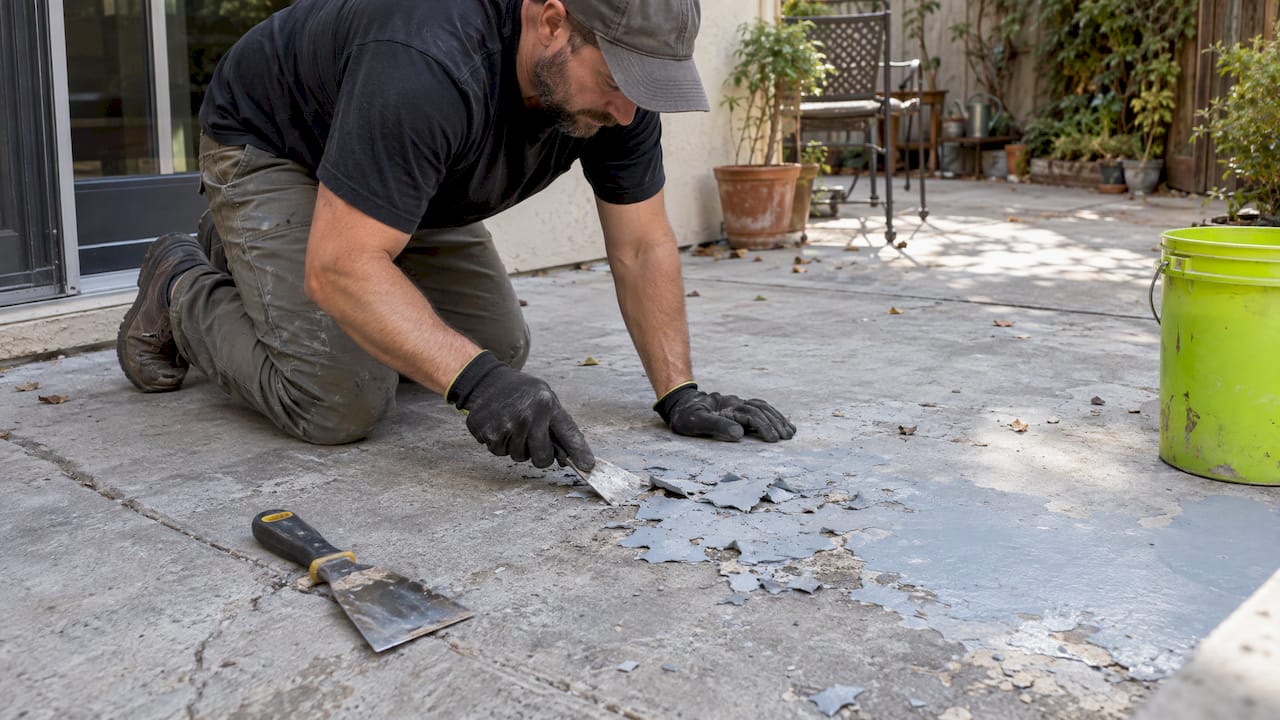
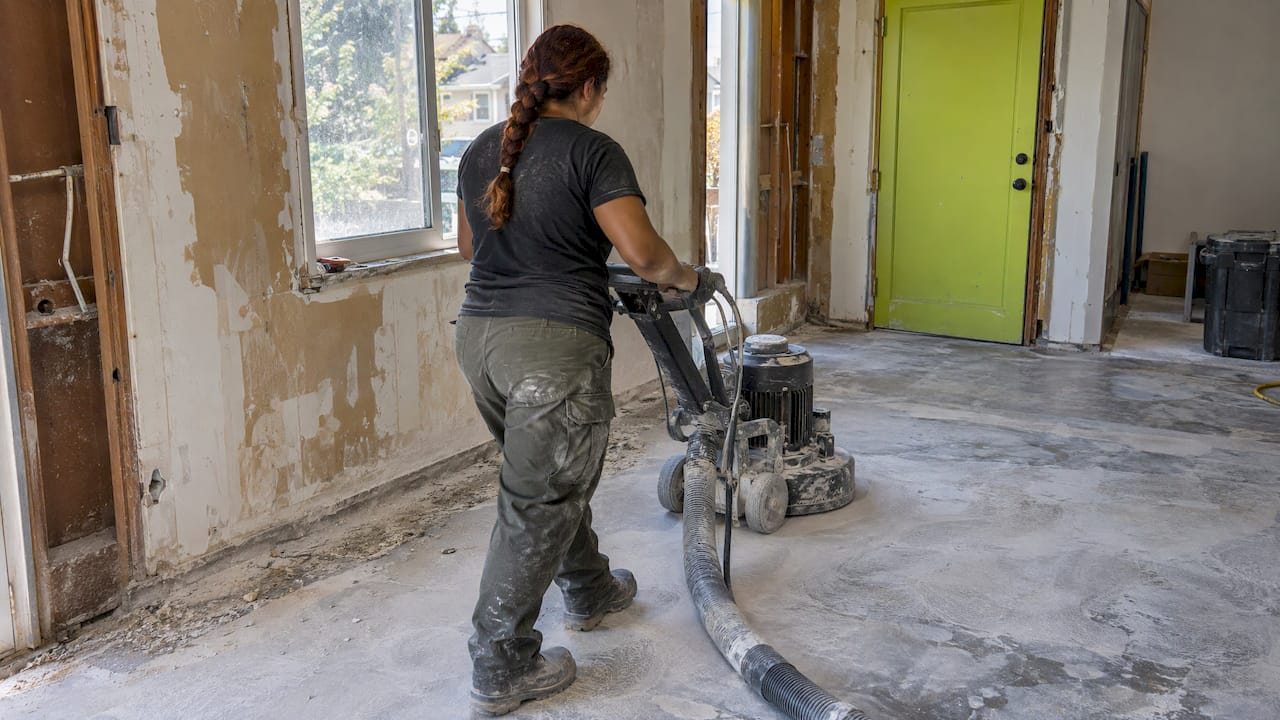
A concrete grinder spins diamond-impregnated segments across the slab. Depending on the tooling, it can remove paint, sealer, adhesive and thin membranes, flatten small ridges and joints, or refine the surface to a smooth finish for polishing.

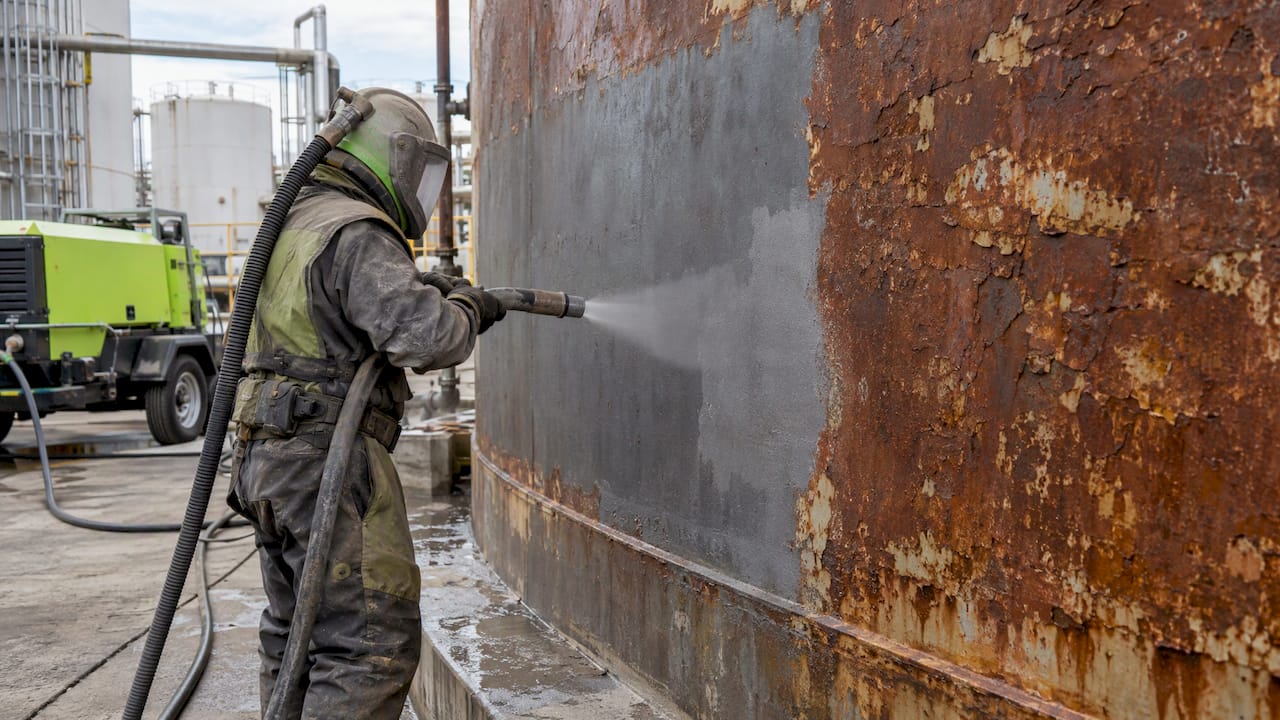
The limits matter when you scope a job. FlooringTech explains that diamond grinders leave a CSP 2 finish (CSP is the concrete surface profile scale from 1, nearly smooth, to 10, very rough) and remove high spots or uneven joints to roughly 1-3 mm. They are good at sealers, paints and adhesives. Shot blasters reach CSP 3-7, and scabblers, which pound the surface, take up to 6 mm per pass at CSP 6-9.
In practice:
- Thin coatings, paint, sealer, glue residue: grinding is the right tool.
- Light leveling before an overlay or flooring: grinding handles it.
- Heavy coatings, deep contamination or major surface damage: the slab may need a more aggressive method first, and grinding finishes the job.
- A polished look: the same machines step through finer grits to refine the surface. See our concrete polishing service.
What concrete grinding costs in California
Prices vary by region, access and slab condition, so we publish ours instead of quoting national averages. For San Francisco and the Bay Area, our rates are:
| Service | Published price | Billing |
|---|---|---|
| Concrete grinding and grind-and-seal | from $2 | per sq ft, one-off |
| Surface preparation | $2-3 | per sq ft, one-off |
| Concrete polishing | no published price | quoted per project |
A 1,000 sq ft garage or shop floor at those rates gives you a starting point to budget against. Treat it as a planning figure: the real quote follows a look at the slab.
What moves the price
- Existing coating. Thin paint comes off quickly. Thick epoxy, mastic or rubber backing takes more passes and more abrasive.
- Slab condition. Cracks, spalls, oil-soaked areas and uneven joints add time.
- Target profile. A light scuff for a sealer is a different job from a profile for a thick-build coating.
- Size and access. Large open floors are efficient. Tight rooms, stairs and edges along walls take hand work.
- Finish. Grind-and-seal, polishing and coating prep all end at different points.
Because our rigs are mobile and self-contained, a job needs parking and access to the surface rather than on-site utilities. That keeps scheduling simple for occupied buildings and active job sites.
Grind-and-seal: what the price covers
Grind-and-seal means grinding the slab to a clean, uniform surface and then applying a sealer. It is a common choice for garages, warehouses, back-of-house areas and retail floors where you want a durable, clean surface without the cost of full polishing.
Coating manufacturers specify the prep. Westcoat’s grind-and-seal specification calls for concrete that is clean, dry and free of anything that impedes adhesion, mechanically diamond ground to a clean, uniform profile, then swept and vacuumed before installation. That is the standard a quote should be built around: grinding, cleanup and the sealer, written down line by line.
If you are deciding between systems, our comparison of polished concrete, grind-and-seal and epoxy walks through garages, warehouses and retail. For the sealing step itself, see our guide to concrete floor sealing.
How grinding is done: tooling and grit
The machine matters less than the match between tooling and concrete.
Bond hardness. FlooringTech’s tooling lesson gives the rule of thumb: soft-bond diamond segments on hard concrete, hard-bond segments on soft concrete. Hard concrete makes fine, powdery dust that does not wear the bond, so the diamonds glaze over and stop cutting. Soft concrete makes coarse dust that wears segments quickly. The same lesson notes that surface condition, such as a burnished or rain-damaged top, often matters more than compressive strength.
Concrete hardness. Husqvarna’s grinding guides classify concrete by its Mohs scratch hardness to choose a tool series, from soft to extremely hard, and advise checking tool wear early in the job.
Grit sequence. Coarse grits remove material and fine grits refine it. A typical sequence starts coarse to open the surface or remove a coating, moves to medium grits for a coating-ready profile, and goes finer only if the floor is being polished.

This is why a quote that says only “grind the floor” is incomplete. A good scope names the starting condition, the target profile and the finish.
California silica rules that apply to grinding
Grinding concrete releases respirable crystalline silica, a fine dust that causes silicosis and other lung disease. Cal/OSHA’s construction pocket guide names silicosis as a disease caused by inhaling silica dust from cutting, drilling, grinding or sandblasting concrete.
The key California requirements:
- Dust reduction. Title 8, Section 1530.1 requires a dust reduction system using water or local exhaust ventilation whenever powered tools cut, grind, core or drill concrete or masonry. There are exceptions, such as reliable air-sampling data showing exposure stays under the permissible limit.
- Training. The same section requires training on silica hazards, control methods and dust-system maintenance before work is assigned and at least annually.
- Exposure control. Cal/OSHA’s silica standards page points to section 1532.3 for construction work: task controls, respiratory protection, housekeeping, a written exposure control plan, medical surveillance and hazard communication.
- Federal baseline. Federal OSHA’s construction silica standard sets a permissible exposure limit of 50 µg/m³ as an 8-hour average, with an action level of 25 µg/m³. ABC SoCal’s 2026 summary confirms these figures for California contractors.
For property managers and facility owners, this is a practical point: dust control, respirators and written plans belong in the scope of whoever you hire, especially in occupied buildings. Cal/OSHA’s silica pages are the place to confirm current requirements for your job.
Preparing and checking the slab before coating
Most floor coating problems trace back to preparation. Our guide to epoxy surface prep, CSP profiles and moisture covers this in depth. The short version follows.
- Assess the slab first. The American Concrete Institute’s guide 515.3R-20 says the preparation method depends on the concrete’s condition and the chosen coating system, and recommends assessing moisture, contaminants, pH, surface voids, structural integrity and environmental conditions.
- Pick a target profile. Your coating’s data sheet names the profile it needs. More texture is not better: the goal is the specified profile.
- Grind. Remove the old coating or contaminants and open the surface to that profile.
- Clean. Vacuum and sweep so dust does not end up under the new coating. Westcoat’s specification requires this step.
- Check moisture and cleanliness. The slab should be dry and free of residue before anything goes down.
- Repair. Fill cracks and spalls, then coat or seal within the product’s window.
If the floor has stains, deal with them before sealing. Our concrete stain removal guide covers what works for each stain type.
Planning a grinding project as a contractor
If you are a general or flooring contractor, subcontracting the prep lets your crew arrive when the slab is ready. A few practical points:
- Give your grinding sub the coating data sheet, so the profile is written into the scope.
- Confirm who handles dust control and cleanup, and when the floor will be accessible for the next trade.
- Ask for pricing per sq ft with edges and repairs listed separately.
Contractors who are growing and weighing equipment or crew expenses can look at funding for concrete contractors in California as part of planning bigger projects.
Our perspective
We see grinding as the step that decides how long the next layer lasts. A sealer or coating can only be as good as the slab under it, so we scope the job around what the surface needs to become: clean, dry and at the profile the product calls for.
That is why we publish our rates and offer free estimates. Grinding and grind-and-seal start at $2 per sq ft, and surface preparation to a coating spec runs $2-3 per sq ft. Our mobile, self-contained rigs need only parking and access to the surface, which keeps scheduling quick and avoids relying on a building’s utilities.
For Bay Area contractors, property managers and homeowners, we think the best use of a grinding budget is a clear scope: what comes off, what profile goes on, and what finish follows. Grind-and-seal suits floors that need to look clean and hold up. Polishing suits floors where appearance matters. Coating prep suits floors headed for epoxy or other systems.
USA
Get a grinding quote in the Bay Area
We grind, grind-and-seal and prepare concrete surfaces for coatings across San Francisco and the Bay Area, for contractors, property managers, industrial facilities and homeowners. Tell us the size of the floor, what is on it now and what is going on next, and we will give you a free estimate. See concrete grinding and grind-and-seal for the service details, or visit our services page for the full list.

FAQ
What does it cost to grind concrete in California?
Our published rate for concrete grinding and grind-and-seal in the Bay Area is from $2 per sq ft, and surface preparation is $2-3 per sq ft. The final number depends on the existing coating, slab condition, access and target finish. We give free estimates.
Is it safe to grind concrete?
It is safe when dust is controlled. California requires water or local exhaust ventilation when powered tools grind concrete, along with silica training for workers, because the dust can cause silicosis. Hiring a contractor that follows Cal/OSHA’s silica rules keeps the work within the law.
What is the difference between grinding and polishing?
Grinding removes coatings and opens or levels the surface, and it is often the first step before sealing or coating. Polishing continues through finer grits to refine the concrete to a smooth, reflective finish. Both use diamond abrasives.
Do I need grinding before epoxy or sealer?
Usually yes. Coatings need a clean, dry surface with the profile the manufacturer specifies, and grinding creates it. Skipping or rushing this step is a common reason coatings peel.
Sources
- Cal/OSHA Pocket Guide for the Construction Industry, 2022
- California Code of Regulations, Title 8, Section 1530.1
- Cal/OSHA Respirable Crystalline Silica Standards and Resources
- ABC SoCal: Cal/OSHA Regulations 2026
- FlooringTech: Machines used to prepare concrete
- FlooringTech: Diamond tooling
- Husqvarna US: Grinding guides for other floor types
- Westcoat grind-and-seal specification
- ACI 515.3R-20 preview
- Sizzle Capital Group: Business funding for concrete contractors in California