Steel Rust Removal: Methods by Rust Depth and When to Hire a Pro
Yes, you can remove rust from steel. The right method depends on how deep the rust goes. Light surface rust comes off with a wire brush, an abrasive pad or a mild acid. Heavy, flaking rust calls for power tools or abrasive blasting. If the steel carries load, a licensed structural engineer should check how much sound metal is left before you clean it or replace it, according to a 2026 methods guide.
This guide walks through each option from kitchen fixes to blasting. It covers what to check first, what to avoid on painted steel, and how to keep the rust from coming back.
TL;DR
- Judge the rust first: a thin orange film, pitting and thick scale each need a different method.
- Household acids (vinegar, lemon, baking soda paste) suit small items and light rust. Wire brushes, grinders and flap discs suit larger pieces and heavier rust.
- Gates, railings, trailers, structural steel and anything coated in old paint are usually faster and cleaner to blast. We charge from $3 per square foot for rust and metal blasting.
- Steel starts to oxidize again as soon as it is bare. Prime or seal it right away.
- Old paint on steel in older buildings may contain lead. Stop and identify the hazard before you grind or blast.
Table of Contents
- Start by reading the rust
- Household fixes for light rust on small steel items
- Hand and power tools for moderate to heavy rust
- Chemical rust removers: what they do and how to stay safe
- When abrasive blasting is the right call
- Painted steel, old railings and lead
- Careful cleaning for steel you want to preserve
- Protect the steel after the rust is gone
- What rust removal costs with us
- Get a free estimate for your steel
- FAQ
- Sources
Start by reading the rust
Before you pick a method, look at what the rust is sitting on. A thin orange film on a bracket is a different job from thick scale on an old machine part. Mike Fowler of Kano Laboratories suggests asking four questions up front: has the part been structurally weakened, is it so pitted that coatings are impractical, what would a replacement cost and how much time do you have.
We add three checks of our own:
- Is there paint or coating over it? Rust under paint behaves differently from bare rust, and old coatings may be hazardous to disturb.
- How big is the area? Hand methods are fine for a hinge. They are punishing on a 40-foot fence.
- What goes on the steel next? Paint, powder coat and industrial coatings each want a specific prepared surface.
The last question matters most. An abrasives handbook makes the point that rust, mill scale, weld oxide and flash rust differ in composition and adhesion. Method selection should start from the actual layer and what comes after, not from the most aggressive tool you own.
Rust depth at a glance
| What you see | Likely condition | Typical approach |
|---|---|---|
| Orange haze or small spots | Light surface rust | Wire brush, abrasive pad, mild acid |
| Rough, bubbling or flaking surface | Moderate to heavy rust | Power tools, chemical remover, blasting |
| Layered scale, pits, holes | Heavy corrosion, possible section loss | Blasting, then inspection; engineer review if structural |
| Rust under peeling paint | Coating failure | Remove coating and rust together, test paint for lead first |
Household fixes for light rust on small steel items
For a tool, a hinge or a pan, household products can be enough. They work best on light rust and small parts.
- White vinegar. Acetic acid dissolves rust. Architectural Digest quotes a restoration specialist who suggests soaking small items in a jar or pouring vinegar on larger objects, giving it time, then brushing. Rinse thoroughly afterward, because vinegar left on metal can damage the surface.
- Baking soda paste. Mix water into baking soda to make a thick paste, spread it on, let it sit about an hour, then scrub, rinse and dry. It suits light stains and thin metal.
- Lemon juice and salt. CRC suggests leaving it for a few hours, then scrubbing. Do not leave it too long, since it can attack the metal underneath.
- Potato and baking soda or salt. The oxalic acid in the potato does the work. Scrub with the cut face.
- Cola. It contains phosphoric acid, but it is sticky and awkward to clean up.
After any soak, rinse and dry the steel fully. For food-contact items such as pans, wash and rinse thoroughly and coat exposed metal with a thin layer of oil, as CRC advises.
These methods are slow and they stop making sense once the piece is bigger than a bucket or the rust is thick. Pushing a vinegar rag across a railing for a weekend is rarely the best use of your time.
Hand and power tools for moderate to heavy rust
Hand tools remove loose rust. The SSPC-SP2 hand tool cleaning standard says plainly that it removes loose mill scale, loose rust and loose paint, but it is not intended to remove adherent rust. Power tool cleaning goes further, but it has limits too. SSPC-SP3 notes that stratified rust, pack rust and scale can cling so tightly that a power wire brush will not lift it. That rust is a poor base for paint even though it feels solid.
How to use power tools without wrecking the steel
- Remove oil, grease and salts first. SSPC-SP3 calls for this before power tool cleaning.
- Start with the coarsest abrasive that does the job, then step to finer grit to smooth the swirls. Flap discs, fiber discs and sanders suit large flat areas. Wire wheels reach seams and corners.
- Do not grind more metal than you need to. Aggressive tools remove base metal along with the rust.
- Wear eye protection and a face shield, since wire wheels throw bristles. Add a respirator, gloves and hearing protection, per this tool guide.
- Keep stainless steel away from discs and brushes that have touched carbon steel.
- Before painting, remove dust by brushing, blowing off with clean dry air or vacuuming.
Power tools make sense for a gate or a trailer frame when you have a weekend and the right gear. They get slow and hard on bodies when the job is hundreds of square feet, or when the steel has tight geometry, rivets or heavy paint build-up.
Chemical rust removers: what they do and how to stay safe
Commercial removers are usually acid-based. Phosphoric acid reacts with rust and converts it to water-soluble compounds that wash away, leaving steel ready for coating. One widely sold gel dissolver needs 15 to 30 minutes on iron and steel. Its data sheet says to rinse the surface and let it dry for one hour before painting. It also warns that the product is a severe eye and skin irritant.
Safety is the whole story with chemicals:
- Stronger products with phosphoric or hydrochloric acid give off intense fumes and need rubber gloves, goggles and a respirator.
- Hydrochloric (muriatic) acid is the one to leave alone. A comparison test rated it 1.5 out of 10 because of burns, dangerous gases and damage to paint, rubber and concrete. Citric, phosphoric and acetic acids are far safer.
- Many chemical removers count as household hazardous waste. Take them to a local drop-off program rather than pouring them out.
- Residue matters. The National Park Service warns that cleaning compounds left on iron can cause later paint failure, and that field use of acidic cleaners on buildings can seep into joints and corrode hidden surfaces, as summarized here.
Chemicals suit small removable parts and spot treatment. They are a poor fit for large installed steel, vertical railings in a courtyard or anything near plants, drains or masonry.
When abrasive blasting is the right call
Abrasive blasting is the dominant surface preparation method in protective and marine coating work because it cleans the substrate and creates the surface profile that coatings need to bond. Cleanliness and profile targets come from AMPP/SSPC/NACE and ISO 8501-1 standards.
Blasting earns its place when:
- the area is large, such as fences, stairs, tanks, trailers, structural members or equipment frames;
- the rust is heavy, pitted or tightly adherent;
- old paint has to come off along with the rust;
- the next step is a coating, powder coat or specification that demands a defined surface standard.
The cleanliness grades are specific. SSPC-SP5 (white metal) requires the surface to be free of all visible rust, coating, oxides and corrosion products. SSPC-SP10 (near-white) allows no more than 5% staining in each 3 by 3 inch unit area, meaning at least 95% must be clean. If a spec calls out one of these grades, hand tools and acids will not get you there.
Why we blast wet
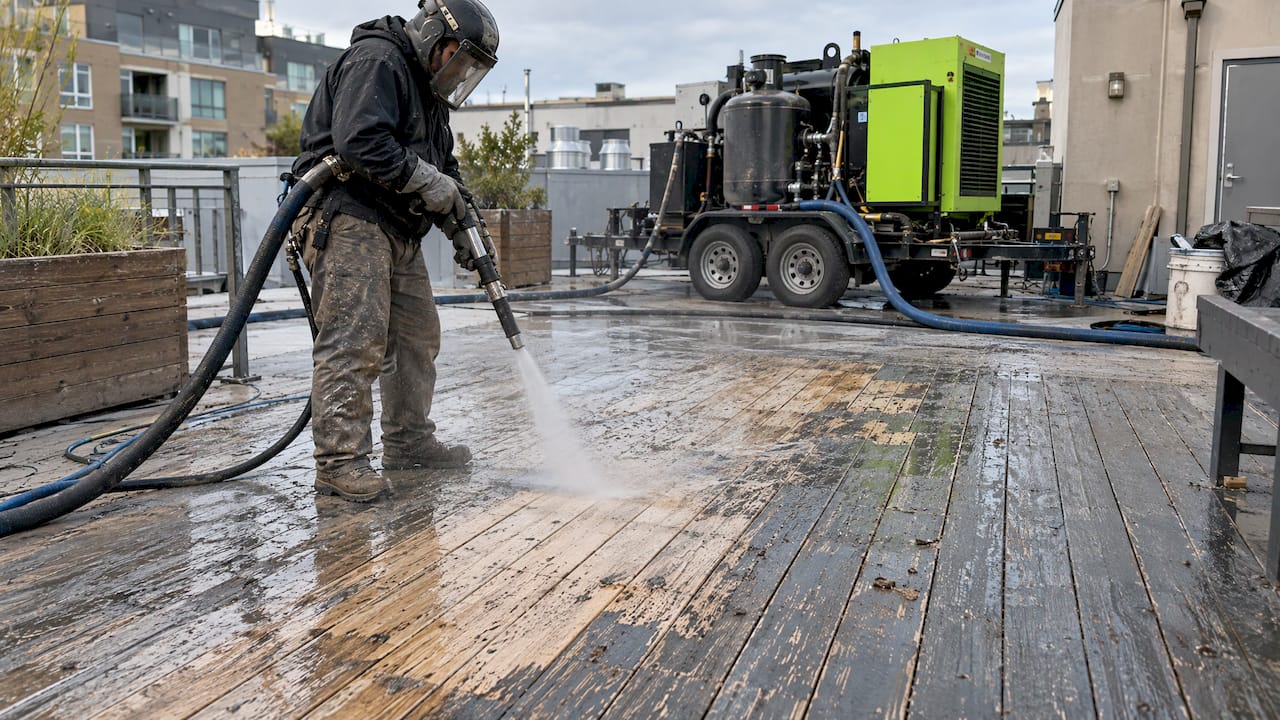
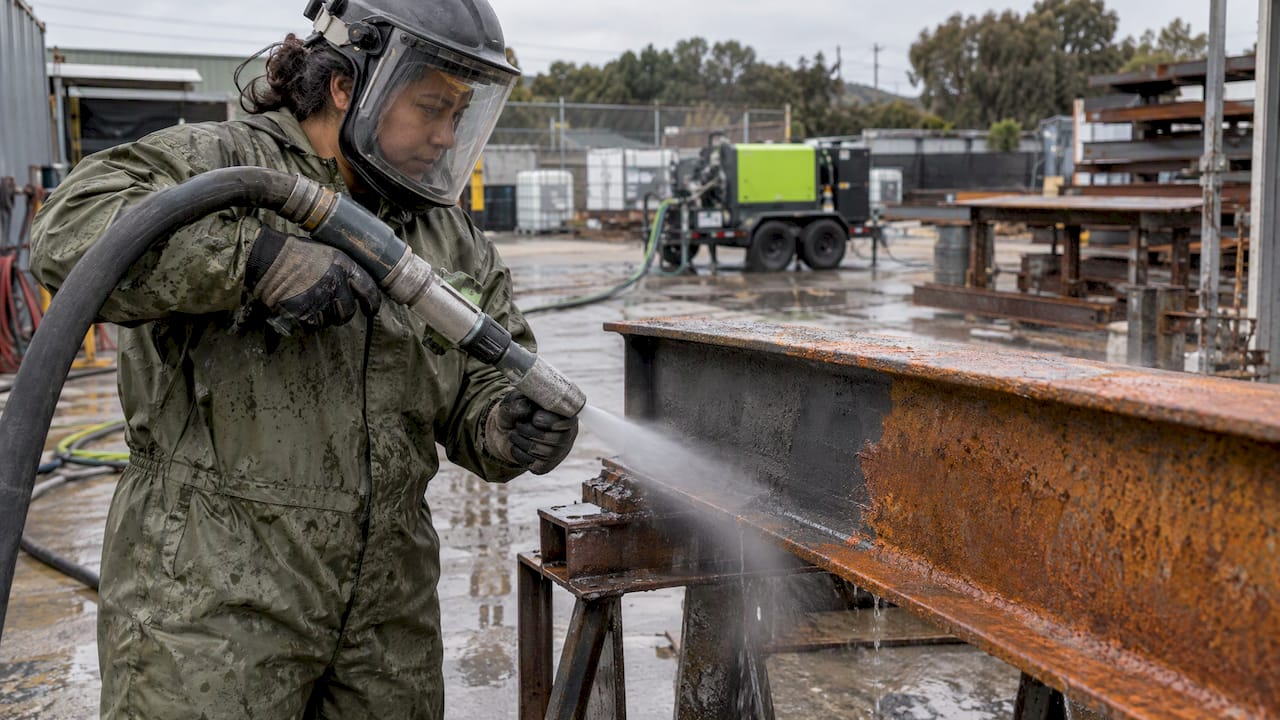
Traditional dry sandblasting throws a lot of dust. Our approach is dustless (wet abrasive) blasting, which produces up to 92% less dust than traditional dry methods. Our rigs are self-contained: they carry their own air and power, so on most jobs we need only parking and access to the steel. You do not need to supply compressors or outlets. For a side-by-side look at the methods, see our comparison of dustless blasting, sandblasting and pressure washing.
There is a timing point on wet work. Bare steel begins oxidizing as soon as it is exposed to air, so the best results come from sealing it right away. That is why we ask what coating is going on and when, and we plan the job so prime or coat follows the blasting without a long gap.
Painted steel, old railings and lead
When the rust sits under paint, the method has to deal with the coating too.
- Rust dissolver gels can strip paint. One common naval jelly product says it must not be used on painted surfaces because it removes paint. If it touches paint, wipe it off at once. Bare metal needs a clear coating or primer and paint within 24 hours.
- Rust under paint means paint loss. One manufacturer notes that a rust-removing gel is safe on most coatings, but some paint will be lost where rust formed beneath it. Old red or orange paints that use iron oxide pigment may lose color. Test a small area first.
- Chemical stripping does not remove structural rust. It can save time on a large panel with several paint layers, while media blasting handles widespread corrosion and pits a flat disc cannot reach, as this paint and rust removal guide explains.
Lead paint comes first
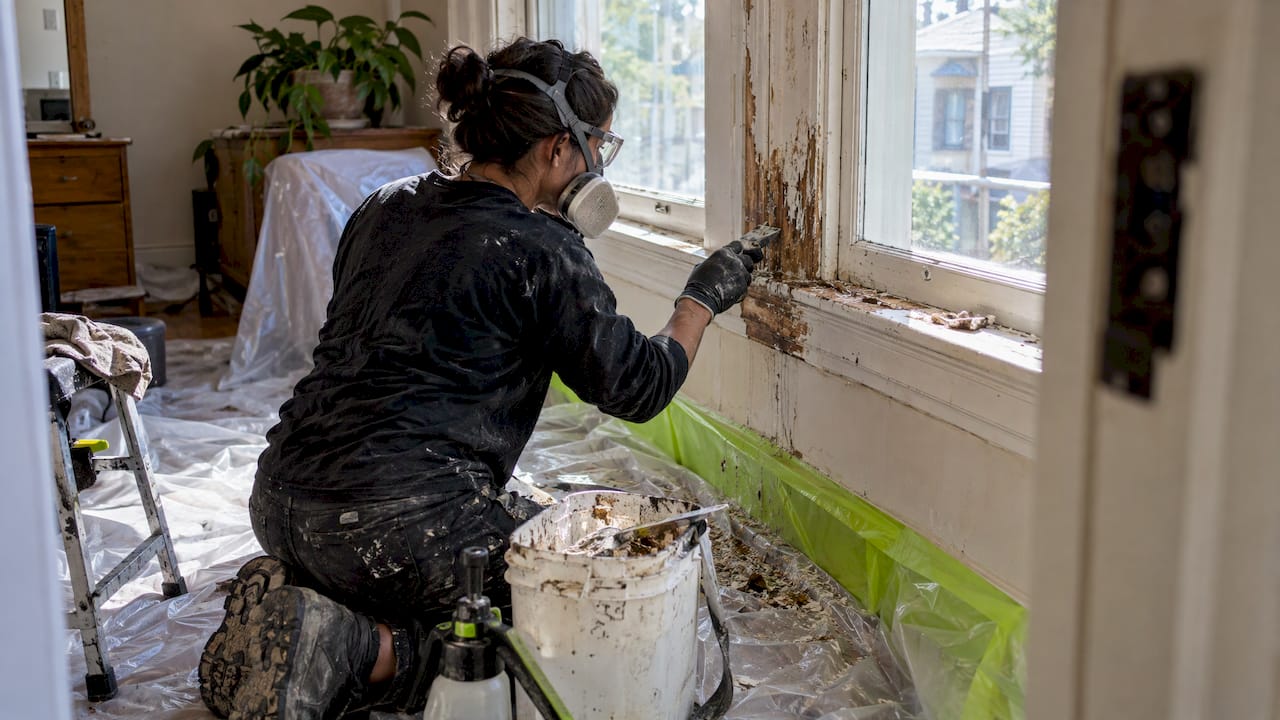
Old railings, columns and structural steel in older buildings may carry lead paint. Scraping, sanding, grinding or blasting it creates hazardous dust. A generic paper dust mask is not a complete answer for unknown paint dust, and work should stop if the coating may contain lead or chromates and the hazard has not been identified, according to the same guide. If you manage a pre-1978 building or are unsure what is on the steel, have the paint tested before anyone starts. Our lead paint removal and containment service exists for exactly this situation.
Careful cleaning for steel you want to preserve
Not all rusty steel should be blasted. The Canadian Conservation Institute says traditional industrial techniques are too aggressive for artifacts, especially machined areas that will not be painted. It notes that sand blasting can pit the surface and powered wire brushes leave deep scratches. Fine steel wool with light oil, glass bristle brushes and rust erasers are the conservation options.

If you own a machined antique or a collectible tool, use those gentler methods. For working steel that will be coated, such as gates, frames, equipment and structure, controlled blasting is the practical route.
Protect the steel after the rust is gone
Removing rust is half the job. The other half is not letting it return.
- Clean first. Wipe off dust and residue before priming.
- Seal quickly. Harbor Freight’s guide says metal starts oxidizing as soon as it meets air, so seal it right away. Use light oil or a rust-prevention spray for tools, wax for hand tools, and primer and paint for gates, furniture and larger surfaces.
- Pick the right primer. Use regular primer on a completely smooth surface, sandable primer to fill scratches, and filler primer for pockmarks. Rust converter stops rust and primes in one step, but it leaves a rough finish that shows after painting.
- Check the spec. For coating work, the governing specification can define the cleanliness grade, dust condition, soluble contaminants, surface profile and the maximum time before coating. Passing one test does not prove the others.
- Store dry. Keep small items in dry, ventilated spaces, and use silica gel packs or a dehumidifier in humid garages.
What we have learned
Most steel rust jobs we see are not really rust jobs. They are coating jobs. The rust is the symptom, and the real question is what has to be on the steel in a year. That is why we start with the finish you want, then work backward to the prep.
We built our service around mobile, self-contained dustless blasting for that reason. We blast wet, which our approach is designed to cut dust by up to 92% compared with traditional dry sandblasting. We bring our own air and power, so a gate in a back lot or a railing at a leasing office does not need a utility hookup. For contractors and property managers, that means fewer scheduling headaches and cleaner job sites.
Our advice: if the rust is heavy, the steel is installed, or a coating spec is waiting on the other end, get a quote before you spend a weekend on a grinder. We give free estimates and can usually walk the site quickly.
USA
What rust removal costs with us
We quote per square foot or per project. These are the published starting prices for steel-related work:
| Service | Published price |
|---|---|
| Rust & Metal Blasting | from $3 per sq ft |
| Dustless Blasting | from $3 per sq ft |
| Surface Preparation | $2 to $3 per sq ft |
| Prep for Powder Coating | No published price, free estimate |
| Lead Paint Removal | No published price, free estimate |
Final pricing depends on rust depth, the amount of coating, access and the finish required. Our dustless blasting cost guide explains what moves the number, and our rust removal and steel blasting page describes the service. If the steel is headed to a powder coater, see our blasting prep for powder coating. For coating specs, our surface preparation page covers the details.
Get a free estimate for your steel
We serve contractors, property managers, homeowners and industrial facilities across San Francisco and the Bay Area. Send us a photo, the approximate square footage and what coating is going on next. We will tell you what the steel needs and give you a free estimate with quick scheduling.

See all of our blasting and surface prep services, or start at All Bay Area Dustless Blasting to request a quote.
FAQ
Can you remove rust from steel completely?
Yes, surface rust can be removed down to bare metal with brushing, power tools, chemicals or blasting. Pitting stays where the rust has eaten into the metal, and heavy corrosion on load-bearing steel needs a structural engineer to judge how much sound metal remains.
What household item works best on steel rust?
White vinegar is the most commonly recommended, and baking soda paste works on light stains and thin metal. Both suit small items. Rinse and dry the steel fully afterward and oil or coat it, because vinegar left on the surface can damage it.
Is a chemical rust remover or blasting better?
Chemical removers fit small, removable parts and spot work, and they need gloves, goggles, ventilation and proper disposal. Blasting fits large areas, heavy rust, coating removal and jobs that need a defined surface profile for a coating.
How soon should I coat steel after removing rust?
As soon as possible. Bare steel begins oxidizing on contact with air, so prime or seal it right away. If the removal product has its own instructions, follow its drying and recoat times, such as the one-hour dry time on one common dissolver.
Sources
- Methods for light to heavy rust
- Five things to consider when using rust removers
- MKTech Abrasives Handbook: rust, oxide and scale removal
- Architectural Digest: removing rust from metal surfaces
- Farmers Almanac: natural rust remedies
- CRC: rust remover household items
- SSPC-SP2 hand tool cleaning
- SSPC-SP3 power tool cleaning (1982)
- SSPC-SP3 power tool cleaning (2017)
- Rust dissolver technical data sheet
- Family Handyman: how to remove rust
- Hot Rod rust remover comparison test
- Empire Abrasives: natural DIY to power tools
- PCI Magazine: surface preparation showdown
- SSPC surface preparation standards summary
- Naval jelly technical data sheet
- Rust removal gel on painted surfaces
- Removing paint and rust before repainting
- Canadian Conservation Institute: mechanical removal of rust
- Harbor Freight: how to remove rust from metal