Industrial Paint Removal: Methods, Costs and How to Choose

Industrial paint removal means taking paint, coatings, rust or graffiti off concrete, steel, brick or wood so the surface can be recoated, restored or inspected. The right method depends on the coating, the surface underneath and the place you are working. For mobile jobs on site in the Bay Area, we use dustless (wet abrasive) blasting, with published prices starting at $3 per sq ft for paint removal.
This guide explains the main stripping methods, how to match one to your job, what the rules say about lead and waste, and how to get a surface ready for its next coating.
TL;DR
- Industrial coating removal falls into three families: chemical, mechanical or abrasive, and thermal. Combinations are common, and no single method fits every job.
- Choose by coating type, surface material, job location, access, utilities and what happens after removal.
- Our paint removal starts at $3 per sq ft, and grinding at $2 per sq ft. Surface preparation runs $2-3 per sq ft.
- Lead paint, hazardous blast waste and containment have federal and state rules. Plan for them before the work starts.
- Removal is only half the job. The surface needs to be clean and have the right profile for the next coating.
Table of Contents
- What industrial paint removal covers
- The three families of removal methods
- How to choose a method
- Removing paint without damaging what is underneath
- Lead paint, containment and waste
- What affects the cost and the schedule
- Preparing the surface for the next coating
- Our perspective
- Get an estimate for your coating removal job
- FAQ
- Sources
What industrial paint removal covers
The term spans a wide range of work. A property manager may need peeling coatings taken off a steel stair tower. A contractor may need old epoxy off a warehouse slab before a new system goes down. A facility may need paint taken off equipment so it can be inspected or reclaimed.
The U.S. EPA notes that coating removal is used across industries including automobiles, aircraft, appliances, defense, shipbuilding and wood products, commonly for rework, maintenance, repair and refinishing. In buildings, the drivers are similar: failing coatings, a change of use, a new coating spec, or graffiti and markings that have to go.
Specialists are often brought in when a renovation is phased inside an occupied facility, because the removal has to fit the schedule and keep disruption low.
The three families of removal methods
Most sources group stripping the same way. Products Finishing’s industrial overview sorts it into chemical, pyrolytic (heat) and mechanical categories. Here is how they differ in practice.
Chemical stripping
Chemical strippers dissolve or soften the coating. According to the EPA’s guide to cleaner coating-removal technologies, solvents can swell coatings, and acids can hydrolyze epoxy resins. Strippers are applied, left to dwell, then scraped or washed off.
Two practical points:
- Dwell times can be long. One manufacturer data sheet for a commercial stripper lists 1 to 24 hours, plus compatibility testing, substrate protection, thorough rinsing and residue disposal under federal, state and local rules.
- Tough coatings may need repeat applications. A Sika product sheet says two-component epoxies and masonry waterproofing paints may need several passes.
Methylene chloride strippers are restricted. Under 40 CFR Part 751, manufacturing, processing and distribution of methylene chloride for consumer paint and coating removal has been prohibited since November 22, 2019, and covered non-consumer uses carry workplace controls.
Mechanical and abrasive removal
Physical methods wear or crack the coating off. The EPA describes the mechanisms as abrasive wear and impact-induced cracking, among others. This family includes hand and power tools, grinding, water jetting, dry abrasive blasting and wet abrasive blasting. The Whole Building Design Guide lists all of these as recognized surface-cleaning and removal methods.
The EPA also points to plastic media, wheat starch, sodium bicarbonate, carbon dioxide pellets and water blasting as abrasive or cold alternatives, and recommends using abrasive techniques with dust controls.
That last point is where wet abrasive blasting fits. Water in the stream keeps dust down. Our system produces up to 92% less dust than traditional dry sandblasting, which is our own measure against dry methods. For what each method removes and where, see our comparison of dustless blasting, sandblasting and pressure washing.
Abrasive blasting in general removes coatings fast from many substrates. Products Finishing notes that it needs enclosure, dust collection and media recovery as part of the process, so the setup matters as much as the nozzle.
Thermal and cryogenic removal
Heat oxidizes, pyrolyzes or vaporizes coatings. Cold does the opposite: Products Finishing reports that cryogenic stripping uses liquid nitrogen at about -200°F to -300°F to crack and delaminate the coating, followed by mechanical removal. Part size limits it. These methods suit shop work on parts and equipment more than building surfaces.
How to choose a method
The EPA’s central point is that method choice is a tradeoff among coating chemistry, substrate protection, pollution prevention and operating limits, not a universal ranking. Its solvent-reduction guide lists the questions to ask: coating type and condition, substrate type and condition, shop versus field, item size, utilities, subsequent processing, and waste handling.
Here is that checklist turned into a working table for typical facility jobs.
| Your situation | What to weigh | Method that tends to fit |
|---|---|---|
| Steel structure, rust under peeling paint | Rust has to come off with the coating | Abrasive or wet abrasive blasting |
| Concrete floor with old epoxy or paint | Surface profile for the next coating | Grinding or wet blasting |
| Brick or masonry | Protecting soft surfaces and mortar | Controlled wet blasting, case by case |
| Wood siding, beams, fences | Avoiding gouging | Lower-pressure wet blasting |
| Small disassembled parts | Part size, shop setting | Immersion stripping, cryogenic, media methods |
| Occupied building, no utilities nearby | Dust, access, power and air | Self-contained mobile equipment |
The WBDG adds that selection should consider contaminant type, amount and adhesion, service environment, access, and the coating system with its required service life.
Removing paint without damaging what is underneath
Every method has a way of hurting the substrate if it is mismatched. Abrasives can distort or abrade a surface, chemicals can stain or soak porous material, and heat can warp thin metal. The fix is matching pressure, media and technique to the material, then confirming on a small area before the full run.
Our approach by surface:
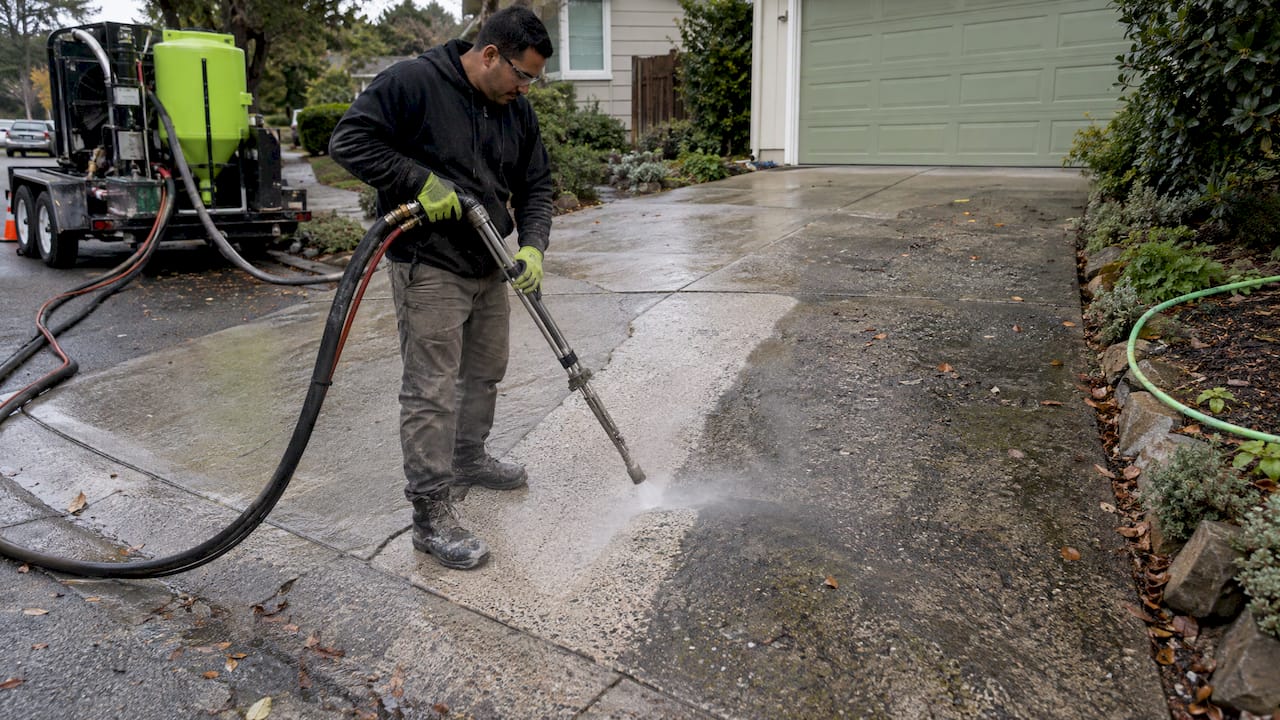
- Concrete: wet blasting or grinding takes coatings off and leaves texture for the next system. See our concrete grinding and grind-and-seal service.
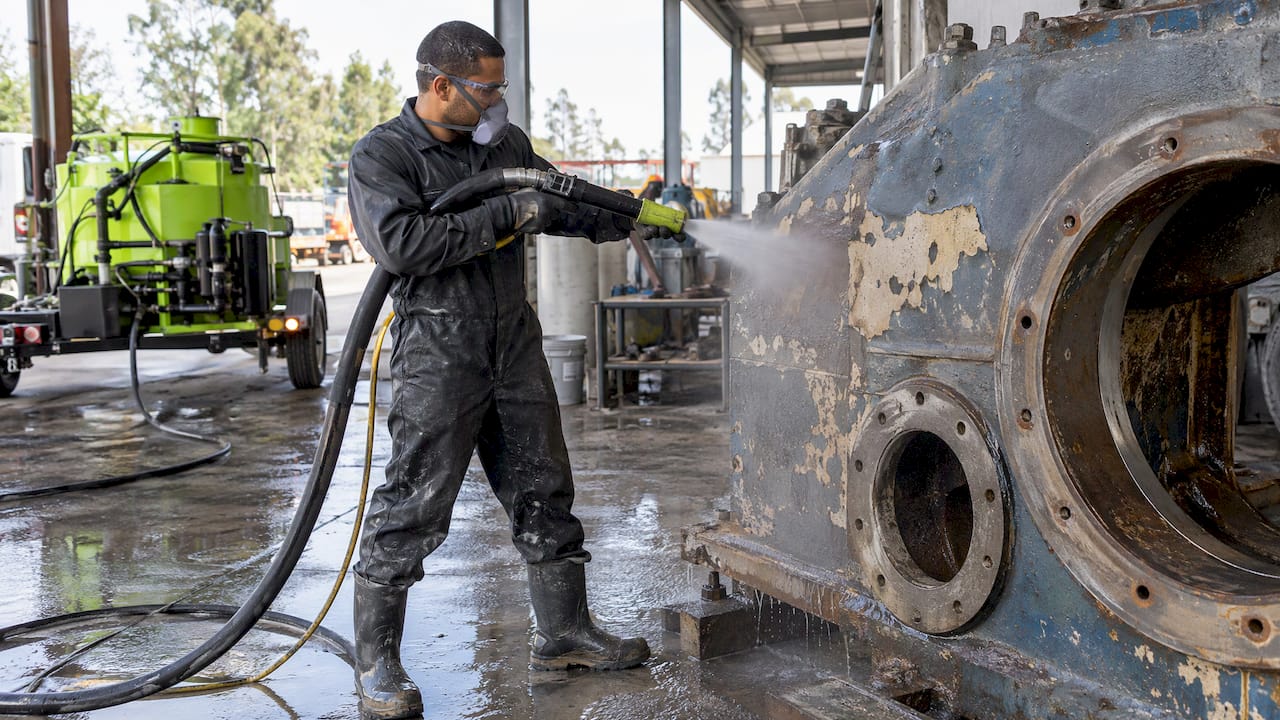
- Steel and metal: blasting removes paint and rust together. Our rust removal and steel blasting page covers it.
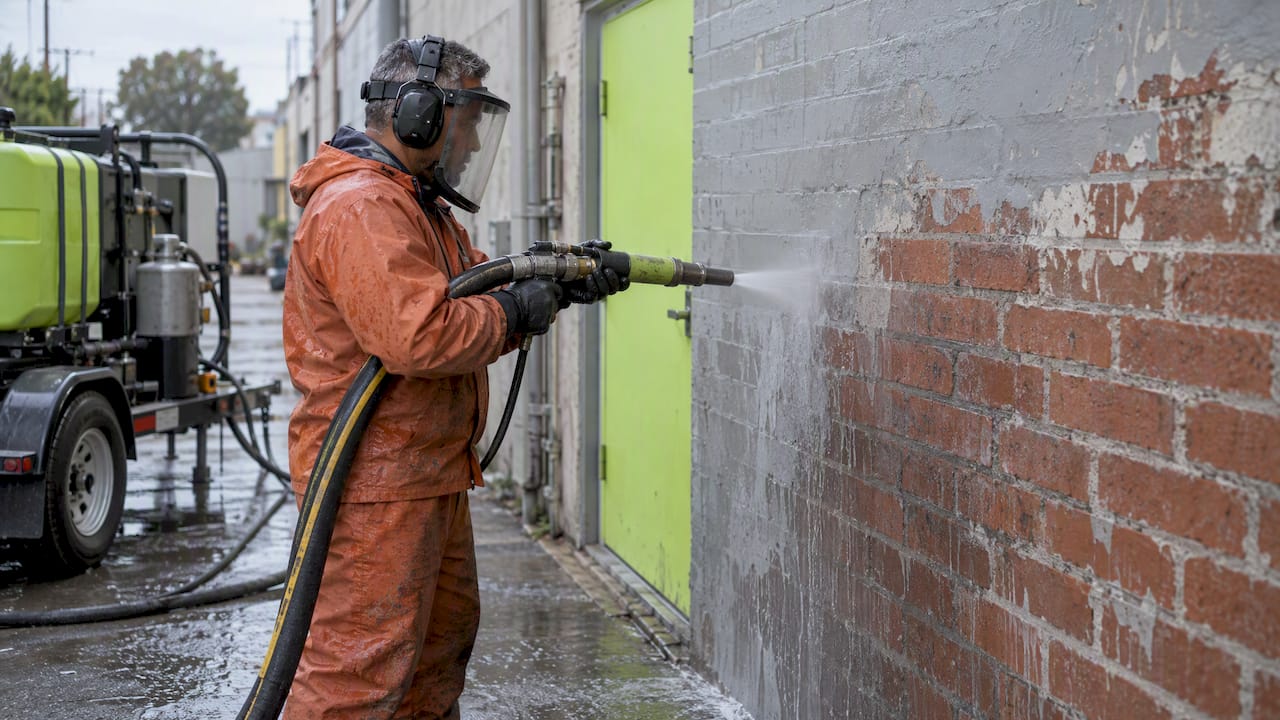
- Brick: older masonry needs a gentle touch. Our guide to removing paint from brick in San Francisco covers what works and the one coating we will not touch.
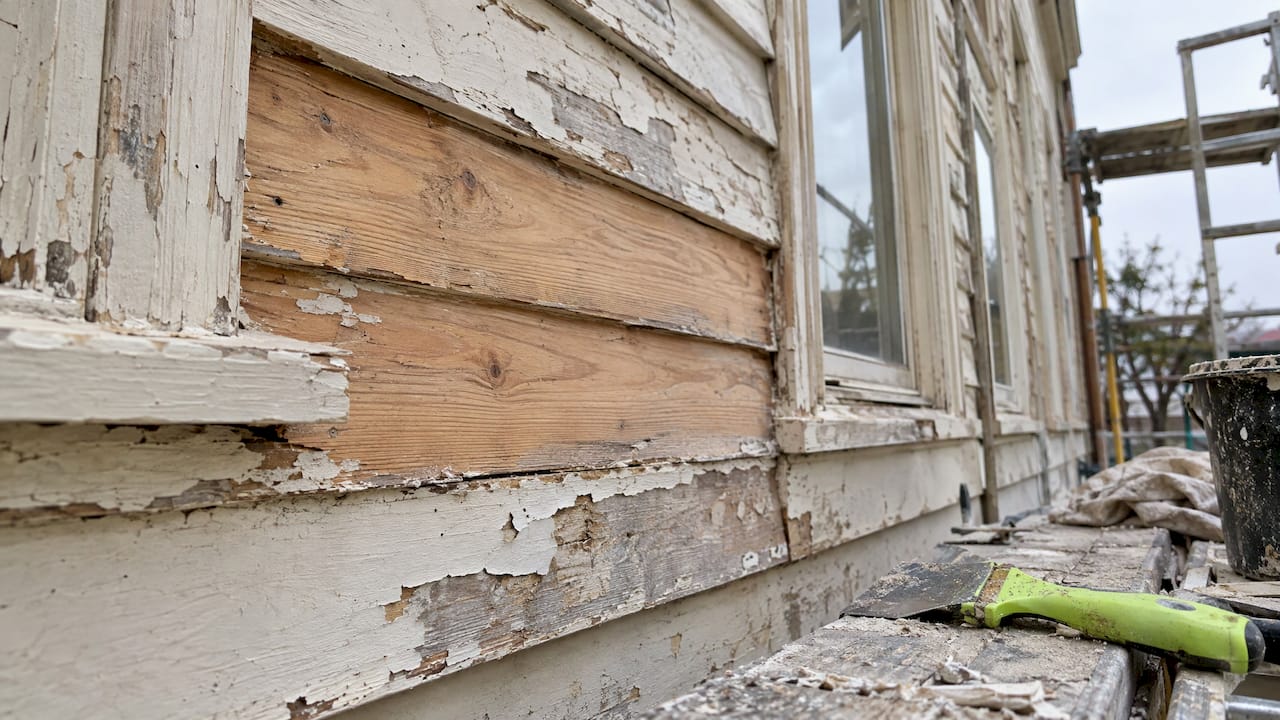
- Wood: restoration work uses controlled settings to lift coatings without cutting into the grain.
- Graffiti: the right method depends on the surface, which we cover in our graffiti removal guide for property managers. For another view on graffiti removal on building surfaces, cleaning-focused methods are worth a look on delicate facades.
Lead paint, containment and waste
Older buildings often carry lead-based paint. This is where you need to plan, not improvise.
Lead. Under 40 CFR 745.227, machine sanding, grinding, abrasive blasting or sandblasting of lead-based paint in covered target housing and child-occupied facility work is prohibited unless HEPA exhaust control is used. Sika’s U.S. sheet adds that removing old paint may release lead dust and recommends an NIOSH-approved respirator, HEPA vacuuming, wet mopping, ventilation and eye and skin protection. If you suspect lead, say so when you request an estimate, and see our lead paint removal and containment page.
Containment. AMPP’s SSPC-Guide 6-2021 describes removal methods, containment systems and emission-minimizing procedures. It is written mainly for steel structures but may also suit concrete, aluminum and wood. It sorts containment into as many as four classes per method by how much emission control is needed, and warns that ventilation alone may not protect workers from lead or toxic metals.
Waste. Blast debris is not always ordinary trash. Missouri’s environmental agency, in a widely referenced state guide, says owners or contractors should plan waste determination, notification, containment and disposal before outdoor paint removal. Hazardousness can be determined by TCLP testing or knowledge of the coating, and hazardous waste has to be contained, labeled, stored under generator rules and shipped through authorized channels. California and local agencies set their own requirements, so confirm them with the state and your city for a specific site.

What affects the cost and the schedule
The EPA states that selection, and so cost, depends on coating and substrate, location, item size, utilities, follow-on processing and waste handling, and that cost comparisons are plant-specific. In plain terms, these push a quote up or down:
- Number of coating layers and their adhesion. Several layers of epoxy take longer than one coat of latex.
- Surface material. Soft brick or old wood needs slower passes than steel or slab.
- Area and shape. Flat floors go faster than railings, trusses or detailed ironwork.
- Access. Lifts, scaffolds or tight mechanical rooms add time.
- Lead or hazardous coatings. Containment and waste handling add scope.
- What comes next. A tighter finish spec means more passes.
Our published pricing
Prices below are as published on our site in 2026. Each is a per-square-foot, one-off project rate.
| Service | Published price |
|---|---|
| Dustless blasting | From $3 per sq ft |
| Paint removal | From $3 per sq ft |
| Rust and metal blasting | From $3 per sq ft |
| Concrete grinding and grind-and-seal | From $2 per sq ft |
| Surface preparation | $2-3 per sq ft |
Graffiti removal, line and stripe removal, wood restoration, masonry cleaning, concrete polishing, powder coating prep and lead paint removal are quoted per project. Our dustless blasting cost guide explains what moves the price. To sanity-check any quote, ask what is included: coating layers, cleanup, and finish level.
Preparing the surface for the next coating
Taking the old coating off does not finish the job. The WBDG stresses that preparation means removing contaminants and producing a surface profile or texture for adhesion. A coating that peels in a year usually failed at this stage.
The Painting and Decorating Contractors of America says project specifications control the preparation level, from basic cleaning up to restoration or resurfacing of badly deteriorated surfaces. Its standard repaint preparation can include solvent cleaning, patching, caulking, light sanding, feather-edge sanding and adhesion testing, with more aggressive methods where adhesion testing shows poor existing-coating bond.
When a coating spec calls for a named cleanliness or profile standard, such as SSPC-SP10 near-white metal, tell us up front. We prepare surfaces to coating spec, so the blasting plan can be set to the finish your coating supplier requires. Our surface preparation work and prep for powder coating follow the same logic.
Our perspective
Most failed coating jobs we see did not fail on the product. They failed on the prep, or on the dust and mess that made the job hard to schedule around.
That is why we built our service around self-contained rigs that carry their own air and power. We need parking and access to the surface, nothing else, so mechanical rooms, loading docks and occupied buildings are workable sites.
Wet abrasive blasting lets us take paint, rust and coatings off concrete, wood, brick, metal and asphalt with up to 92% less dust than traditional dry sandblasting. One crew, one method, and a clean surface ready for the next step.
We would rather quote a job transparently, with the price per square foot stated up front, than hide it behind a sales call. Tell us the coating, the surface and what goes on next, and we will tell you the plan.
USA
Get an estimate for your coating removal job
We remove paint, rust, graffiti and old coatings for contractors, property managers, homeowners and industrial facilities across San Francisco and the Bay Area. Estimates are free, site visits are quick, and scheduling is fast. Paint removal starts at $3 per sq ft.

Send us the surface, the coating if you know it, and the approximate area. See our paint removal and stripping service or go straight to the full service list to request your free estimate.
FAQ
What is the difference between industrial paint stripping and paint removal?
The terms are used interchangeably. Stripping often implies chemical strippers or immersion for parts, while removal covers any method, including blasting and grinding. For building surfaces and large structures, mechanical and wet abrasive methods are the usual route.
Can you remove paint from concrete and brick without damaging it?
Yes, when pressure, media and technique are matched to the material. Concrete handles blasting or grinding well, while older brick needs controlled settings and a case-by-case review. We look at the surface before quoting.
Do I need to test for lead before paint removal?
If the building was painted before lead paint was phased out, assume it may be present until tested. Federal rules in 40 CFR 745.227 require HEPA exhaust control for abrasive blasting of lead-based paint in covered housing and child-occupied facilities. Tell us about any suspected lead when you ask for an estimate.
How much does industrial paint removal cost in the Bay Area?
Our paint removal starts at $3 per sq ft, grinding at $2 per sq ft, and surface preparation runs $2-3 per sq ft. The final figure depends on coating layers, surface, access and scope. We give free estimates.
Sources
- WBDG Paints and Coatings Knowledge Area
- EPA Guide to Cleaner Technologies: Organic Coating Removal
- EPA Paint and Coating Stripping Operations
- EPA Source Reduction and Recycling of Halogenated Solvents
- Products Finishing: Stripping Organic Coatings
- Smart Strip PRO Technical Data Sheet
- Sika ZAR Paint & Varnish Remover
- eCFR 40 CFR Part 751
- eCFR 40 CFR 745.227
- AMPP SSPC-Guide 6-2021
- Missouri DNR: Environmental Regulations for Paint Removal on Outdoor Structures
- PCA P14 Standard
- Industrial Building Renovation Planning Guide
- Graffiti removal on building surfaces