Brick Cleaning Services: Methods, Costs and How to Hire the Right Pro

Professional brick cleaning matches the method to the brick and the stain, starting with the gentlest option that works. Light dirt usually needs only water and a brush. Paint, graffiti, soot and old coatings need a contractor who can control dust, water and abrasive. In the San Francisco Bay Area, we clean and strip brick with mobile dustless (wet abrasive) blasting, and we give free estimates.
This guide explains what brick cleaning services actually do, what the work costs, and how to decide between washing, chemical cleaning and blasting. It is written for property managers, contractors and homeowners who are hiring the work, not doing it themselves.
TL;DR
- Start gentle: the Brick Industry Association recommends the gentlest effective method, with bucket-and-brush or pressurized water tried before chemicals.
- Test first: clean a sample area of about 20 square feet before you commit the whole wall.
- Typical washing costs are well under $1 per square foot; paint, graffiti and coating removal is a different job and is priced differently.
- Old historic brick is easy to damage. Leave it to professionals who can show you a test patch.
- We offer free estimates for brick and masonry cleaning across San Francisco and the Bay Area. Request one here.
Table of Contents
- What a brick cleaning service actually does
- The main brick cleaning methods
- Matching the method to the stain
- Why the test patch matters
- What brick cleaning costs
- Perspective
- How to hire a brick cleaning contractor
- Get brick cleaning in the Bay Area
- FAQ
- Sources
What a brick cleaning service actually does
“Brick cleaning” covers a wide range of work. A homeowner with green algae on a north-facing wall and a property manager with three coats of paint on a 1920s storefront both search for the same thing, but they need very different services.
Professional work usually falls into one of four jobs:
- Routine cleaning. Dirt, dust, pollen, moss and algae from exterior brick.
- Stain and deposit removal. Efflorescence (white salt deposits), mortar smears after new construction, soot, rust and oil.
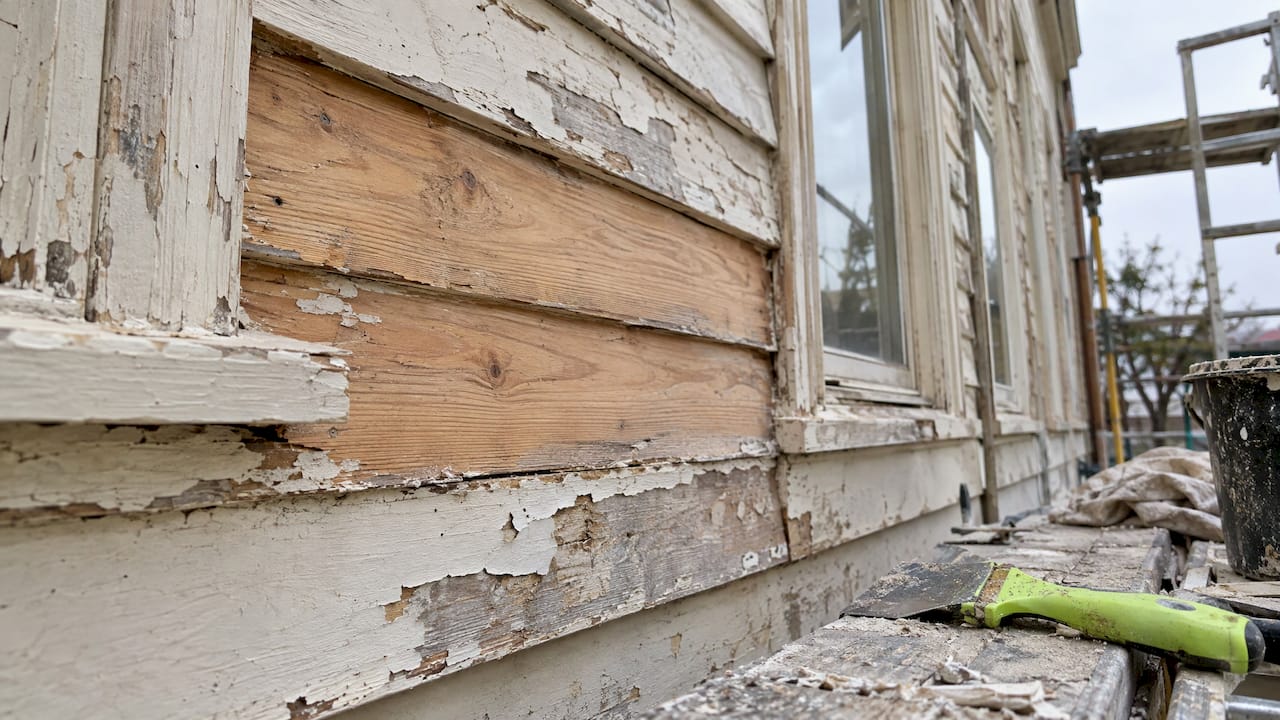
- Coating removal. Paint, graffiti, sealers and old elastomeric coatings.
- Restoration prep. Cleaning brick so it can be repointed, sealed, re-coated or repainted.
The right service depends on which of these you have. Hiring a crew that only pressure washes will not solve a paint problem, and blasting a wall that only has surface dirt is more than the job needs.
The main brick cleaning methods
The Brick Industry Association’s technical note on cleaning brickwork lists the options a contractor chooses between: bucket-and-brush cleaning, pressurized water, poultices, microabrasives and lasers, with laser cleaning needing specialized contractors. Here is how they compare in practice.
| Method | Best for | Watch out for |
|---|---|---|
| Hand scrubbing with water and a brush | Light dirt, efflorescence, interior brick | Slow on large areas |
| Low-pressure or pressurized water | General exterior grime, algae, loose buildup | Too much pressure can damage soft brick and mortar |
| Chemical cleaners | Mortar smears, some stains | Runoff, strict label directions, risk to people nearby |
| Poultice (paste or gel) | Graffiti or stains that soaked into the brick | Long contact times, careful removal |
| Dustless (wet abrasive) blasting | Paint, coatings, rust, graffiti, heavy soiling | Needs a trained operator and a test patch |
| Laser | Specialty and historic work | Specialized contractors only |
Water and brush
Water is the first thing to try. The Brick Industry Association advises thoroughly saturating the area with water before applying any cleaning solution, which reduces absorption and staining. For efflorescence, the same guidance says dry brushing or a stiff fiber brush with water usually does the job, and that it often fades with normal weathering anyway.
Home guidance from The Spruce is consistent: hand-scrub interior brick with warm water, a little dish soap and a nylon brush, and use low-pressure washing outside. The same article says older historic brick is best left to professionals. For interior brick, Martha Stewart’s guidance says warm water is usually enough, with a couple of drops of mild dish soap for tougher stains.
Chemical cleaners and poultices
Chemical cleaning has a place, but it is the step after water, not before. The Brick Industry Association says cleaning solutions should not be allowed to dry on the brickwork, and walls should be rinsed with large amounts of clean water before the surface dries.
For graffiti that has soaked into the brick, the same technical note says a paste or gel poultice that clings to the surface is often the best approach because it extends the cleaner’s contact time. Algae and other organic growth are typically treated with masonry-specific biocides, always following the manufacturer’s instructions.

Safety matters here. The National Park Service’s Preservation Brief 1 says cleaner labels and safety data sheets must be followed, that crews should be provided with protective clothing, gloves, face shields, hearing protection and respirators as appropriate, and that acidic or alkaline cleaners can seriously injure passers-by. If your building has a sidewalk, tenants or a storefront entrance, ask any contractor how they will protect people and plants nearby.
Dustless blasting for paint, coatings and heavy soiling
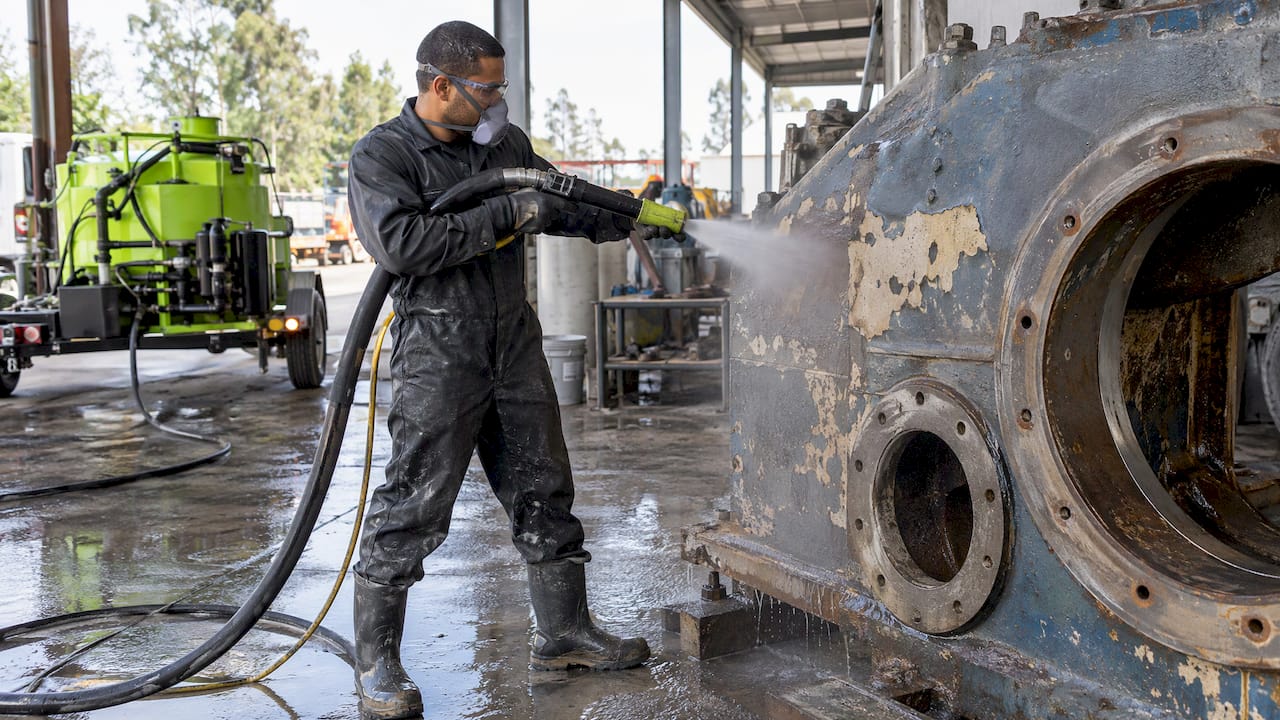
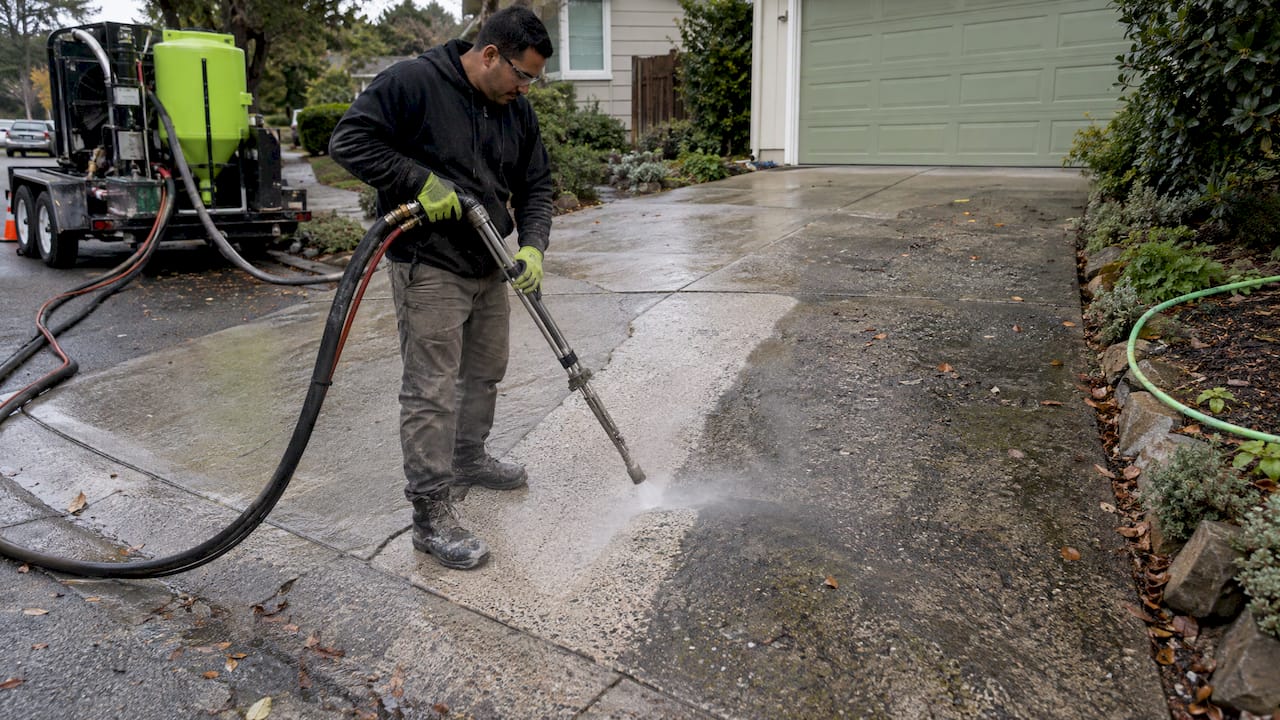
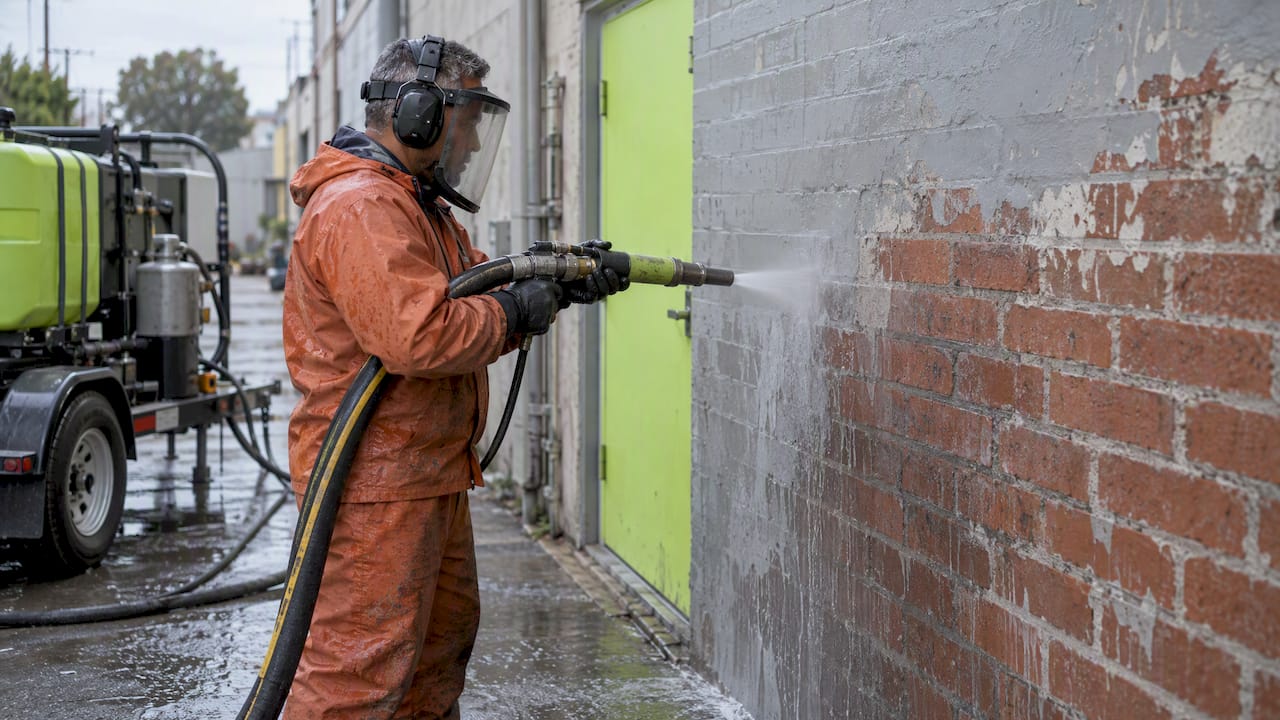
When the problem is paint, graffiti, old coatings or heavy buildup, washing will not touch it, and chemical strippers can leave residue and runoff. This is where we use dustless blasting. The method mixes abrasive with water, so it removes coatings while producing up to 92% less dust than traditional dry blasting (our own comparison with dry sandblasting).
Our rigs are self-contained, with their own air and power. They need only parking and access to the surface, so there is no need to find an outlet or compressor on your property. Because the method is adjustable, the operator sets the abrasive and pressure for the brick in front of them and confirms it on a test patch before the full wall.
You can see what we do on our brick and masonry blasting page, and for painted brick specifically on our paint removal page.
Matching the method to the stain
Most walls have more than one problem. Use this as a starting point, then have a contractor confirm on the actual brick.
- General dirt, pollen, light algae: water and brush, or low-pressure washing.
- White powder (efflorescence): dry brushing, then water and a stiff fiber brush.
- Mortar smears on new brickwork: a masonry cleaner chosen for your brick type, applied after pre-wetting.
- Graffiti: a poultice or commercial remover for small, penetrated marks; blasting for larger areas or porous brick. See our graffiti removal service.
- Paint, including multiple layers: controlled wet abrasive blasting, with the abrasive and pressure set on a test area.
- Lead-based paint: treat this separately. Older buildings can have it, and removal needs containment and proper handling. Read about our lead paint removal and containment before anyone sands or scrapes.
- Rust streaks and metal staining: often come from fasteners or lintels above the brick, so the source needs attention as well as the stain.
Why the test patch matters
Both the Brick Industry Association and the International Masonry Institute give the same core advice: begin with the least aggressive method, and test the proposed procedure in a discreet but representative location before cleaning. The Brick Industry Association puts the sample at about 20 square feet.
The National Park Service goes further for historic buildings: inappropriate chemical and abrasive cleaning can damage historic masonry and create hazards. A good contractor welcomes a test patch. If one resists it, that tells you something.
A useful test patch checks three things: does the stain or coating come off, does the brick face stay intact, and does the mortar hold? Let the patch dry fully before judging it, because wet brick looks darker and cleaner than it will be.

What brick cleaning costs
Cost depends on the method, the brick, the height, the access and how much needs to come off. Two published national estimates give a baseline for plain washing:
- Homewyse’s January 2026 estimate for basic brick cleaning starts at $0.55 to $0.68 per square foot, and it notes that actual costs vary with project conditions, requirements, labor and materials.
- Fixr reports power washing at $0.35 to $0.70 per square foot, with a $2,000 example for specialty pressure washing of a 2,500-square-foot brick home with severe grime.
Those figures cover washing. Removing paint, graffiti or coatings is a different scope, because it takes more time, more controlled equipment and more cleanup. Use national numbers to sanity-check a quote, not to predict one, since local access, height and scope change the total.
Our published rates
Our site publishes starting rates for related services, quoted per square foot or per project:
| Service | Published rate |
|---|---|
| Paint removal | From $3 per sq ft |
| Dustless blasting | From $3 per sq ft |
| Surface preparation | $2 to $3 per sq ft |
| Concrete grinding and grind-and-seal | From $2 per sq ft |
| Masonry and brick cleaning | Quoted per project after a site visit |
Brick cleaning is quoted per project because the scope varies so much: a single clean-faced wall is a different job from a three-story painted facade. We give free estimates, and the more you tell us, the tighter the number.
What moves the price
- Coating or no coating. Plain dirt is cheapest. Layered paint costs more.
- Brick condition. Soft or spalling brick needs gentler settings and more time.
- Height and access. Second-story work, tight alleys and slopes add time.
- Surface area and detail. Ornamental brick, arches and recessed mortar joints take longer than flat walls.
- Lead or hazardous coatings. Containment and disposal add steps.
- Follow-on work. Sealing, repointing or repainting afterwards.
Perspective
We see the same mistake on Bay Area brick again and again: someone reaches for the most aggressive tool because the wall looks bad, and the brick pays for it. Overly aggressive abrasive or pressure can strip the hard outer face of a brick, and once that face is gone the brick can absorb more water and weather faster.
Our approach is to match the method to the job. Where water and a brush will work, that is what we recommend. Where there is paint, graffiti or a stubborn coating, we use dustless blasting because it lets us control the abrasive and pressure and keeps dust down, with up to 92% less than traditional dry methods. Our rigs bring their own air and power, which matters on city sites where there is no spare outlet, no staging area and neighbors close by.
We also believe in transparent pricing. Our published starting rates are there so you can sanity-check any quote, ours included. Tell us what the wall is, how tall it is, and what is on it, and we will tell you what we would do and what it costs.
USA
How to hire a brick cleaning contractor
Whether you hire us or someone else, these steps protect your building.
- Describe the problem accurately. Photos of the wall, an approximate square footage, the building’s age and any known coatings.
- Ask which method they propose and why. The answer should start with the gentlest option that will work.
- Ask for a test patch. It should be on a representative area, and you should approve it before the full job.
- Ask about dust, water and runoff. Where does the water go, and how are people and plants protected?
- Ask about lead. If the building is older and has been painted many times, say so up front. Read more on our lead paint removal page.
- Get a written scope and price. Per square foot or per project, with what is and is not included.
- Ask what comes next. Sealing, repointing or repainting should be planned before cleaning, not after.
Contractors who need a surface ready for a coating can also look at our surface preparation service, which prepares substrates to the coating specification.
Get brick cleaning in the Bay Area
We clean and strip brick and masonry for property managers, contractors and homeowners throughout San Francisco and the Bay Area, including the Peninsula and the East Bay. Our mobile rigs are self-contained: we need parking and access to the wall.
Free estimates, quick site visits and fast scheduling are how we work. Send us photos and an approximate size, and we will tell you what the job takes.

See all our services and request a free estimate, or visit our main site to get in touch.
FAQ
Can I clean brick myself with dish soap?
For light dirt on interior brick, yes: warm water, a few drops of mild dish soap and a nylon brush is the usual home method, and warm water alone is often enough. Do not let any cleaning solution dry on the surface, and rinse thoroughly. For painted, graffitied or historic brick, hire a professional.
How much does professional brick cleaning cost?
Basic washing is commonly estimated at $0.55 to $0.68 per square foot nationally. Paint and coating removal costs more and depends on layers, height and access. We quote brick and masonry cleaning per project after a site visit, and the estimate is free.
What is the safest way to clean old brick?
Use the gentlest method that works and test it first. The National Park Service warns that inappropriate chemical and abrasive cleaning can damage historic masonry. Ask a professional to clean a sample area before the full wall.
Does dustless blasting damage brick?
Any abrasive method can damage brick if it is set too aggressively. Our operators choose the abrasive and pressure for the brick and confirm the settings on a test patch before the full wall. The wet process also keeps dust down, with up to 92% less than traditional dry blasting.
How do I remove white powder from brick?
That is usually efflorescence, a salt deposit. The Brick Industry Association says it can be removed by dry brushing or a stiff fiber brush and water, and that it often fades with weathering. If it keeps returning, moisture is getting into the wall and needs fixing.
Sources
- Cleaning Brickwork, Brick Industry Association (2018)
- Cleaning Brickwork technical note, Brick Industry Association
- Preservation Brief 1: Assessing Cleaning and Water-Repellent Treatments, National Park Service
- Masonry Restoration Cleaning Guide, International Masonry Institute (2020)
- How to Clean Interior and Exterior Brick, The Spruce
- How to Clean Brick on Your Interior and Exterior Surfaces, Martha Stewart
- Cost to Clean Bricks, Homewyse (2026)
- Cost to Pressure Wash House, Fixr