Fence Paint Removal: What Works on Wood, Metal and Masonry
The fastest way to strip paint from a fence without damaging it is to match the method to the material and hire out anything that involves lead, long runs or old, deep paint. For most Bay Area fences, that means dustless (wet abrasive) blasting. It lifts paint from wood, metal, brick and concrete in one pass, with up to 92% less dust than traditional dry sandblasting, and our self-contained rigs need only parking and access to the fence. Paint removal with us starts from $3 per square foot, and estimates are free.
This guide is for property managers, contractors, homeowners and facility managers who have a painted fence that needs to come back to bare, sound surface. It covers what each method does, where it goes wrong, what the rules say about lead, and how to prepare a fence for repainting.
TL;DR
- Match the method to the fence: wood needs gentle, controlled removal that does not gouge the grain, metal needs the paint and rust gone together, and brick or concrete needs the paint pulled out of the pores.
- Scraping, sanding, heat guns and chemical strippers work on small sections but are slow on a full fence, and each has a specific way of failing.
- If the fence could carry lead paint, dry sanding, torching and uncontained blasting are the wrong tools. Federal guidance restricts them, and the waste has its own handling rules.
- Wet abrasive blasting strips a whole fence in one pass with far less dust. Our paint removal starts from $3 per square foot, with a free estimate.
- Never repaint over peeling paint. Remove it, repair the boards, prime, then paint.
Table of Contents
- Why fence paint is harder to remove than it looks
- Fence paint removal methods by material
- Hand methods: scraping, sanding and heat
- Chemical strippers and pressure washing
- Wet abrasive blasting: one pass, far less dust
- Check for lead before anyone touches the paint
- How a professional fence paint removal job runs
- What fence paint removal costs
- Request a free estimate for your fence
- Our perspective on fence paint stripping
- Preparing the fence for repainting
- FAQ
- Sources
Why fence paint is harder to remove than it looks
A fence is a lot of surface. A single 100-foot run of 6-foot fence is 600 square feet per side, and every picket, rail and post edge counts as extra area. Paint on a fence also takes weather that interior paint never sees: sun, fog, irrigation overspray and temperature swings. It cracks, blisters and lifts in layers, and often the layers are different products from different owners over decades.
That is why a method that looks fine on one board becomes a multi-day job on the whole fence. A hand scraper removes loose flakes quickly, but the paint still bonded to the grain stays, and so the fence needs a second method to finish the job.
The surface under the paint matters just as much as the paint:
- Wood is soft. Aggressive tools raise the grain, cut grooves and leave a fence that takes the next coat unevenly.
- Metal hides rust under bubbling paint. Paint removed without addressing the rust fails again quickly.
- Brick and concrete are porous. Paint sits inside the surface, so a surface-only method leaves ghosting.
Fence paint removal methods by material
This table summarizes the options for each fence type and the main way each goes wrong.
| Fence material | Common methods | Where it goes wrong |
|---|---|---|
| Wood | Scraping, sanding, chemical stripper, low-pressure washing, wet blasting | Gouged or fuzzy grain, trapped moisture, leftover paint in cracks |
| Metal (iron, steel) | Wire brushing, chemical stripper, heat, sanding, wet blasting | Rust left under new paint, slow work on ornamental detail |
| Brick and concrete | Chemical stripper, washing, wet blasting | Paint left in pores, surface damage from harsh pressure |
| Any fence with possible lead paint | Contained, regulated removal | Spreading chips and dust, improper waste disposal |
We work on wood, metal, brick and concrete, which covers the large majority of fences in the Bay Area: redwood and cedar privacy fences, wrought iron and steel gates and rails, and masonry walls.
Hand methods: scraping, sanding and heat
These are the methods most people picture first. They are real options for a small repair area, and they show why a whole fence takes so long by hand.
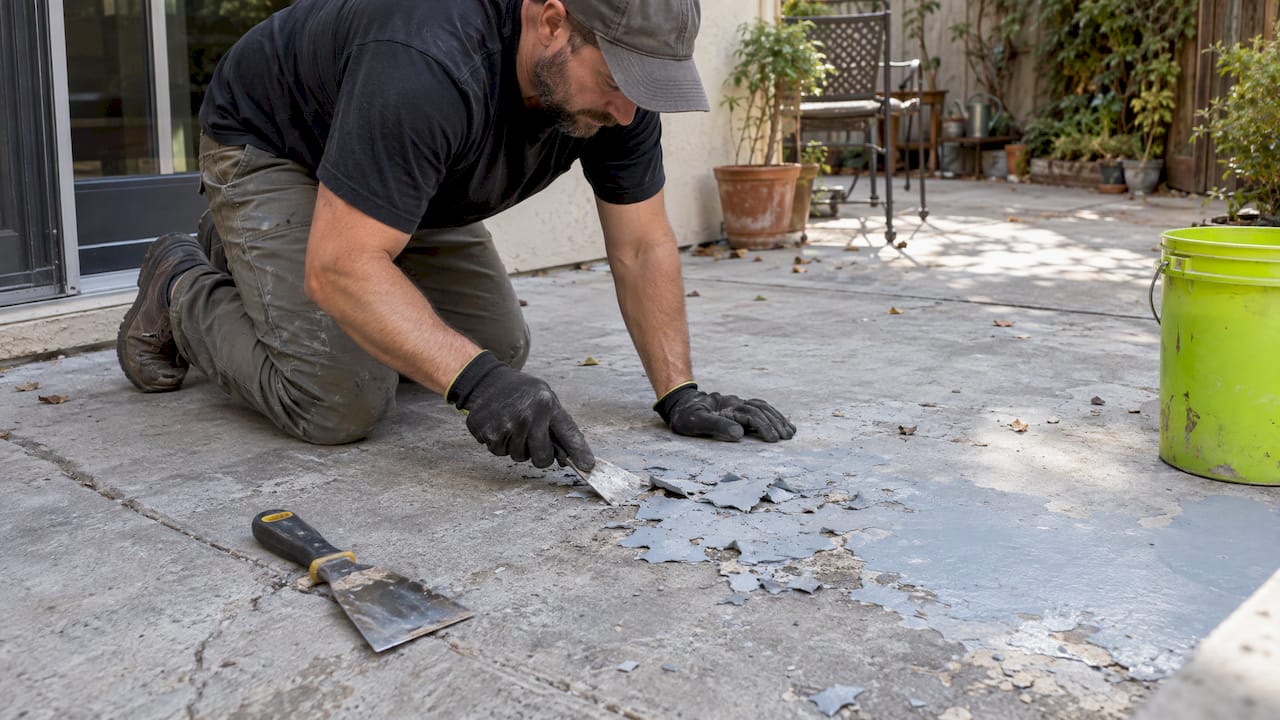
Scraping. A scraper removes loose, flaking paint only. It does nothing about paint that is still bonded, which means you finish with a patchwork of bare wood and stuck paint. Scraping is also where fresh grooves in soft wood come from if the blade digs in.
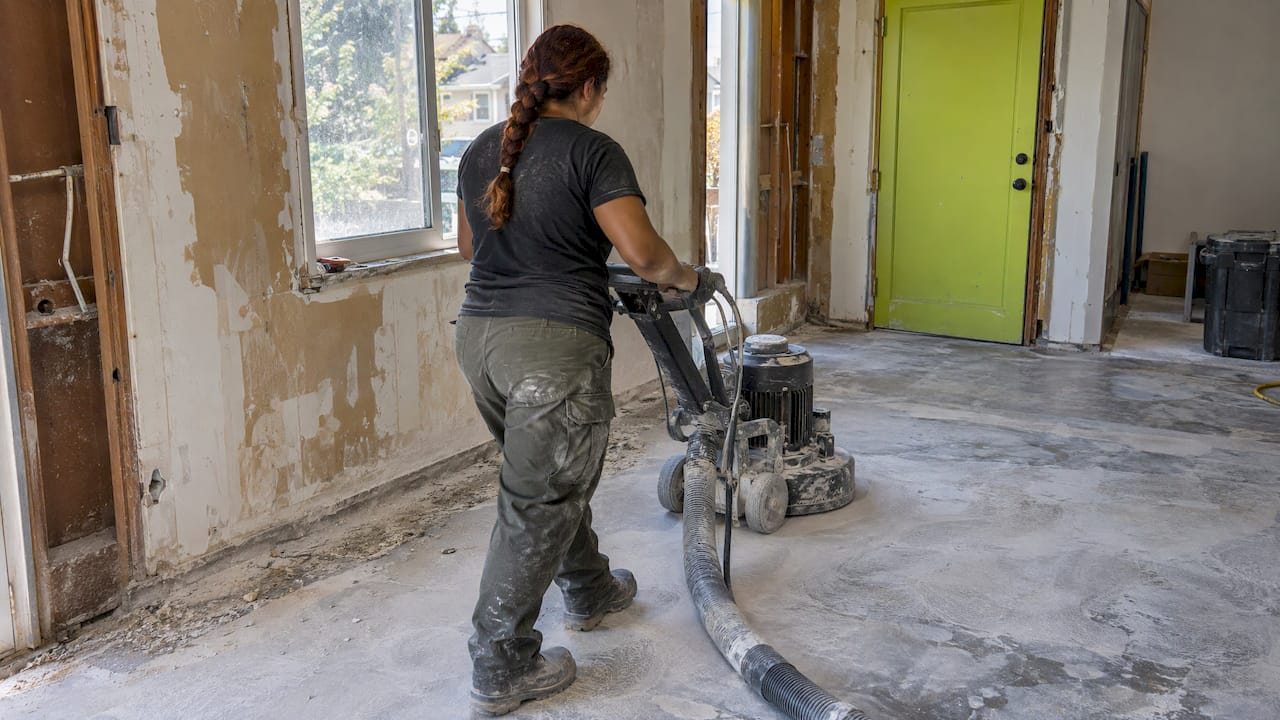
Sanding. Sanding evens out the edges where paint remains and smooths scraped wood. On a fence, the cost is time: pickets have two faces and two edges, and rails have recessed corners that a sander cannot reach. Dry sanding also throws fine dust, which is a problem near neighbors, gardens and any painted surface that could contain lead.
Heat guns. This Old House’s guide describes holding a heat gun about six inches from the surface until paint blisters, then scraping, and stopping immediately at any sign of smoke. That is workable on a small metal or wood section. On a fence, it means a few square feet at a time, and scorched wood is a common result when the gun lingers.
All three share one problem: they are labor-hours multiplied by square footage. Our rigs replace that labor with a single pass over the surface, quoted per square foot, so the cost is known before work begins.

Chemical strippers and pressure washing
Chemical strippers soften paint so it can be scraped off. They need dwell time, repeated coats on layered paint, rinsing and often neutralizing. Residue left in wood can interfere with the next coat, and the rinse water carries paint and chemicals into soil and drains. Federal rules have also tightened on one ingredient: the EPA’s 2019 final rule prohibited methylene chloride for consumer paint and coating removal after finding a risk of acute lethality, so older strippers you may find in a garage may no longer be sold or may be formulated differently.
On a large fence, strippers also mean a lot of applied product and a lot of cleanup, so the cost climbs with the area.
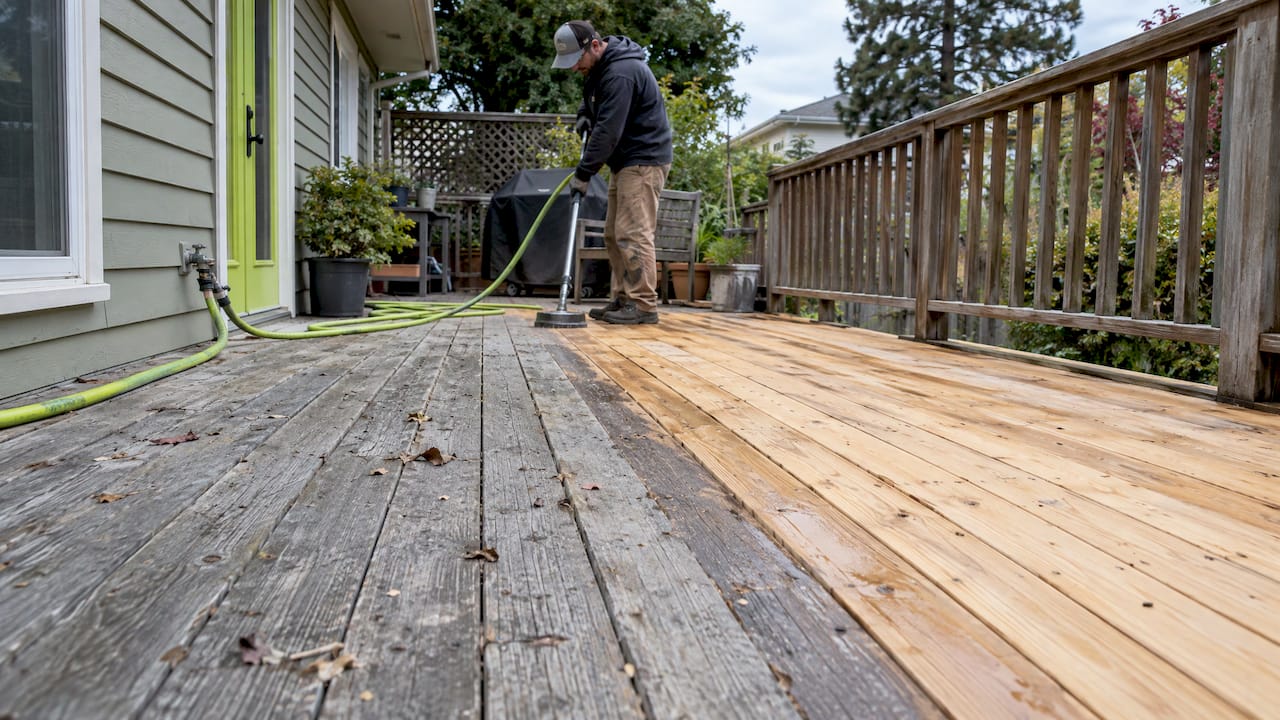
Pressure washing removes loose paint but leaves bonded paint. Used at high pressure on wood, it etches the surface and drives water into the grain, and wet wood cannot be painted until it dries fully. Graco’s fence guide says the fence must dry completely before painting and rotted material must be replaced first. For a side-by-side look at what each approach removes, see our comparison of dustless blasting, sandblasting and pressure washing.

Wet abrasive blasting: one pass, far less dust
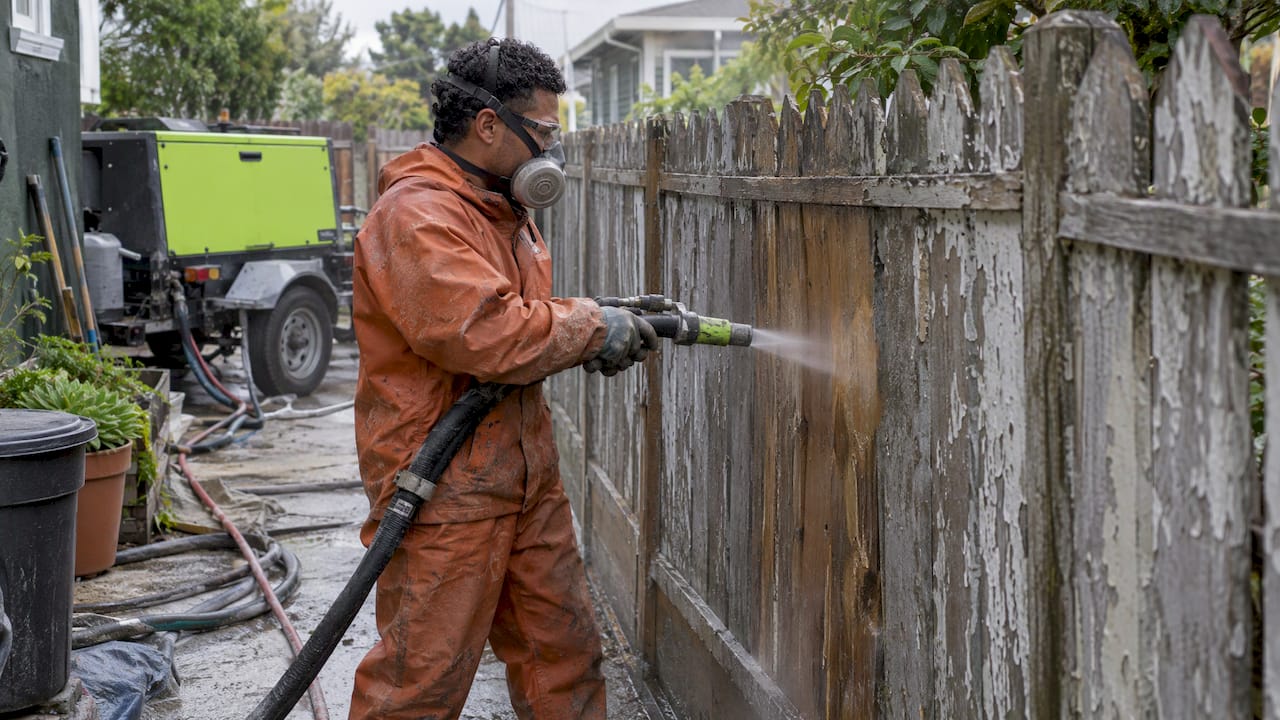
Dustless blasting mixes abrasive with water as it leaves the nozzle. The water suppresses most of the dust, which is why we can state up to 92% less dust than traditional dry sandblasting. The abrasive does the removal, so one method handles paint, rust and old coatings on different materials.
For fences, that gives several practical advantages:
- One method across materials. The same crew can strip a wood fence, a wrought iron gate and a brick wall on one visit.
- No hand labor on detail. Ornamental ironwork, picket edges and recessed corners are reached by the blast stream.
- Rust and paint together. On metal fences, the blast removes paint and surface rust in the same pass, leaving a profile the next coating can grip.
- No utilities needed. Our rigs are self-contained and carry their own air and power. We need parking and access to the fence, not an outlet or a hose bib.
- Less dust around the work area. That matters next to neighbors, tenants, landscaping and parked cars.
On wood, we set pressure and abrasive for the species and the condition of the boards, so the grain is cleaned rather than cut. Fences with rotted boards need those boards replaced before painting. Paint will not hold on rot, as Bob Vila’s repainting guide points out.
See our paint removal service and dustless blasting service pages for the details. If your fence is steel or iron, our rust removal and steel blasting page covers that work, and for masonry walls we have a guide to removing paint from brick.
Check for lead before anyone touches the paint
If a fence was painted decades ago, assume the paint could contain lead until a test says otherwise. This is a safety step, not an upsell: the dust and chips are the hazard, and the methods most people reach for first are the ones that spread them.
HUD’s lead abatement guidelines prohibit open flame burning, heat guns above 1100°F, machine sanding or grinding and abrasive blasting without HEPA vacuum exhaust, and they recommend wet scraping to keep surfaces moist. They also treat uncontained washing as a way to scatter chips beyond the work area, so washing is expected to be contained, with runoff control.
Waste follows its own rules. HUD’s housing waste chapter says lead paint strippings, chips and dust should be tested by a laboratory, that non-residential waste leaching lead above 5 ppm is classed as hazardous waste (code D008), and that residential waste should be wrapped in 6-mil polyethylene, covered in transport and taken only to a permitted facility.
What this means in practice:
- Do not dry sand, torch or heat-strip a fence of unknown age. Test the paint first.
- Keep children, pets and neighbors away from the work area until it is cleaned and cleared.
- Treat the debris as regulated if lead is present. Sweeping chips into the trash is not an option.
We offer lead paint removal and containment, and our guide to lead paint removal in California explains the rules and methods. If you suspect lead on a rental or multi-unit property, raise it when you call for the estimate, so the job is planned for containment from the start.
How a professional fence paint removal job runs
Here is the routine, and what we take off your hands at each step.
- Survey the fence. Note the material, the number of paint layers, the condition of boards and rails, and anything that suggests lead. At this step, we offer free estimates and quick site visits, so you get a number against the actual fence.
- Protect the surroundings. Plants, vehicles, windows and neighboring property need shielding before any blasting. Because our process produces up to 92% less dust, there is less to contain, but the area still gets prepared.
- Set up. Our self-contained rigs bring their own air and power. You provide parking and access, and nothing else needs to be available on site.
- Blast. We strip the paint in a pass, working with the grain on wood and into corners and detail on metal. On brick and concrete, we work paint out of the pores.
- Clean up. Spent abrasive and paint debris leave with the crew rather than staying in your beds and gutters.
- Hand off a repaint-ready surface. Wood needs to dry fully before priming, and metal should be coated promptly so it does not flash-rust. We schedule with your painter or contractor so the gap is short.
For contractors, that last step is the point. Surface prep is the part of a fence repaint that decides whether the finish lasts, and handing it to a specialist keeps your crew on coating work.
What fence paint removal costs
Our published rates are per square foot. Paint removal starts from $3 per square foot, as does dustless blasting and rust and metal blasting. General surface preparation is $2 to $3 per square foot, and concrete grinding starts from $2 per square foot.
To see how that applies, take a 100-foot fence that is 6 feet tall, with one side to strip. That is 600 square feet. At the starting rate of $3 per square foot, that is from $1,800 for that side. Your final quote depends on the fence, its access, the number of paint layers and whether lead is involved, and we price it per project or per square foot after the site visit.
When you compare quotes from any provider, ask three questions:
- Is the price per square foot of fence surface or per linear foot of fence?
- Does it cover both faces and the edges?
- Does it include cleanup and debris handling?
For the factors that move price across all our blasting work, see our Bay Area dustless blasting cost guide.
Request a free estimate for your fence
If you manage a property, run a repaint job or own a fence that needs to come back to bare surface, we can survey it, quote it and schedule quickly. Our mobile rigs serve San Francisco and the Bay Area, and fence work is within the paint removal, rust and metal blasting and masonry cleaning we do. Tell us the material, the approximate length and height, and whether the paint is old, and we will give you a clear number.

See our full list of services or start with paint removal and stripping.
Our perspective on fence paint stripping
We get most fence calls after someone has already tried one method. A scraper took off the flakes and left the rest. A sander created a mess and a gouged picket. A chemical stripper left residue that the new paint would not grip.
Our view is that fence paint removal is a surface preparation problem first and a painting problem second. The finish only lasts if the paint underneath is gone and the material is sound. That is why we use one method that works across wood, metal, brick and concrete, rather than a different tool for every board.
Wet abrasive blasting suits fences because it removes paint and rust in the same pass, with up to 92% less dust than dry sandblasting. Our rigs are self-contained, so the fence being at the back of a lot with no power nearby is not a problem. We need access and a place to park.
We also treat old paint as potentially lead-bearing until it is tested, because the rules on dust and debris are strict and the consequences of spreading chips are real. We are not interested in a job where the paint comes off fast and the problem moves into your neighbor’s yard.
Our pricing is per square foot and posted on our site because you should know the range before you call. A free estimate and a quick site visit settle the rest.
USA
Preparing the fence for repainting
Once the paint is off, the next steps decide how long the new finish lasts.
- Repair first. Tighten loose fasteners, fill cracks and replace rotted or warped boards. Sherwin-Williams’ fence guide also calls for letting filler cure and for the fence to be clean and fully dry before priming, since trapped moisture causes defects.
- Prime the bare spots. Bob Vila’s guide recommends an exterior primer with a blocking agent to stop knot oil bleeding through on wood.
- Use exterior paint. Choose an exterior alkyd or acrylic with UV protection and mildewcide, and check that primer and paint are compatible.
- Never paint over peeling paint. Bob Vila calls it the cardinal rule: scrape or remove loose paint first.
On metal, coat soon after stripping. On brick and concrete, make sure the surface is dry and clean before sealing or painting.
FAQ
Can I paint over an old fence without removing the paint?
Only if the existing paint is sound and well bonded. Peeling, blistering or flaking paint must come off first, because new paint fails along with the layer beneath it. If more than patches are failing, stripping the whole fence is more reliable than spot repair.
How do I get spray paint or graffiti off a fence?
The method depends on the fence material, since wood, metal and masonry each need different handling. We remove graffiti by blasting, and our graffiti removal service covers fences and walls across the Bay Area. Quick removal also tends to make repeat tagging less likely.
Is it safe to remove paint from an old fence myself?
That depends on what is in the paint. Older fences can carry lead paint, and federal guidance restricts dry sanding, torching and uncontained blasting around it. If the fence is old, have the paint tested before any work, and have a contained removal done if lead is present.
How much does fence paint removal cost in the Bay Area?
Our paint removal starts from $3 per square foot, and we quote by the square foot or by the project after seeing the fence. A 600-square-foot fence side at the starting rate is from $1,800. Request a free estimate for a number that fits your fence.
How long should I wait before repainting?
Wait until the fence is clean and fully dry, and until repairs and primer have cured. Wood holds moisture, so drying time depends on the weather and the species. Metal should be primed and coated soon after stripping to avoid new rust.
Sources
- This Old House: How to Clean Paint Off Any Surface
- Federal Register, EPA methylene chloride final rule (2019)
- Graco: How to Paint or Stain a Fence
- Bob Vila: How to Paint a Fence
- HUD Lead-Based Paint Guidelines, Chapter 12: Abatement
- HUD Lead-Based Paint Guidelines, Chapter 10: Housing Waste
- Sherwin-Williams: How to Paint a Wood Fence