San Francisco has a lot of painted brick: Victorian chimneys, SoMa warehouse walls, Mission storefronts, and the interior walls of loft conversions where someone wants the brick back. Most of it can be stripped cleanly. Some of it can't, and the difference is worth understanding before you hire anyone.
Why brick is different
Fired clay brick has a hard outer "face" — the skin that formed in the kiln — over a softer core. The face is what sheds water. Strip the paint too aggressively and you remove the face with it; the brick then absorbs water, spalls in freeze-and-thaw (rare here) and, more commonly in the Bay Area, grows efflorescence and crumbles over a decade. Mortar joints are softer still.
So the goal is never "blast it clean." It's "remove the coating with the least energy that works."
How we do it
- Identify the paint. Latex, oil, elastomeric and old lime wash all come off. Silicone-based masonry paint does not (more below). We look at the sheen, how it fails, and sometimes a solvent test.
- Test patch. A square foot in an inconspicuous spot, starting at low pressure with a soft media — crushed glass is too hard for most brick; we use walnut shell, corn cob, or a fine soda/glass blend depending on the brick. You see the result before we commit.
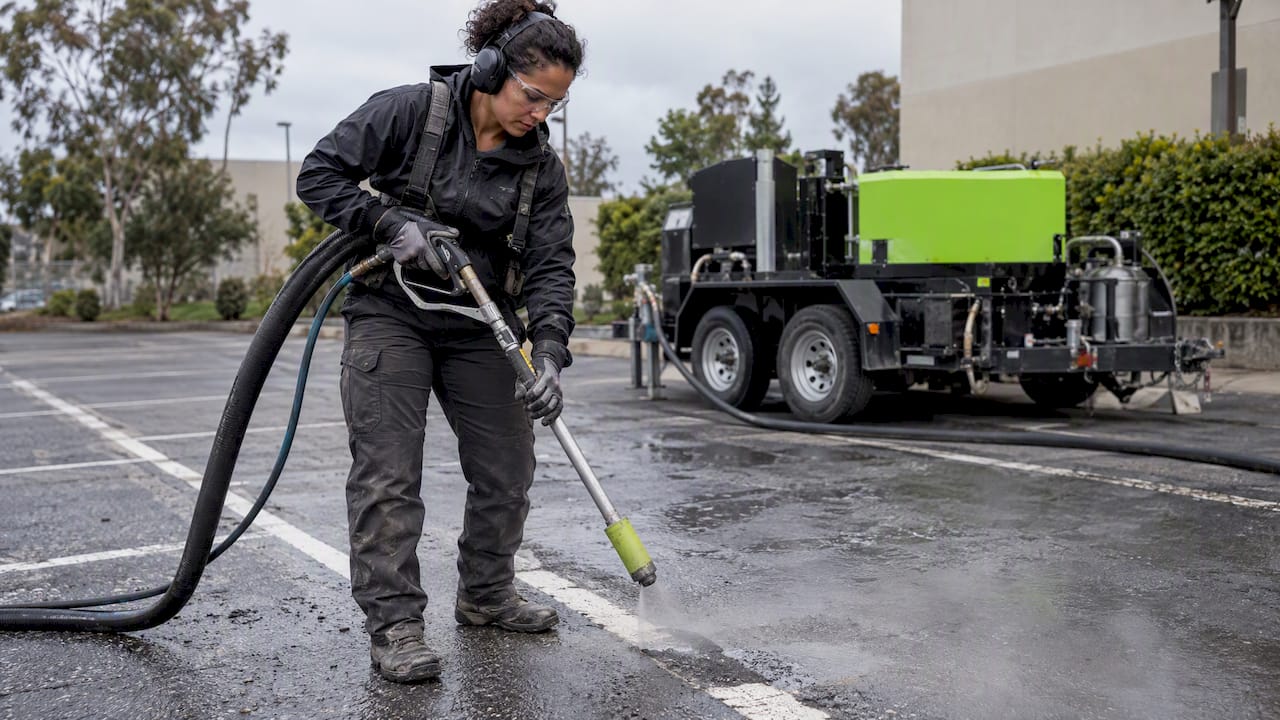
- Blast wet, low pressure, wide angle. The water keeps dust down, which matters on a Mission storefront with a café next door, and softens the impact.
- Rinse and assess the joints. Soft or missing mortar gets flagged for a mason. We don't repoint, but we'll tell you where you need it.
Expect brick to run above our $3/sq ft concrete rate because of the slower, lower-pressure approach.
Interior exposed brick
Loft and office conversions are the most common interior request. The process is the same, with containment: plastic on the floor and adjacent surfaces, and a wet-blast rig that keeps the mess manageable in an occupied building. Expect a day for a typical 300–500 sq ft wall, plus cleanup. After stripping, a breathable masonry sealer keeps the dust down without the shine of a gloss sealer.
Silicone paint: the one we won't do
Silicone-based (and some siloxane) masonry paints bond into the pores of the brick rather than sitting on top of it. There is no media, pressure or chemical that removes them without taking the brick face along. We've tested it; so has everyone else in the trade. When a test patch tells us the coating is silicone, we stop and say so.
Your options at that point are to repaint with a compatible breathable coating, or to accept the look. We'd rather lose the job than hand you a wall that looks stripped for a year and then starts shedding.
Graffiti on brick
Same approach: soft media, low pressure, test first. Fresh spray paint on unsealed brick comes off well. Old, deeply absorbed graffiti sometimes leaves a shadow; we'll show you on the test patch and let you decide. An anti-graffiti sacrificial sealer afterwards makes the next removal a pressure-wash job instead of a blasting job.
Before you call
Have a look at how the paint is failing. Peeling in sheets, chalking, or flaking at the joints means a conventional coating — good news. Paint that is bonded tight everywhere, with a slightly rubbery feel and no chalk, is worth a closer look. Either way, a photo and a square-footage estimate to (628) 222-4876 gets you a same-day answer, and we test before we quote on brick.