Masonry Cleaning Services: Methods, Costs and How to Hire
Professional masonry cleaning removes dirt, paint, graffiti, biological growth and construction residue from brick, block, stone and concrete without damaging the surface underneath. The right method depends on the material and on what is sitting on it. Water comes first, chemistry second, abrasive methods last and only where the masonry can take them. We are All Bay Area Dustless Blasting, and this guide covers how to match method to surface, what to test before work starts, and what to ask when you hire a crew in San Francisco or the wider Bay Area.
TL;DR
- Start with the gentlest method that works: water first, then a suitable cleaner, then abrasive methods only on masonry that can handle them.
- Acid cleaners suit unglazed brick and most granite and sandstone. Limestone, marble and glazed surfaces need alkaline or pH-neutral products.
- Always test a patch of roughly one square yard, and judge it only once it is dry.
- Our wet abrasive rigs run from $3 per sq ft for blasting work, with free estimates. Masonry and brick cleaning is quoted per job after a site look.
- Historic or soft brick needs a conservative approach. Tell us what you know about the building before we quote.
Table of Contents
- What a masonry cleaning service actually covers
- The three method families, and where each fits
- Will dish soap clean brick?
- Test before you commit
- Weather and timing
- Cleaning new masonry before handover
- After cleaning: keeping masonry in good shape
- What masonry cleaning costs in the Bay Area
- How to hire a masonry cleaning contractor
- Our perspective
- Get a masonry cleaning estimate
- FAQ
- Sources
What a masonry cleaning service actually covers
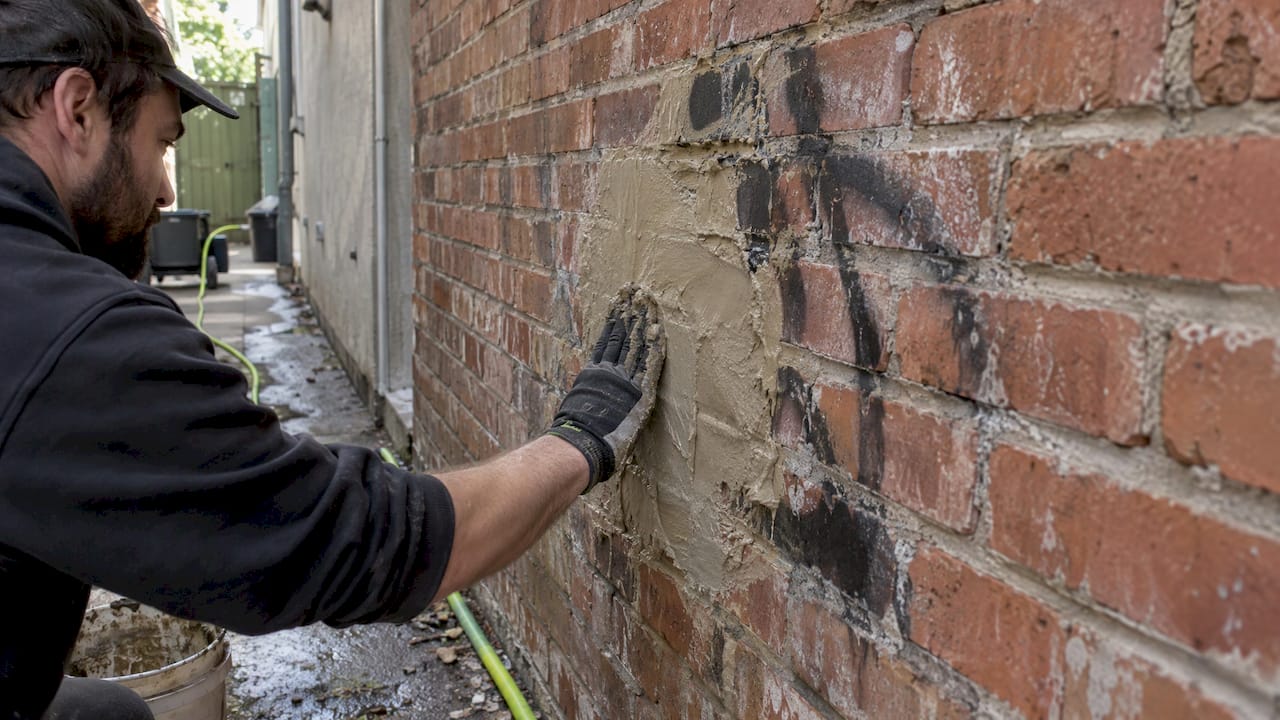
Masonry cleaning is two different jobs under one name. The first is final cleaning of new work. According to the Masonry Contractors Association, cleaning is usually the last step when masonry is built, removing mortar smears, grout spills and other construction stains. The second is restoring existing masonry: removing dirt, pollutants, biological growth, paint and graffiti so the wall looks right and keeps performing.
In practice, a request usually falls into one of these buckets:
- Construction cleanup: mortar haze, grout splatter, efflorescence on new brick or block.
- Atmospheric soiling: gray or black film from traffic and industrial fallout, common on older commercial fronts.
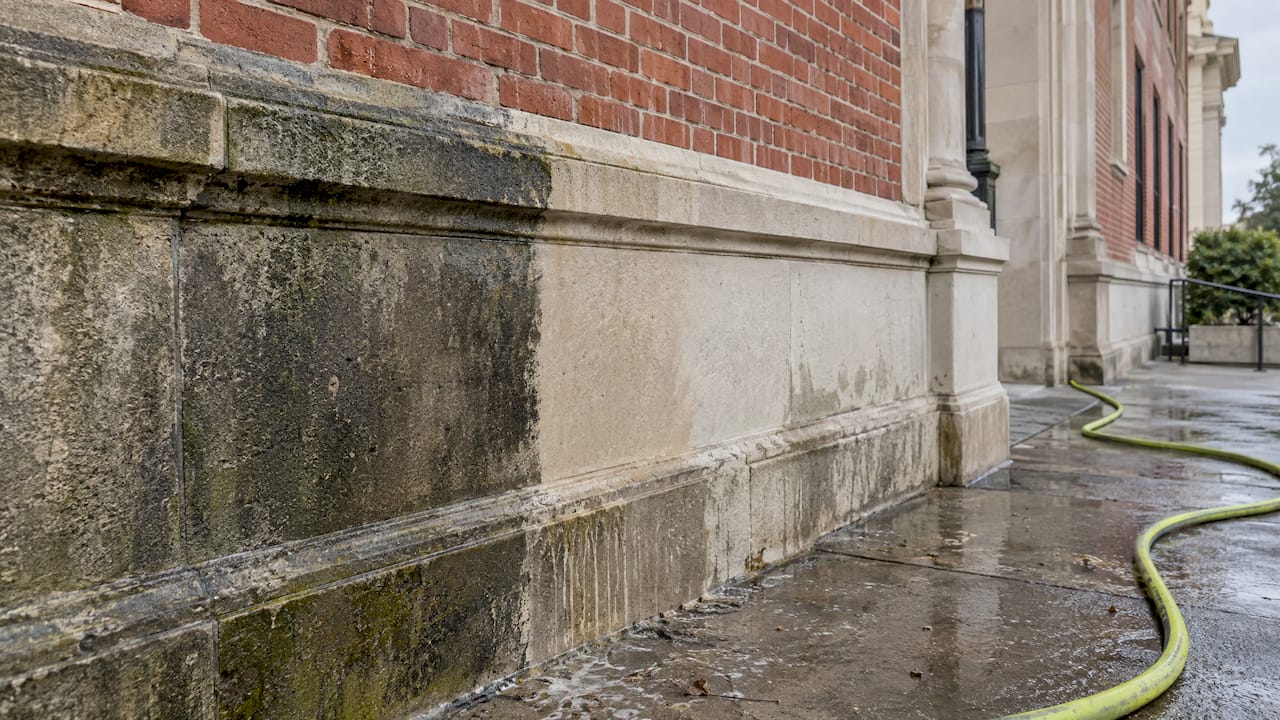
- Biological growth: moss, algae and ivy residue on shaded or damp walls.
- Coatings: old paint on brick, sign paint, and overspray.
- Graffiti and stains: tags, rust runs, oil and soot.
Each one calls for a different tool. Treating them all with a pressure washer is the most common reason masonry gets damaged during cleaning.
The three method families, and where each fits
The National Park Service’s Preservation Brief 1 sorts cleaning methods into three groups: water, chemical and abrasive. Water softens and rinses dirt. Chemical cleaners react with the soiling or paint. Abrasive methods mechanically remove dirt and usually some of the masonry surface along with it.
That last point is the reason method choice matters. Here is how the families compare for a typical Bay Area job.
| Method | Best for | Watch for |
|---|---|---|
| Low-pressure water wash, soaking, steam | Light soiling, biological growth, general maintenance | Badly deteriorated masonry and water-soluble stone |
| Chemical cleaners | Mortar haze, efflorescence, stains, some coatings | Matching the product to the stone type; thorough rinsing |
| Wet abrasive (dustless) blasting | Paint, heavy coatings, graffiti, rust, stubborn buildup | Setup suited to the brick hardness; test patch first |
| Dry sandblasting | Not our recommendation for brick | Heavy dust and an aggressive surface cut |
For a closer look at what each approach removes, see our comparison of dustless blasting, sandblasting and pressure washing.
Water methods
Preservation Brief 1 describes water as generally the gentlest means available. Options include soaking, pressure washing, washing with a non-ionic detergent, and steam or hot-pressurized water. Steam cleaning is really low-pressure hot water, since the steam condenses almost as soon as it leaves the hose. That makes it effective on acid-sensitive stone and on built-up deposits such as ivy disks and tendrils.
Pressure matters. The same brief says to start at 100 psi or below, even a garden hose, and to go no higher than 300 to 400 psi. Use natural or synthetic bristle brushes, never metal, because metal can abrade the surface and leave staining particles behind.
The Masonry Contractors Association is stricter for brick and block: stay under 300 psi if you pressure wash, keep the nozzle at least 12 inches from the wall, use a 30-degree fan tip and never a needle tip. It also warns that equipment above 400 to 600 psi can damage the wall and may void a supplier’s warranty.
Water is not right for everything. The NPS notes that it may worsen badly deteriorated masonry and should not be used on gypsum or alabaster, which dissolve in water.
Chemical cleaners
Chemistry has to match the stone. The NPS’s Keeping It Clean guide says acidic cleaners may be used on non-acid-sensitive masonry such as most granites, most sandstones, slate, unglazed brick, unglazed terra cotta and concrete. It says they should never go on limestone, marble, calcareous sandstone, or glazed and polished surfaces. Preservation Brief 1 puts it the other way around: alkaline cleaners belong on acid-sensitive masonry, including limestone, marble, glazed brick, glazed terra cotta and polished granite.
The Industrial Mason Institute’s interior masonry cleaning guide draws the same line: siliceous stone, brick and terra cotta tolerate a dilute acidic solution, while calcareous stone and cast stone need a pH-neutral or alkaline one.
One rule for new construction: the Masonry Contractors Association points out that The Masonry Society’s TMS 602-16 specification requires cleaning, and it prohibits acid or caustic solutions unless the project specification calls for them. Check the spec before anyone opens a drum of acid.
Abrasive methods, including wet blasting
Abrasive cleaning removes soiling by wearing it away, so it needs the most judgment. The Masonry Contractors Association notes that physical methods tend to remove some base material and are especially hard on soft brick, historic lime-based mortar, glazed finishes, carved surfaces and soft stone. For sensitive projects it points to softer media such as ground nut shells, sponge particles, baking soda or dry ice.
Preservation guidance in Hamilton, Ontario goes further and does not recommend sandblasting on heritage buildings, because fired brick has a protective skin that is lost once it is abraded. That is a heritage-building rule from another country, but the reasoning applies to any old, soft or hand-molded brick here: if the surface skin matters, treat the surface gently.
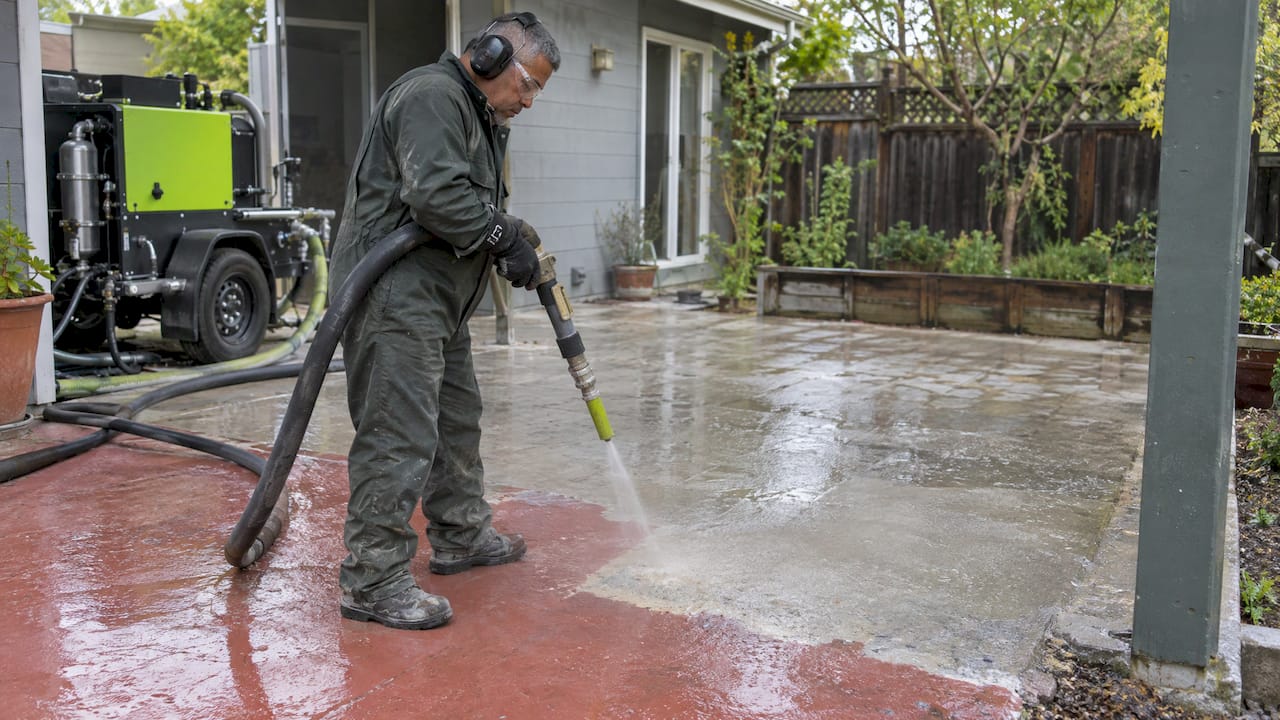
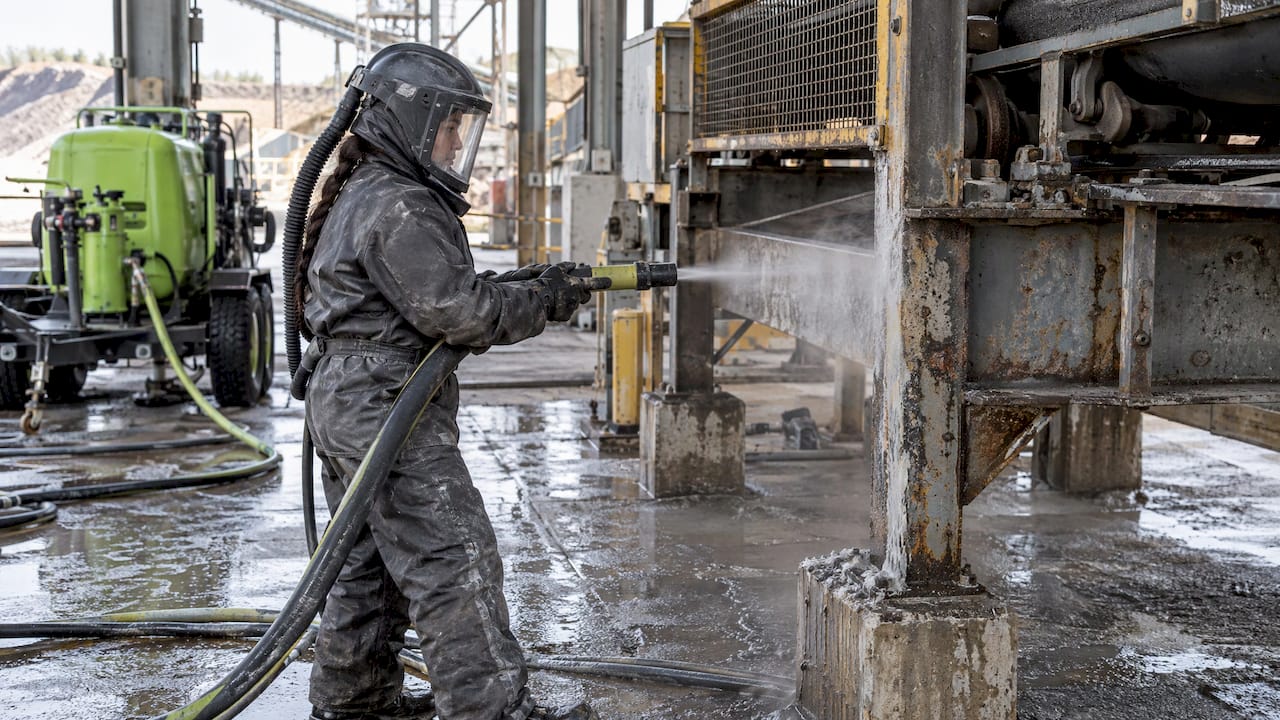
This is where we put our own experience to work. Wet abrasive blasting suits jobs where water alone and mild cleaners will not do the work, such as multiple layers of paint, graffiti, or coatings that have soaked into the brick. We assess the brick before we choose a setup, and we say so up front if a job should be handled with a gentler approach. Our brick and masonry blasting page lays out how we handle it.

Will dish soap clean brick?
Often, yes, for light dirt. Home Depot’s brick cleaning guide lists warm water, a masonry sponge and a few drops of dish soap as the first thing to try, and it arranges its methods from gentlest to strongest. It also says to rinse each cleaner off completely before trying the next, so products do not react.
That covers everyday film and light grime on interior or protected brick. It will not lift paint, mortar haze, efflorescence, heavy soot, graffiti or years of exterior buildup. When dish soap and a soft brush make no visible difference on a test spot, the soiling needs a purpose-made cleaner or a different method. A professional picks that based on the brick and the stain.
Test before you commit
Every credible guide says the same thing: test first. We treat it as non-negotiable on any wall we have not worked on before.
- Identify the material. Brick, block, limestone, sandstone and terra cotta behave differently. Glazed or unglazed matters for chemical choice.
- Identify the soiling. The IMI’s author notes that knowing both the masonry and the soiling is critical to choosing the method.
- Start with the least aggressive option. The IMI’s restoration cleaning guide recommends this and says to test in discreet but representative spots.
- Use a real test patch. Keeping It Clean calls for patches of about one square yard, judged only when dry. Ideally they weather for a year first, which is realistic on a heritage restoration but not on most commercial schedules.
- Get the manufacturer involved if a proprietary product is on the table.
The NPS also notes that in some cases it may be impossible to avoid taking off a little masonry, such as when paint has penetrated the surface or industrial grime has reacted with brick or sandstone. A good contractor tells you that before the job rather than after.
Weather and timing
Most cleaning methods involve water, so frost is the main risk. Keeping It Clean advises never starting when frost or freezing is likely and names late spring, early summer and early fall as the best times for historic masonry. A manufacturer data sheet from Prosoco gives 50°F or above as the best air and surface temperature, and warns that cleaning in freezing conditions can harm masonry.
The Bay Area rarely hits hard freezes in the lowlands, so winter work is usually fine here. The practical concern is rain and damp: wet walls hide how a surface will look dry, and test patches should be judged dry. We plan around forecasts and tell you if a day should move.
Cleaning new masonry before handover
New brick and block carry mortar smears, grout and sometimes efflorescence by the time trades finish. Cleaning is part of the specification, and it has to protect the finished work around it: windows, metal trim, landscaping and adjacent surfaces.
Work in a controlled order. The NPS says to work from the bottom to the top of the building and keep all surfaces below the cleaning area wet, since dirty runoff will streak a dry dirty surface but not a clean, wet one. The Masonry Contractors Association gives a similar sequence for chemical cleaners: pre-wet the wall, apply at low pressure (30 to 60 psi), work in thin vertical strips, allow a 3 to 5 minute dwell, scrub the units rather than the joints, and rinse thoroughly from the top down.
General contractors and property managers who oversee residential blocks may also want to understand what routine upkeep looks like once a building is occupied. This overview of block cleaning for managing agents shows how recurring cleaning schedules are organized around a building.
If your project needs coating prep or paint removal before a new finish, we can prepare surfaces to the coating specification so the next trade starts on a sound substrate.

After cleaning: keeping masonry in good shape
Once masonry is clean, the aim is to keep it that way without harming it.
- Use the least aggressive routine. The IMI recommends starting with the mildest cleaning solution and approach that works.
- Rinse. Some proprietary cleaners contain soluble salts that build up on porous masonry when routine cleaning leaves them behind.
- Use soft bristles and avoid wipes with fine abrasives on polished surfaces.
- Be careful with sealers on old brick. Hamilton’s guidelines explain that heritage brick and lime mortar breathe, and a sealer on one side can trap moisture and let minerals build up below the surface. If you plan to seal historic masonry, discuss it with a preservation specialist first.
What masonry cleaning costs in the Bay Area
Here is what we publish. Prices are one-off, per square foot, and a site visit sets the final number.
| Service | Published price |
|---|---|
| Dustless blasting | From $3 per sq ft |
| Paint removal | From $3 per sq ft |
| Rust and metal blasting | From $3 per sq ft |
| Concrete grinding and grind and seal | From $2 per sq ft |
| Surface preparation | $2-3 per sq ft |
| Masonry and brick cleaning | Quoted per project, no published price |
What moves a quote on masonry: how many paint layers there are, how tight the access is, the brick’s condition, how much of the wall needs work, and whether lead paint is suspected. For a broader view, see our dustless blasting cost guide and our page on brick cleaning methods and costs.
Older buildings can have lead in their coatings. If yours predates modern paint, tell us before the job starts so we can plan the work properly. We cover that in our lead paint removal service.
How to hire a masonry cleaning contractor
Use these questions as a checklist when you compare quotes:
- What will you do on the test patch, and where? The answer should involve a small, representative area, not the whole wall.
- How do you decide on pressure and method? Look for references to the brick type and condition, not a single default setup.
- What gets protected? Windows, trim, plants, vehicles and neighboring property.
- How is runoff handled? Cleaning with water produces effluent that has to be managed.
- How is the quote built? Per square foot or per project, with the scope written down.
- What site conditions do you need? Our rigs are self-contained and carry their own air and power, so we need parking and access to the surface, not utilities.
Our perspective
Most masonry damage we see starts with the wrong tool, not a dirty wall. A pressure washer set too high, or an acid on the wrong stone, can do more harm than decades of grime.
That is why we start every masonry job by looking at the material and the soiling. Our wet abrasive process is built for the jobs that gentler methods struggle with: layered paint, graffiti, coatings that have soaked in. It also produces up to 92% less dust than traditional dry sandblasting, which matters on occupied buildings, tight urban sites and anywhere neighbors are close.
Because our rigs are self-contained, we can usually schedule quickly and arrive with nothing more than a parking spot and access to the wall. We give free estimates, and we tell you plainly what we would do and why. If a surface calls for a lighter touch, we say so and set the job up that way.
USA
Get a masonry cleaning estimate
If you manage a building, run a project or own an older brick home, we can look at the wall and give you a clear scope and price. We work with contractors, property managers, homeowners and industrial facilities across San Francisco and the Bay Area.
Send us the address, a few photos and what you know about the brick and the coating.

See all our services or learn more about dustless blasting in the Bay Area. For paint on brick specifically, read what works and what doesn’t when removing paint from brick. Ask for a free estimate and we will schedule a site visit.
FAQ
What is the best way to clean stone masonry?
Start with water: soaking or low-pressure washing at 100 psi or below, with a soft bristle brush. Move to a cleaner only if needed, and match it to the stone. Limestone and marble need alkaline or pH-neutral products, while granite and most sandstone tolerate acid cleaners. Test a small patch first and let it dry before judging the result.
What is masonry maintenance?
It is the routine care that keeps brick, block and stone sound: regular gentle cleaning, rinsing away cleaner residue, and watching for moisture and mortar problems. The aim is to use the least aggressive method that works, so you do not wear down the surface.
Can paint be removed from brick without damaging it?
Often, yes, if the method matches the brick and the paint. Soft or historic brick needs a more conservative setup and a test patch first. We look at the wall before quoting and explain the approach we would use. You can start with our guide on removing paint from brick.
How much does masonry cleaning cost?
Our dustless blasting and paint removal start from $3 per sq ft, and surface preparation runs $2-3 per sq ft. Masonry and brick cleaning is quoted per project after we see the site. Estimates are free.
Sources
- Cleaning Masonry Explained, Masonry Contractors Association
- Preservation Brief 1: Assessing Cleaning and Water-Repellent Treatments, National Park Service
- Keeping It Clean: Removing Exterior Dirt, Paint, Stains and Graffiti, National Park Service
- Routine Cleaning of Interior Masonry Surfaces, IMI
- Masonry Restoration Cleaning Guide, IMI
- Klean 'N Release Cleaner product data sheet, Prosoco
- How to Clean Brick, The Home Depot
- Masonry Restoration Guidelines, City of Hamilton
Recommended
- Brick Cleaning Services: Methods, Costs and How to Hire the Right Pro
- Brick & Masonry Blasting | Paint Removal from Brick
- Removing Paint from Brick in San Francisco: What Works, What Doesn’t, and the One Coating We Won’t Touch
- Dustless Blasting vs. Sandblasting vs. Pressure Washing: Which Removes What