Industrial Equipment Cleaning: Methods, Safety and Choices
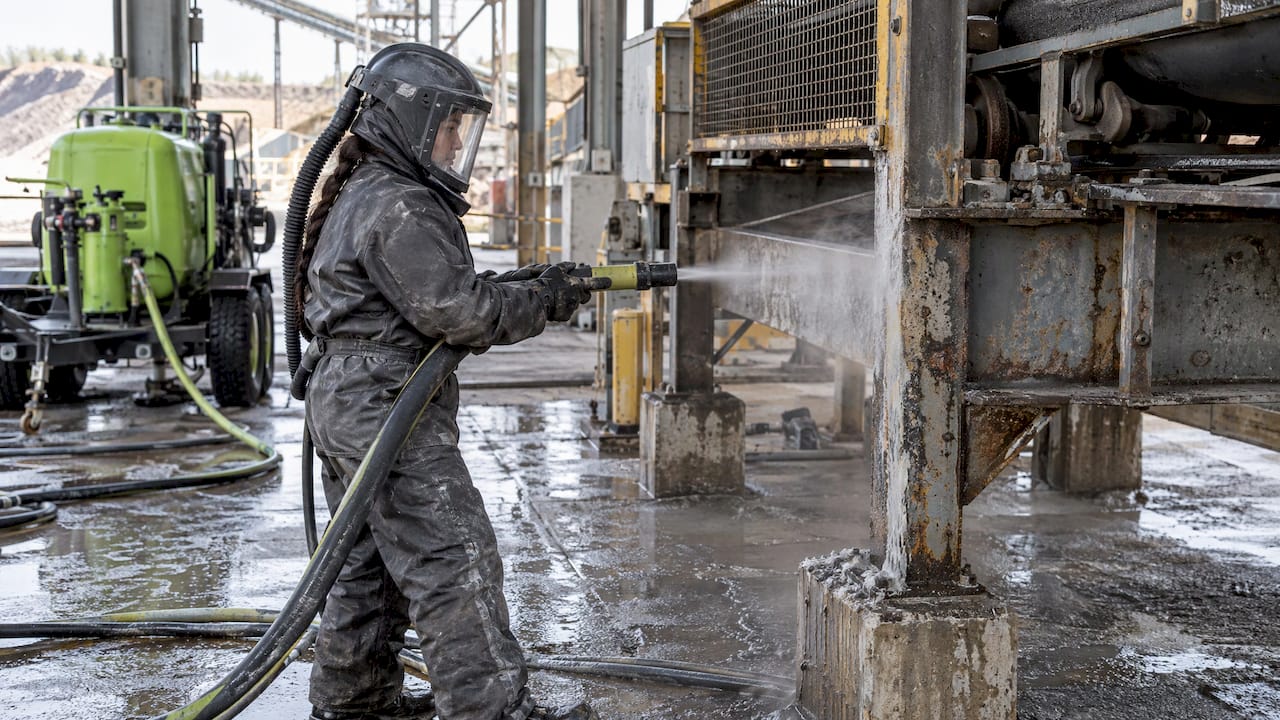
Industrial equipment cleaning means removing the soil your process leaves on machines, frames, tanks and structures, using a method matched to that soil and to the material underneath. When the soil is rust, old paint, scale or a failed coating, abrasive removal does the job that wiping and degreasing cannot. We do that work with mobile dustless (wet abrasive) blasting, which produces up to 92% less dust than traditional dry sandblasting, with self-contained rigs that carry their own air and power. Free estimates are standard.
This guide covers how to pick a method, how to shut equipment down safely, what the waste rules say, how to confirm the job is done, and what it costs in the Bay Area.
TL;DR
- Classify the soil first (oil and grease, rust and scale, or old coatings), then choose the method. Cleaner chemistry cannot lift a bonded coating or heavy rust.
- Under OSHA’s lockout/tagout standard, cleaning a machine can require isolating its energy sources before anyone works on it.
- Spent solvents and blast residue can be regulated waste. The facility is responsible for classifying it.
- Our wet abrasive blasting removes paint, rust and coatings from metal, concrete, wood and brick. Published prices start at $3 per sq ft for blasting and rust work.
- Written procedures, inspection and a set frequency keep a clean result from slipping.
Table of Contents
- What industrial equipment cleaning involves
- Match the method to the soil
- Prepare the equipment safely before any cleaning starts
- What the Bay Area prices look like
- Waste, residue and compliance
- Verify the result and set a schedule
- When to involve the equipment manufacturer
- Request an estimate for your equipment surfaces
- Our perspective
- FAQ
- Sources
What industrial equipment cleaning involves
General facility cleaning deals with floors, walls, windows, restrooms and storage areas. Industrial equipment cleaning deals with the machines and structures that make the product: conveyors, frames, tanks, hoppers, steel supports, fabrication tables, loading docks and the slabs they sit on.
Three things set it apart:
- The soil is process-specific. It can be oil, resin, weld scale, carbon, rust, overspray or a coating that has failed.
- The surface matters. Soft metals, gaskets, instruments and bare steel each tolerate different treatments.
- Energy and hazards are part of the job. Machines can start up, release stored energy or hold residue.
That is why a janitorial crew with a mop is the wrong tool for a corroded steel frame, and why surface preparation crews are brought in where cleaning becomes coating removal.
Match the method to the soil
The University of Minnesota’s MnTAP program sorts soils into organic soils such as oils, grease and resins, inorganic soils such as scale, carbon, dust, rust and oxides, and mixed soils. It also lists factors for choosing a cleaner, including the metals involved, surface condition, part size, susceptibility to corrosion, operating cost and environmental regulations.
The European Industrial Gases Association’s cleaning guidance adds that method selection depends on the required cleanliness, the contaminants, how widespread the contamination is, the equipment layout, compatibility with materials, cost, and disposal considerations. It names mechanical cleaning, which includes blast cleaning, alongside aqueous, solvent and semi-aqueous methods.
In practice that gives you a simple decision table:
| Soil on the equipment | Typical approach | Where we fit |
|---|---|---|
| Light oil, grease, dust | Degreasing, aqueous cleaning, vacuuming | Not our work |
| Surface rust, rust scale | Abrasive removal down to clean metal | Rust and metal blasting |
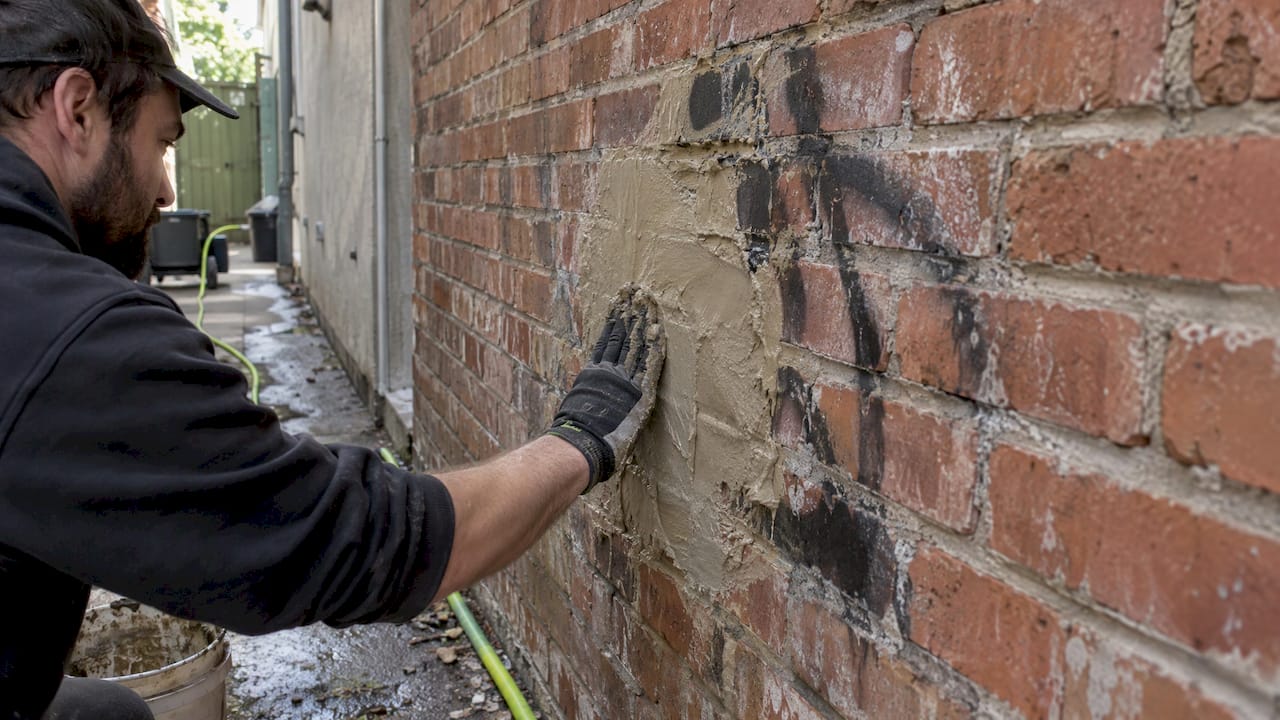
| Layers of paint or failed coating | Abrasive removal, so the new coating bonds | Paint removal |
| Graffiti on structures and walls | Blasting matched to the surface | Graffiti removal |
| Worn stripes and markings on slabs | Removal without gouging the concrete | Stripe and line removal |
| Stained, coated or pitted concrete floors | Grinding, then sealing or polishing | Concrete grinding and grind and seal |
The split matters because rust and coatings are bonded to the surface. Chemistry alone rarely finishes the job, and repeated wipe-downs only repeat the cost. Abrasive removal takes the layer off.
Why wet abrasive blasting suits equipment work
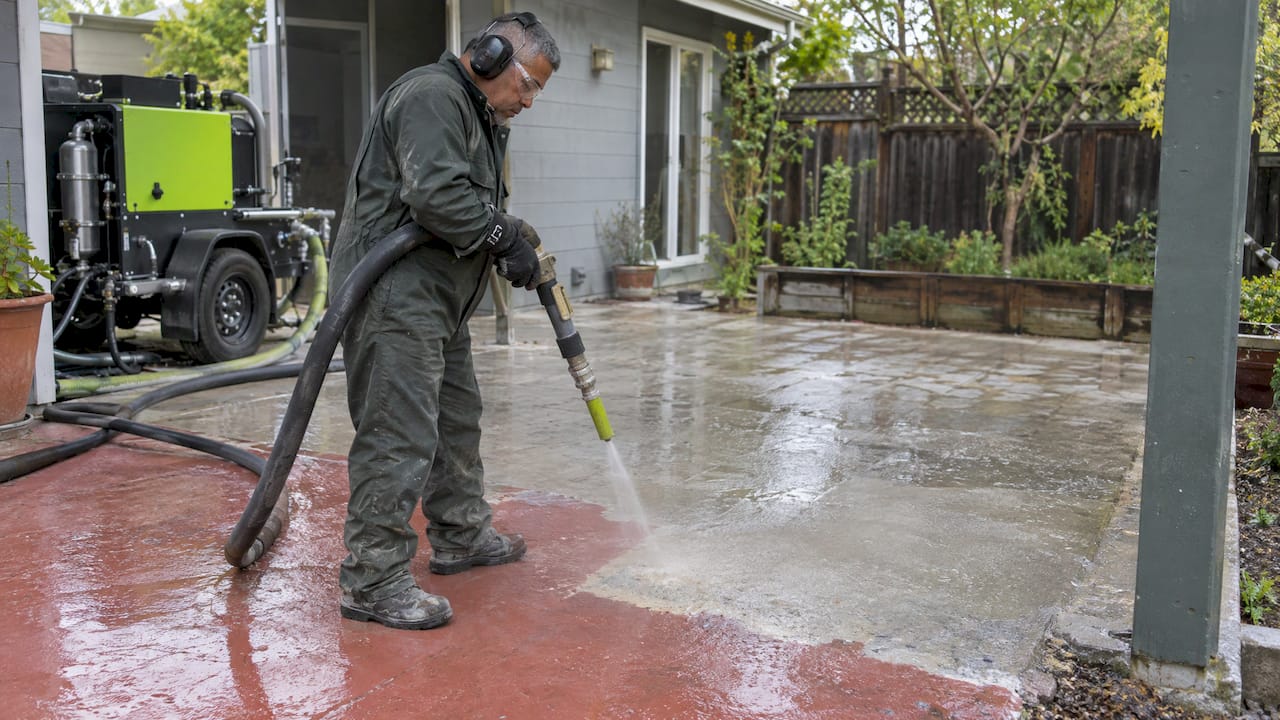
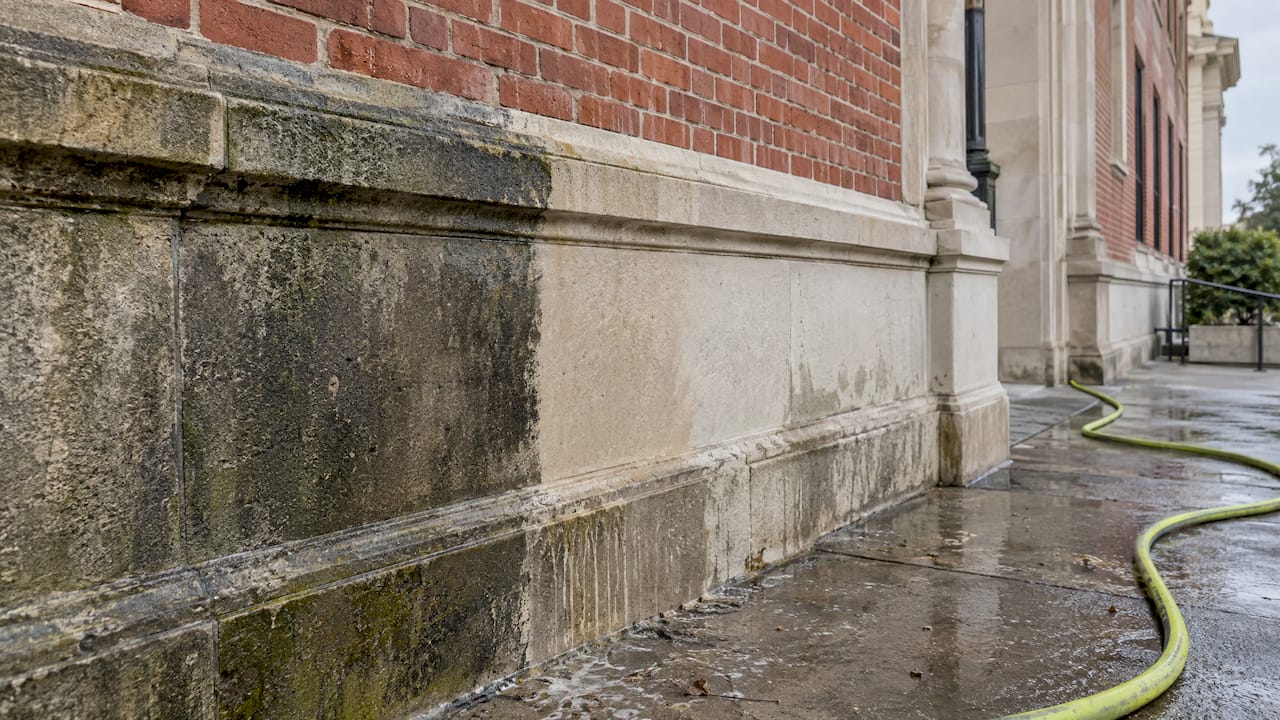
Dustless blasting mixes water into the abrasive stream. We use it to strip paint, rust and coatings from steel, concrete, brick and wood, and our published claim is up to 92% less dust than dry sandblasting. For a working plant that matters: less airborne dust around people, product and neighboring equipment.
Our rigs are self-contained. They carry their own air and power, so a job needs parking and access to the surface, not a utility hookup. For a facility that cannot spare a compressor or a power drop, that removes a coordination step.
If you are weighing blasting against other removal methods, our comparison of dustless blasting, sandblasting and pressure washing shows what each one removes. For painted steel and structures specifically, see industrial paint removal.
Prepare the equipment safely before any cleaning starts
Cleaning is maintenance, and OSHA treats it that way. The hazardous energy standard, 29 CFR 1910.147, covers servicing and maintenance, explicitly including cleaning or unjamming of machines, where unexpected startup or released stored energy could injure someone. It requires an energy control program with documented procedures, training and inspections at least annually.
OSHA’s text lays out the sequence. Prepare for shutdown, shut down by the established procedure, isolate every energy source, apply lockout or tagout devices, make stored or residual energy safe, and verify the isolation before work begins.
In plain steps:
- Identify every energy source: electrical, hydraulic, pneumatic, gravity, thermal and stored pressure.
- Shut down using your documented procedure, not by pulling a switch.
- Isolate and lock out or tag out each source.
- Release or restrain stored energy, such as pressure in lines or raised components.
- Verify that the machine will not start before anyone reaches in.
- Plan the return to service. Reinstall guards, check for leftover tools and residue, and restart under your procedure.
OSHA has also said in an interpretation that if an employee must place any part of the body into a danger zone during cleaning, lockout/tagout applies. The American Institute of Chemical Engineers’ process safety center frames the same idea as two phases: isolating and preparing equipment for maintenance, including decontamination and de-energization, then returning it to service with an operational readiness plan.
When we quote work on a facility, we talk through site access and the surfaces involved. Your lockout/tagout procedure stays yours, and your safety lead should confirm what is isolated before our crew works near a machine.
Dust and protective equipment
Dust is a safety topic of its own. The U.S. Chemical Safety Board counted 281 combustible dust incidents between 1980 and 2005, which killed 119 workers and injured 718, a figure OSHA cites in its housekeeping guidance. If your plant generates combustible dust, tell us before the job so the work is planned around it.

OSHA’s general industry requirements also call for employers to assess hazards, select PPE that protects against them and train employees in its use. The same publication notes that blast-cleaning enclosures must be exhaust ventilated so air flows inward at openings and dust-laden air clears promptly after blasting stops.
What the Bay Area prices look like
Our prices are quoted per square foot or per project. These are the amounts published on our services page:
| Service | Published price |
|---|---|
| Dustless blasting | From $3 per sq ft |
| Paint removal | From $3 per sq ft |
| Rust and metal blasting | From $3 per sq ft |
| Concrete grinding and grind and seal | From $2 per sq ft |
| Surface preparation | $2-$3 per sq ft |
Concrete polishing, powder coating prep, graffiti removal, stripe removal, wood restoration, masonry and brick cleaning and lead paint removal are quoted per project. Square footage, the thickness and type of the coating, how much rust there is, and access all move the number. Our cost guide explains what shifts a quote and what day rates look like.
A useful habit is to bring the facts to the estimate: what the surface is, what is on it, how big the area is, and what coating goes on next. If the next step is a coating with a specified surface profile, say so, because we prepare surfaces to coating spec.
Waste, residue and compliance
Whatever method you use, cleaning creates something to dispose of. The EPA’s solvent guidance says that under federal hazardous waste rules, a facility is responsible for determining whether its spent solvents are hazardous waste. If they are, they are managed under 40 CFR parts 261 and 262. It adds that employers may need to provide information under OSHA’s Hazard Communication rule at 29 CFR 1910.1200.
The EPA’s small business guide makes a second point: you remain responsible for hazardous waste after it leaves your site, and you should check that waste handlers hold an EPA identification number and permit. It also stresses that you know your waste best, so pay attention when a vendor suggests how to classify it.
OSHA’s housekeeping guidance adds a shop-floor rule: thinners, solvents, rags and scrap go into a covered fire-resistant container at the end of each shift or job.
For coating removal on equipment, the debris depends on what was on the surface. Old coatings can contain lead, which is why we run lead paint removal and containment as its own service. Tell us what you know about the coating’s age and history when you request an estimate, so the job is scoped correctly from the start. Your environmental or safety manager should confirm how the resulting waste is classified for your site.

Verify the result and set a schedule
A clean machine is one you can prove is clean. The University of Florida’s IFAS Extension says cleaning procedures should be evaluated by inspection, swab testing or direct observation, with adherence monitored and records kept. It also says cleaning frequency should be defined for each process line.
That gives you a workable routine:
- Define the standard. For blasting jobs, name the finish you need, such as bare metal ready for coating, or a coating removed to a sound substrate.
- Inspect after the work, against that standard, before coating or return to service.
- Record it. Dates, areas, results and who signed off.
- Set frequency by line or asset, not for the whole building at once.
For building-level routines, documented procedures and inspections, this overview of warehouse cleaning schedules and routines is a good model for structuring recurring work, even though your equipment will need its own asset-level schedule on top.
On the surface-prep side, a good trigger for blasting is condition, not the calendar: rust spreading, a coating that is lifting, graffiti that returns, or a floor that is staining through its sealer. Property managers who want a response pattern for repeat issues will find ours in the graffiti removal guide.
When to involve the equipment manufacturer
Before any new cleaning agent or method touches a machine, check what the maker allows. The EIGA guidance advises that if a cleaning agent could harm material properties needed to contain pressure or perform as intended, you consult the manufacturer and product literature. It also says to confirm compatibility with all wetted parts, including gaskets, seals, packing and instrumentation.
A good working order is: manufacturer’s guidance on what must be protected or removed, then your safety procedure, then the cleaning scope. Give us that scope with the estimate request and we can quote the surfaces that need blasting.
Request an estimate for your equipment surfaces
If your equipment, structures or floors need paint, rust or coatings taken off, we do that work across San Francisco, the Peninsula, the East Bay and Northern California. Our services page lists every service, and the dustless blasting page shows how the process works. Estimates are free, and we schedule quickly.

Send us the surface, the soil and the size of the area. Contact us through allbayareadustlessblasting.com and we will come back with a quote per square foot or per project.
Our perspective
Most of the industrial cleaning pages you will find are written around janitorial scope: floors, windows, sanitation schedules. That covers the soil you can wipe away. It does not cover the soil that is bonded to the metal or concrete.
We built our work around that second category. Rust on a steel frame, a coating that has failed on a structure, graffiti on a wall, stripes on a slab: these call for abrasive removal, and doing it wet, with up to 92% less dust than dry sandblasting, suits sites where people and production are close by.
Our rigs bring their own air and power, so a job needs parking and access to the surface. We publish our prices because a facility manager should be able to budget before calling: from $3 per sq ft for blasting, paint removal and rust work, from $2 for grinding and grind and seal, and $2-$3 for surface preparation.
Our advice is simple. Classify the soil, lock out the energy, scope the surface, and give us the coating spec. We will take it from there.
USA
FAQ
What is the difference between industrial equipment cleaning and industrial cleaning?
Industrial cleaning usually means facility-wide work: floors, walls and general sanitation. Equipment cleaning targets machines and structures, where soils like scale, rust and coatings and hazards like stored energy need a specific method and procedure. Where the soil is a bonded coating or rust, abrasive removal such as our wet blasting is the method.
Do I need lockout/tagout to clean a machine?
Often, yes. OSHA’s standard covers cleaning of machines where unexpected energization or stored energy could cause injury. Your safety lead should confirm the procedure for each machine.
How much does blasting rust or paint off equipment cost in the Bay Area?
Our published rate for dustless blasting, paint removal and rust and metal blasting starts at $3 per sq ft. Surface preparation is $2-$3 per sq ft. The final quote depends on area, coating or rust condition and access, and estimates are free.
Can your rigs work where there is no power or compressed air?
Yes. Our self-contained rigs carry their own air and power, so we need parking and access to the surface.
Sources
- MnTAP, University of Minnesota: plating cleaning guidance
- EIGA: Cleaning of equipment for oxygen service
- OSHA: 29 CFR 1910.147, the control of hazardous energy
- OSHA: Control of hazardous energy source, final rule (1989)
- OSHA: lockout/tagout for cleanup and sanitizing interpretation (1991)
- AIChE CCPS: preparing process equipment for maintenance
- OSHA: shipyard housekeeping guidance
- OSHA: General Industry Digest
- EPA: solvents in the workplace guidance
- EPA: managing your hazardous waste, a guide for small businesses
- University of Florida IFAS Extension: equipment cleaning and sanitizing