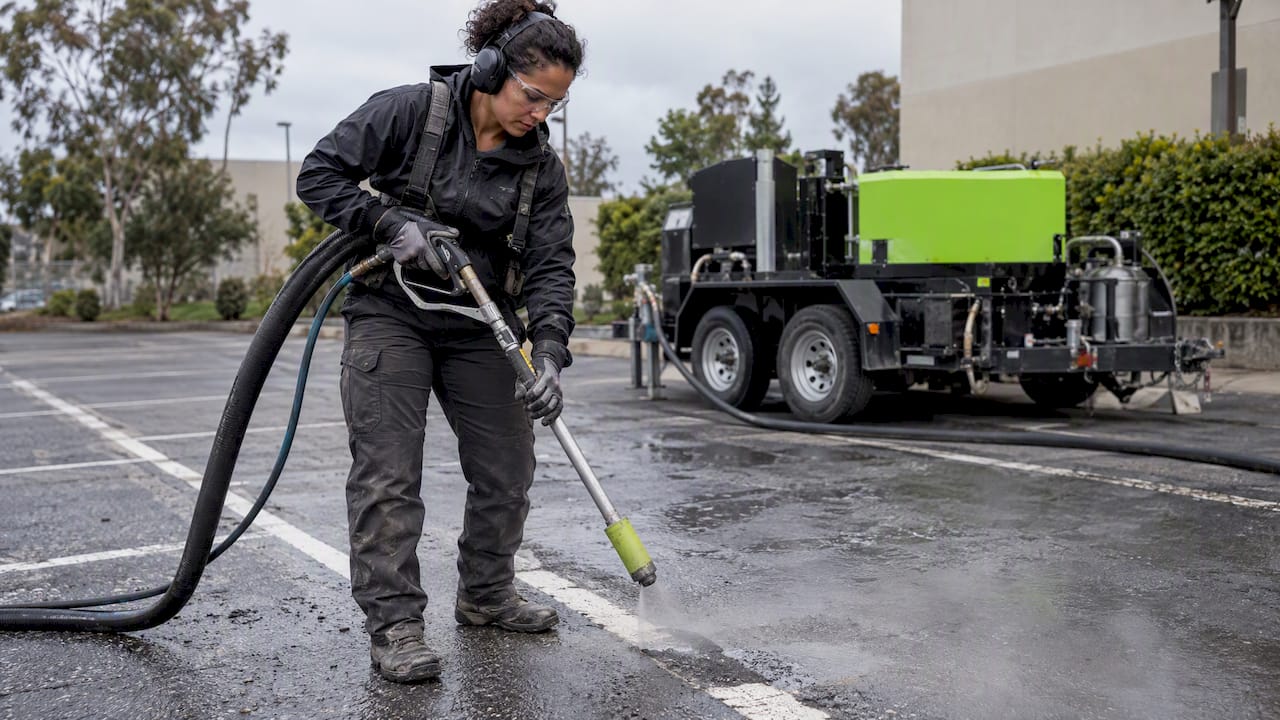
If you manage buildings in San Francisco, Oakland or anywhere along the 880 corridor, graffiti isn't a question of if. The two things that matter are how fast it comes off and whether it leaves a ghost behind. Here's how we handle it for property managers, HOAs, schools and municipal clients.
Speed matters more than you'd think
Tagged walls get re-tagged. A wall that stays clean for weeks gets left alone; a wall that stays tagged for weeks collects more. Most of our property management clients are on a standing arrangement: call or text a photo, and we're there within a few days — same week for repeat sites. Many Bay Area cities also have ordinances requiring removal within a set window (San Francisco's is 30 days after notice), so there's a compliance angle too.
Method by surface
Bare concrete and block (retaining walls, parking structures, loading docks). Low-pressure wet abrasive blasting. It takes the paint and a hair of surface with it, so there is no shadow. Pressure washing and solvents on porous concrete almost always leave a ghost because the paint has wicked in.
Brick. Soft media, low pressure, test patch first. Fresh paint comes off clean; old, absorbed paint may leave a faint shadow we'll show you on the test patch before proceeding. Never let anyone dry-sandblast your brick.
Painted stucco or painted block. Here the question is whether you want the graffiti gone or the wall repainted. Blasting removes both the tag and the wall paint underneath. For a quick fix on painted walls, a color-matched repaint is usually cheaper; for a wall that gets hit repeatedly, strip it and apply an anti-graffiti coating.
Metal (roll-up doors, utility boxes, railings). Wet blasting at reduced pressure strips the tag and usually the factory paint with it, leaving the metal ready for a fresh coat. For powder-coated or painted surfaces you want to keep, a solvent wipe by your painter is the better first attempt.
Glass and polished stone. Not blasting jobs. Chemical removal or glass replacement.
Anti-graffiti coatings
After a surface is stripped, two kinds of coating make the next removal easier:
- Sacrificial coatings (wax-based) sit on top; the tag comes off with hot water, and you re-apply the coating. Cheap, good for walls hit a few times a year.
- Permanent coatings (polyurethane or siloxane) resist absorption so tags wipe off with a solvent. Pricier, better for high-frequency sites.
We don't apply coatings, but we'll prep for them and can point you to who does.
What it costs
Graffiti removal is quoted per site rather than strictly per square foot, because the mobilization is the same whether it's one tag or ten. A single wall in the Bay Area typically runs a few hundred dollars; a parking structure with a dozen tags runs to a crew day. Standing clients get a flat per-visit rate.
What we need from you
A photo, the address, and what the surface is. Access and parking for a truck-and-rig within about 150 feet of the wall. That's it — our rigs carry their own water, air and power.
Call or text (628) 222-4876 with a photo and we'll price it the same day. Open seven days, 6 AM to 8 PM.